Feller Forty Recap

I don’t update this blog very often anymore, but I share weekly updates about the process of writing my memoir in my Substack newsletter. Check it out!

I just returned home from celebrating the fortieth birthday of one of my first blog friends, Ali Feller of Ali on the Run, so what better way to memorialize the occasion than with an old-school blog recap?

Two weeks ago, I was walking my dogs while listening to Ali’s podcast recap of Boston Marathon weekend when I realized her milestone birthday was coming up. “I’ll have to remember to send her a card,” I thought.

When I got home and checked my email, one of the subject lines gave me a jump-scare: “Re: Feller Forty – You’re Invited!”

I’m sorry, what? The message was a last call to RSVP for Ali’s birthday celebration, but I hadn’t gotten the first call! All of a sudden, I was sweaty, panicked. How had I missed the initial message? Was it too late for me to figure out how to get to Hopkinton, New Hampshire, the following weekend?

I found the original invitation buried in my junk folder (thanks for nothing, Gmail!) and got up to speed on all the details. I checked out flight costs, ran it by Aaron, shot Ali a text, and before I knew it, I was booked on a flight to Boston.

My friendship with Ali started in her email inbox. After I started running and blogging in 2010, I found her blog and began following along as she trained for her first marathon. When I planned a trip to New York City in 2011, I was training for my first marathon and had a long run to do while I was in town. Ali didn’t have any clue who I was at the time, but I emailed her to see if she’d be interested in running with me. She replied with a nice message saying that she’d love to, but she’d be out of town. From there, we stayed in touch and finally got the chance to run together when I visited NYC again in March 2015.

I was training for the Big Sur International Marathon and had 19 miles to run. Ali joined me for the first 13 miles, slipping and sliding along the slushy sidewalks of Manhattan and her favorite Central Park paths. As all runners can attest, there’s no better way to get to know someone quickly than while running. Something about sweating side-by-side together makes it easy to go deep.

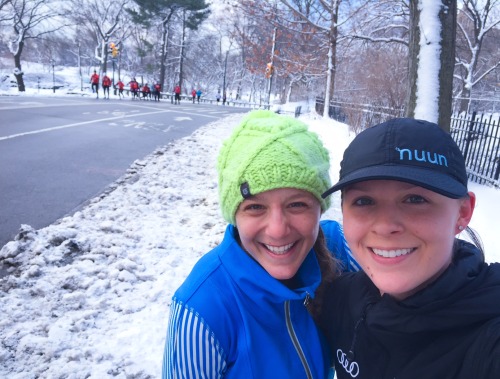
At the time, I was 27 and Ali was 29. I had just gotten married and was going to try to get pregnant after Big Sur. She was planning her wedding. It was a pivotal time of big changes on the horizon for both of us.

Since then, there’s been a wedding and babies. A new job for me, a new podcast for her, and more marathons for both of us. An Alzheimer’s diagnosis and a cancer diagnosis. Unspeakable grief and heartache in many forms. We’ve cheered for each other and cried for each other from opposite coasts for more than a decade.

When Ali was going through cancer treatment, I let her know I’d be there in a heartbeat to help with chemo or cold capping or whatever she needed, but because everyone loves her, she had that offer from a lot of people. I didn’t get the chance to support her in person at her lowest, but now I had the chance to celebrate her as she enters a new decade, the very beginning of an era in which I’m certain she’ll be at her highest. I wouldn’t miss it for the world.

I was excited, too, to visit Boston for the first time, just a few weeks after this year’s Boston Marathon, where my friends Beth and Kerri crushed the race and reignited my desire to qualify for it someday.

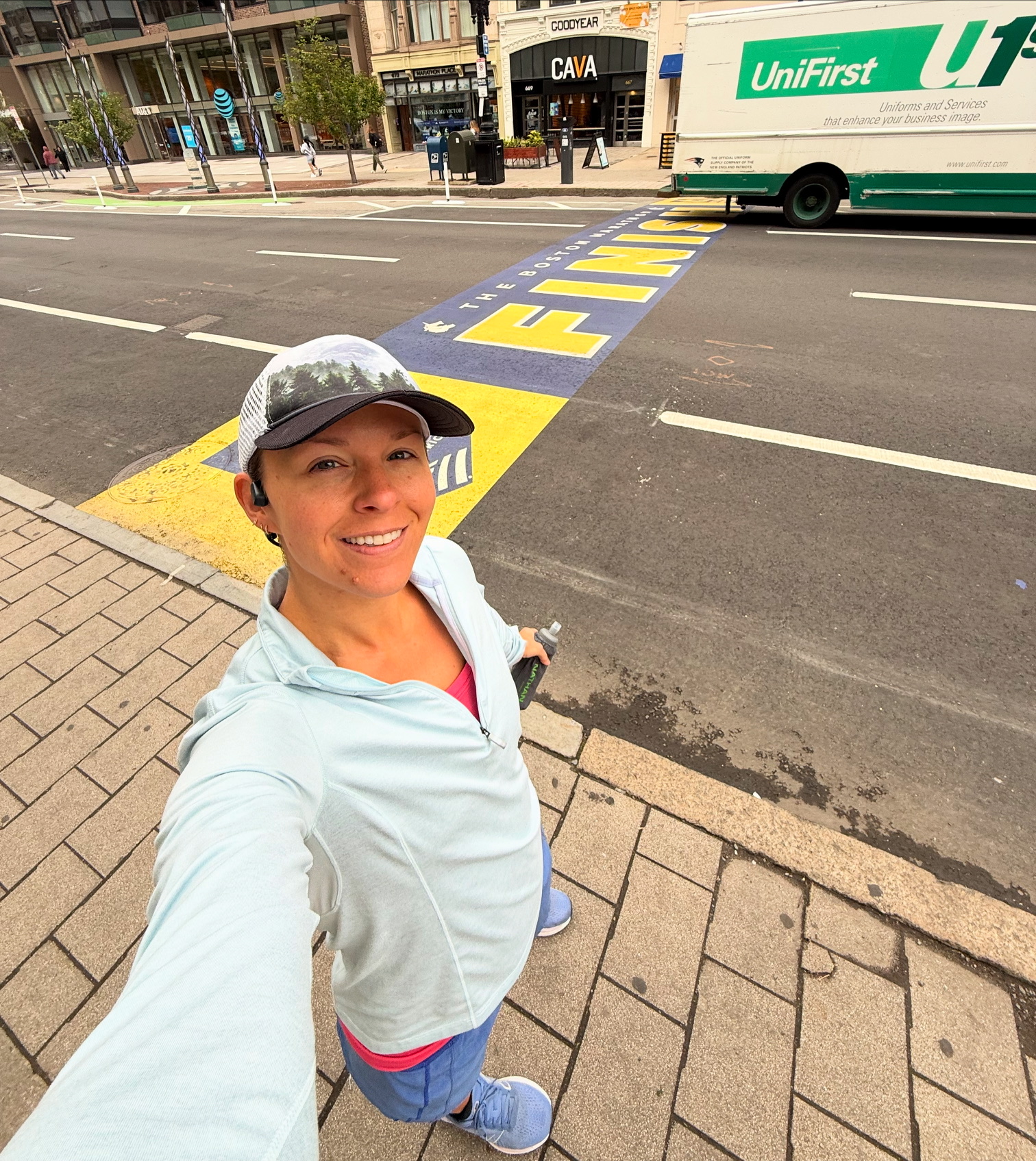
I got into town on Thursday evening and dug straight into a hot, buttery lobster roll made with a perfectly soft and chewy brioche bun at Saltie Girl. On Friday morning, I did a little running tour of Back Bay and snapped photos of all the sights runners dream of: the Charles River; the giant CITGO sign that signals the end of the marathon is near; the corner of Hereford and Boylston; and the Boston Marathon finish line, which is permanently painted on Boylston Street. The weather was gray and drizzly, so I didn’t get to see the city in its full glory, but it was perfect for a contemplative solo run fueled by big dreams.

After I showered and had lunch, it was time to pick up my road-trip crew. Ali’s friend Conor Nickel, who used to plan massive events for New York Road Runners, was in charge of planning the festivities, and he asked if I could drive his boyfriend, Zach Cole, and best friend, Jess Movold, from Boston to New Hampshire. I was nervous because I didn’t know anyone attending the party besides Ali, so it was nice to be able to get to know a few of her friends on the drive instead of showing up at her house all by myself. I figured any friend of Ali’s is a friend of mine, and that proved to be the case time and time again throughout the weekend.

We rolled into downtown Concord, New Hampshire—all quaint red brick, ripped straight from a Netflix Christmas movie—to pick up coffee and food, then proceeded along winding country roads to Ali’s house.

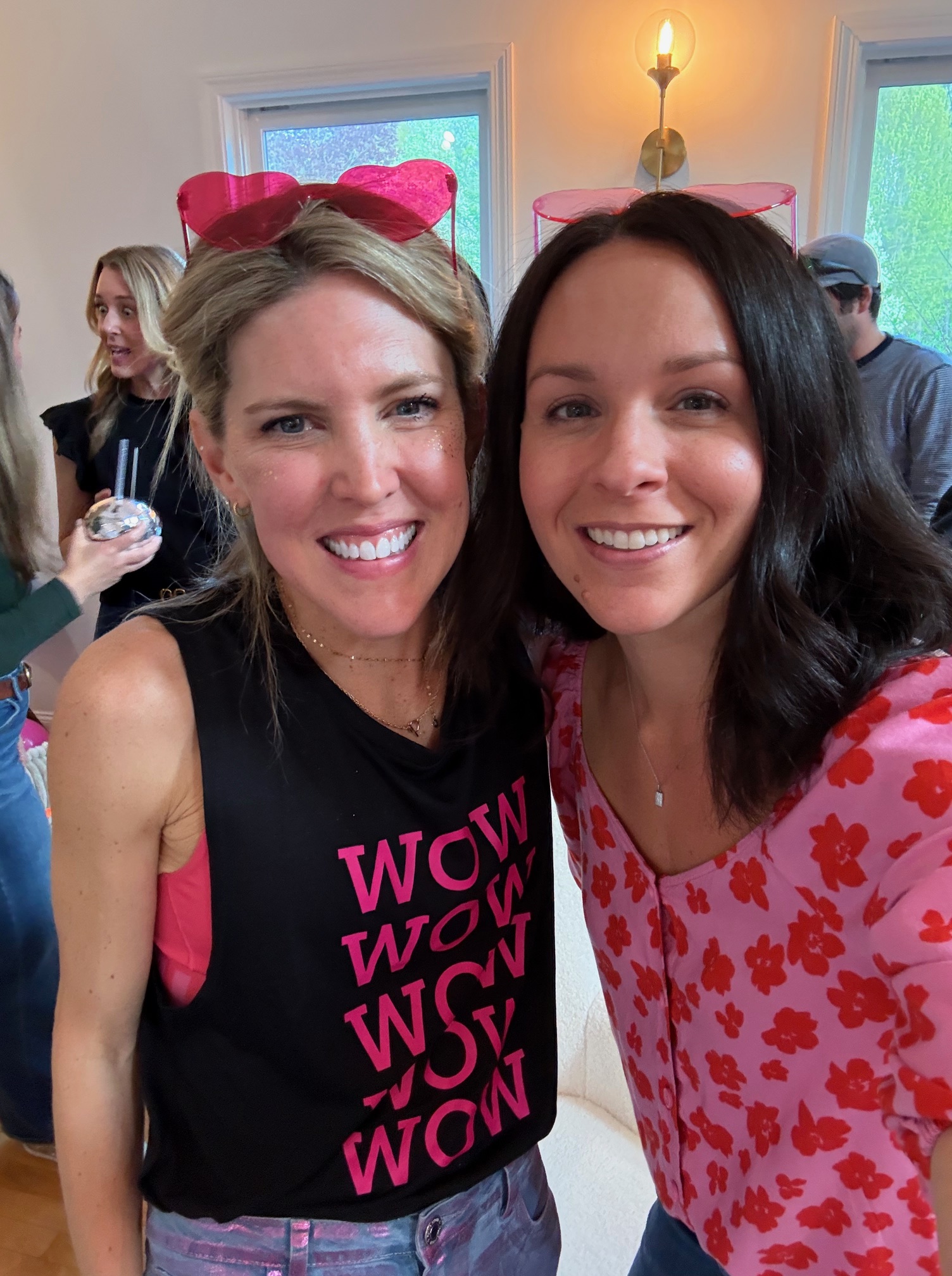
Ali answered the door wearing glittery undereye patches, which couldn’t be more her. The vibe was relaxed as we ate and chatted with Conor, Ali’s Cousin Jackie (most certainly her legal name by now), and Cousin Jackie’s husband, Neil. Neil and I somehow went deep into hard-hitting life topics within five minutes of saying hello, and we weren’t even running! I guess that also happens when people are open and easy to talk to.

The first event of the weekend was a welcome party at the Contoocook Cider tasting room at Gould Hill Farm. As we all got ready, I answered the call to help curl Ali’s hair and gave her my signature waves with a flat iron. Ali has been open about struggling with losing a lot of her hair due to chemo, and she’s now working with a mix of her previous hair, new growth, and extensions. I was honored to be entrusted to help style it. She looked beautiful!

The welcome party was cozy and casual. Friends and family filtered in throughout the evening, and it was fun to chat with people from so many facets of Ali’s life. Girl’s got a lot of friends! I got to know her father, David; her ski-team friend, Tom; her sister-in-law, Michaela; her college friends, Dana and Teddy; and more. We munched on pretzel bites, pizza, and brownies, and the cider was flowing for the drinkers. At one point, Mary Wittenberg (former CEO of New York Road Runners and race director of the New York City Marathon) played a video of TikTok dance that looked complicated to me, but Ali picked it up right away. Once a dancer, always a dancer.

After the welcome party wound down, we headed back to Ali’s house to continue hanging out. I had a lovely chat with pro runner Keira D’Amato, who is Ali’s close friend and the American women’s record holder in the half marathon. She told me all about her book that’s coming out in September and asked me about my book! (I’ll share more about our convo in my next Substack update.)

Conor rallied a group of people to do an 8:15 Orangetheory class in Concord the next morning before a planned run, and my FOMO eventually convinced me to sign up as well. I may or may not have forced Cousin Jackie to join, too.

I was lucky enough to stay over at Ali’s house, along with several other friends, and I got to sleep in her office, where she records her podcast episodes! I’ve been on Ali’s show a few times (first as a guest, then as a guest host), and it was fun to be in the room where it all happens.

Saturday morning, I was up early to do my pre-run knee taping, foam rolling, and stretching in Ali’s basement workout room. Zach and I headed to Concord early to grab coffee and food, since I’m always immediately starving when I wake up and need a solid breakfast in my stomach before I work out.

The Orangetheory class was great! The more experienced Orangetheory folks didn’t love some parts of it, but as a first-timer, I had fun and got a decent workout. There were eight of us, and we all started on the rowers and strength, then moved to treadmills for the second half of the class. The class flew by and I got pretty sweaty. Some of us were smart and brought clean clothes to change into for the run; I was not part of that group. 🤣

After class, as we got ready to leave, I noticed Mary Wittenberg had a banana and asked her if she thought the Starbucks across the parking lot might have bananas because that sounded so good at the moment. She said she only wanted one bite of hers and insisted on giving me the rest, which was so nice of her and really hit the spot!

Next, we headed to Memorial Field for the run. There was a bit of confusion as to whether it was a race or a fun run, but the official name was “Ali Feller’s Ali on the Run Show Contoocook Meredith Palmer Memorial Celebrity Rabies Awareness Pro-AM Fun Run Race for the Cure 4.0-Mile Run,” and we ultimately decided it was a race.

Keira, who ran from Ali’s house as part of a 15-mile run and met us in the parking lot, offered Cousin Jackie a significant head start, and I jumped in on that. Jackie wasn’t feeling so great after doing squats at Orangetheory and a bunch of hiking earlier in the week, so I vowed to stick with her and run, walk, or whatever she wanted to do to get to the finish. I had no desire to race Keira or any of the other super-fast people in the group, for that matter. 🤣

It was pouring rain and in the 50s, but I was nice and warm from Orangetheory and I’m super used to this weather in Seattle. Even though we got completely soaked, we all looked so cute decked out in our pink Taylor Swift-inspired shirts and “ball sports fan” hats to celebrate Ali.

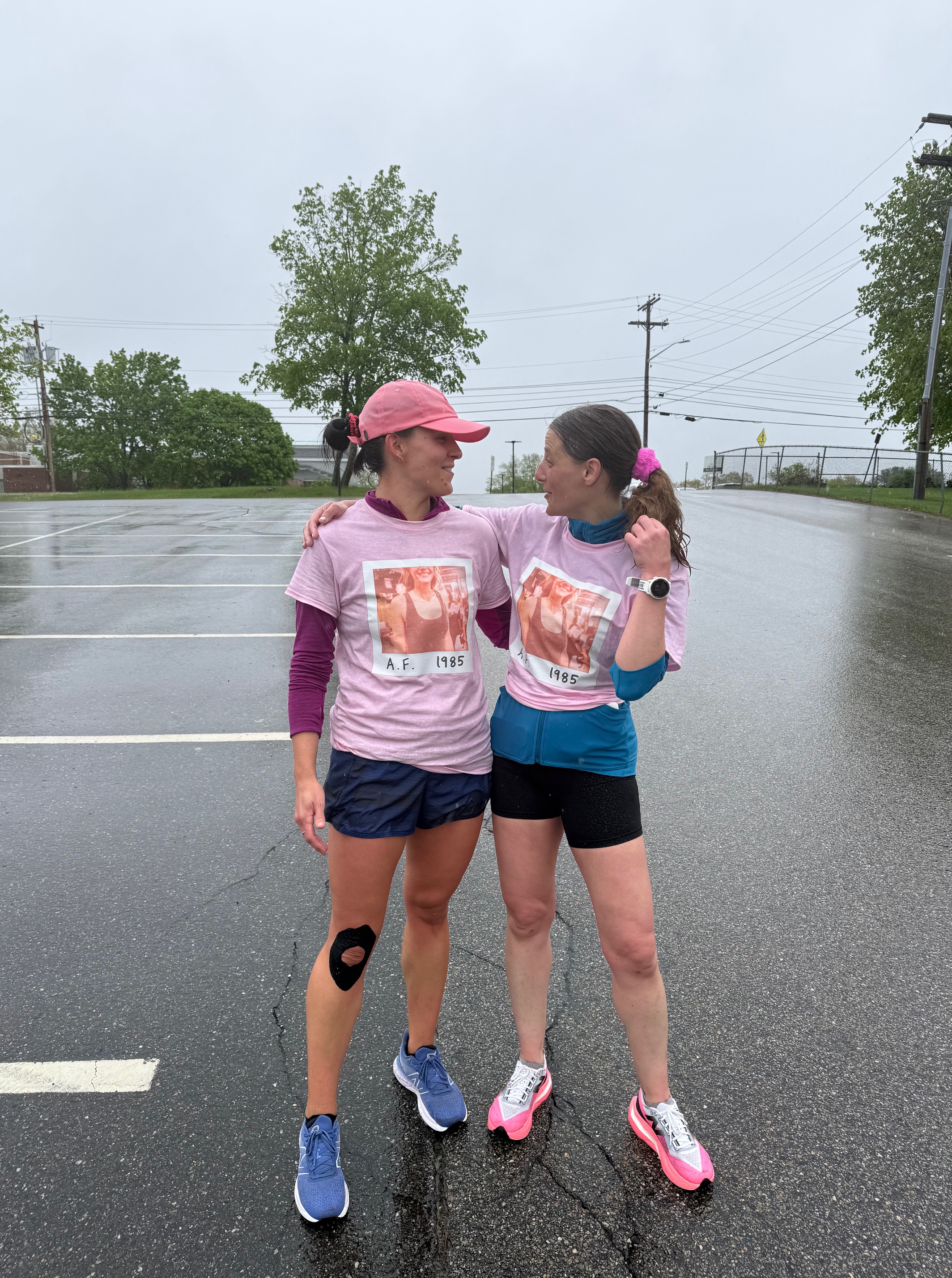
Cousin Jackie and I took off first. We were promised a 14-minute head start, but in reality, we got two minutes. It only took Keira, Conor, and Zach about three minutes to catch up, but we had fun heckling them as they smoked us. We eventually got passed by everyone and took our time with frequent walk breaks. I felt terrible that Jackie was in pain, but she gutted it out like a champ! We finished with a very respectable 9:38 average pace, so we must have been hauling while we were running. The group formed a cheer tunnel for us to run through as we finished, which was so fun and indicative of the supportive, celebratory spirit of the whole weekend.

Then Zach and I hightailed it back to Ali’s house while she and handful of friends picked up açaí bowls for everyone from Playa Bowls. I was the last to finish the race, but the first to get a warm shower, so who was the real winner??

The Nutella açaí bowl they got for me was not only the first açaí bowl I’ve ever had, but one of the greatest things I’ve ever tasted. Maybe it was due to my exhaustion after the back-to-back Orangetheory class and run; or the whiplash of going from being wet and cold to warm and cozy; or the irresistible combination of the creamy açaí base, crunchy granola, gooey Nutella, and juicy fresh fruit. In any case, I’m pissed we don’t have Playa Bowls in Seattle, and I’ll spend the rest of my life trying to find or recreate an açaí bowl as good as that one.

Once we were all fed and showered, it was time to prep Ali’s house for the party. A creative group got to work on the decorations while I snuck upstairs to dry my hair and put on makeup (I had the limited bathroom space on my mind and wanted to get it out of the way). Then I helped with food and drink prep, plus setting up plates, utensils, and such. Assembling two charcuterie boards was my crowning achievement. I’m no Martha Stewart, but I did my best!
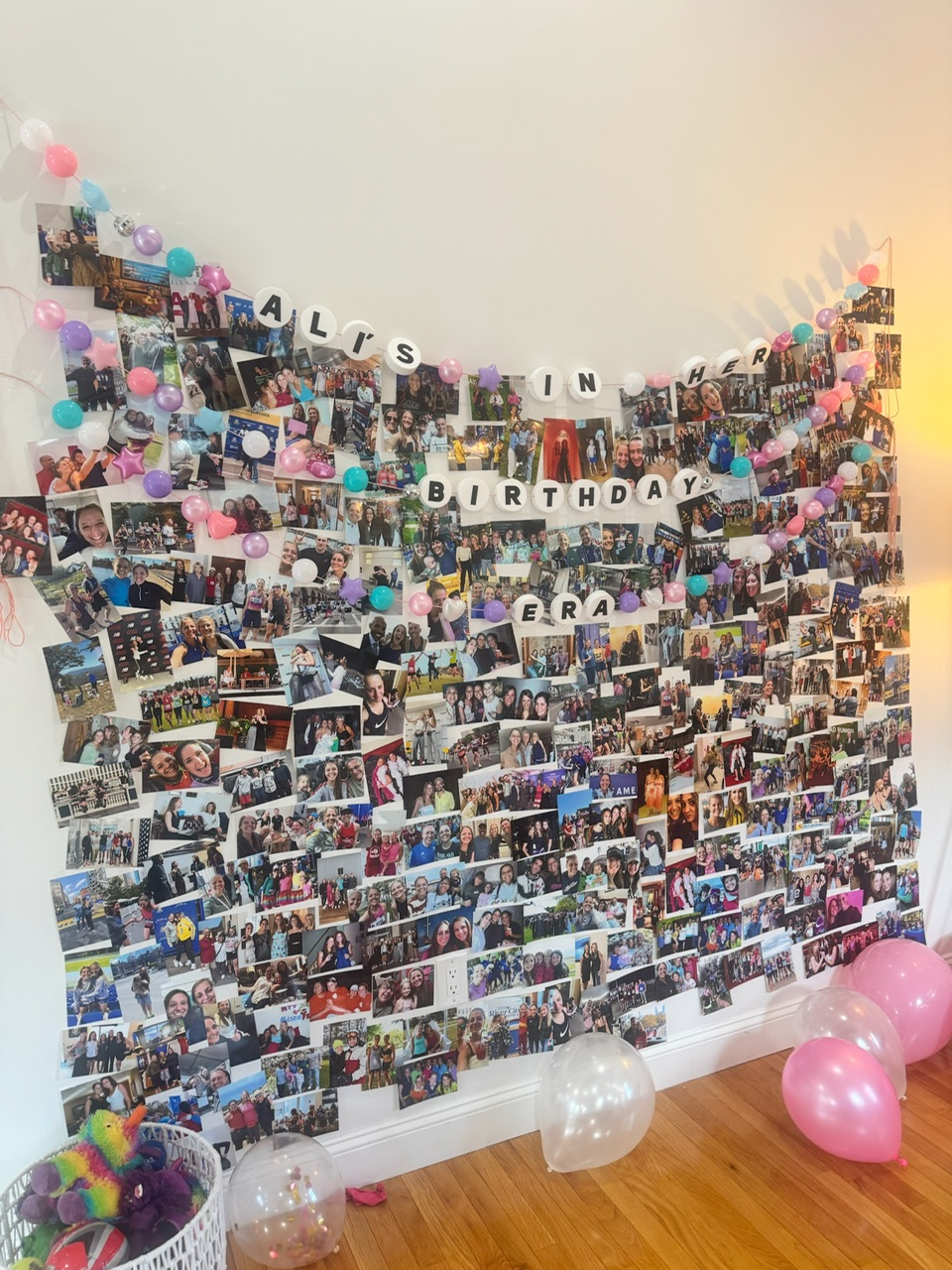
Ali rounded everyone up to give a toast before the rest of the guests arrived. She started crying almost immediately as she expressed such heartfelt gratitude for everyone coming to celebrate with her. Between cancer treatment and a divorce, she’s been through more these last two years than any one person should have to handle.
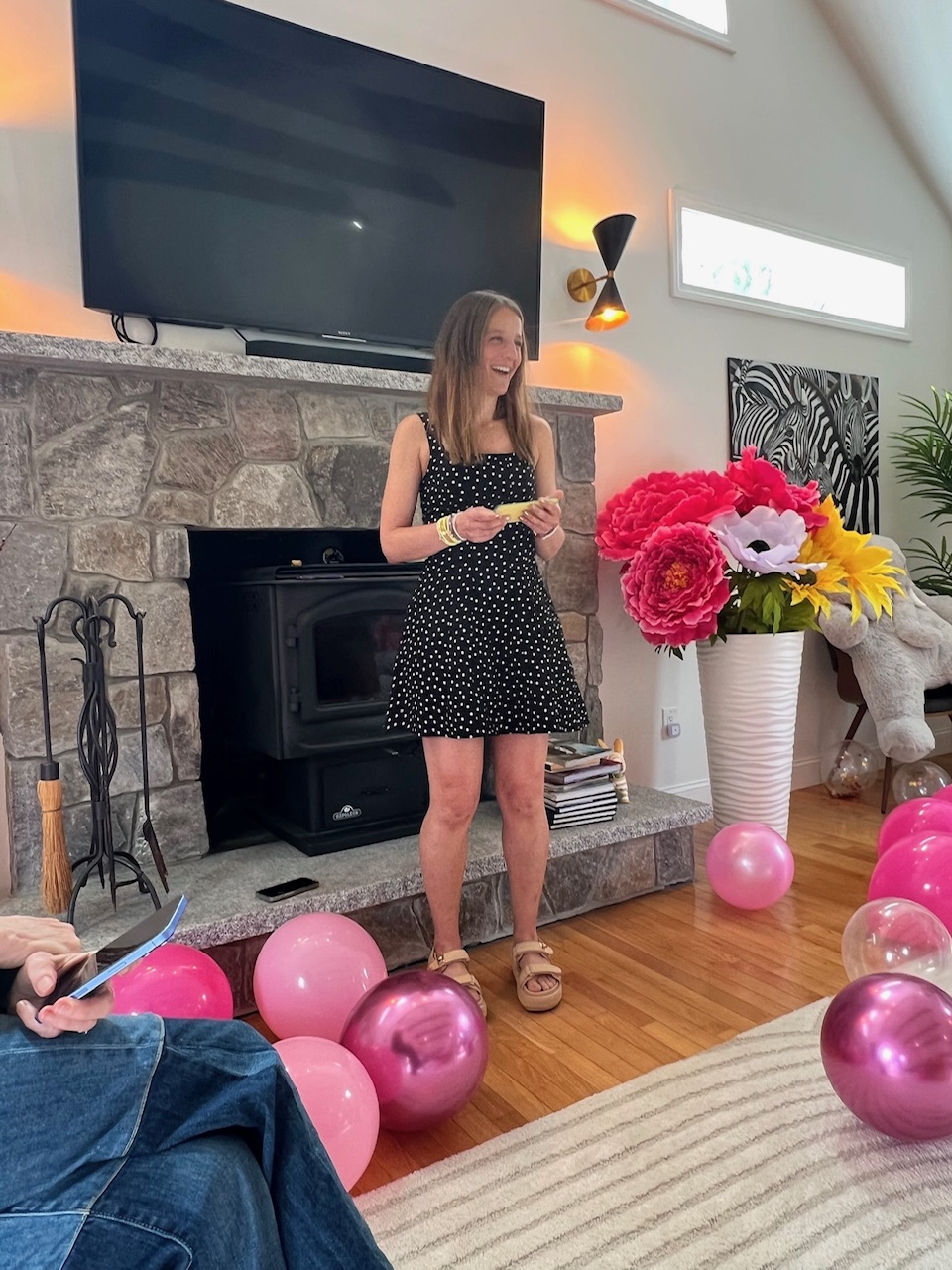
I didn’t cry until she started talking about laundry. I’ll pull from the story she shared on Instagram, since I certainly can’t say it any better:

Divorce with a young kid is really hard. There’s no denying that. For me, it was the unexpected little moments that were sneaky, unconsolably hard.

Doing Annie’s laundry has always been one of my favorite things. Since before she was born, there’s always been something so sweet and comforting about washing and folding those tiny socks and onesies, and now the twirly dresses and flare pants.

So the first time I did laundry and none of it was Annie’s because she was at her dad’s, I broke down. Heavy sobs on the bathroom floor. I was broken. I was sad and alone and scared, and I missed her so much that I thought my heart might be physically broken.

Fast forward a bit, and I still hate the loads without the little socks. But sometimes in that sadness, you find something beautiful.

This weekend, as party prep was in full swing, I sat on the bathroom floor moving the laundry from the washer to the dryer.

A big load of laundry! Post-rainy run laundry.

It was mine.

And Cousin Jackie’s.

And Jess’s.

It was Keira’s and Devon’s and Zach’s and Conor’s and Neil’s.

It was a full load of laundry.

It went perfectly with my very full heart.

That heart had broken. And then all these people—and especially Annie—put it back together again.

All Ali wanted for her birthday was to fill her house with love, and that’s exactly what happened. The sparkly decorations and the massive spread of food and the big-name guests were great, sure, but it was a bunch of smelly running clothes soaked with rain and sweat that meant the most. It was the intimacy and togetherness, the result of sticking by each other even when things got tough and messy. It was incredibly inspiring, and my heart felt full, too—on behalf of Ali, and because of Ali.

We went around the room sharing little tributes to Ali, but guests starting arriving before I got the chance to say something, so I’ll share what I was going to say here.

Ali is one of those people who makes you feel like you’re the most special person in the world when you talk to her. She naturally shines as a person, but always makes sure to turn her spotlight on others and highlight the best in them. When she first asked me to be a guest on her podcast, I was shocked because I didn’t think anyone would care about my story as a very average runner, especially compared to the professional runners and legitimately popular bloggers she’s had on her show. But she convinced me I mattered, and empowered me to share the story of my mother’s Alzheimer’s diagnosis for the first time. It was only then that I realized I had a lot to say about it. Right after our conversation, I felt inspired to start writing about my mother’s journey, which has since snowballed into lots of writing over the years, and now the full-time pursuit of sharing my mother’s story in a memoir. Maybe I would have ended up here anyway; maybe I wouldn’t have. But Ali was unwittingly the catalyst, all because of her huge heart and genuine interest in others.

Ali has said that her friends have kept her alive over the past few years. They’ve sat with her during chemo, answered dark and scary phone calls, and helped pick her up off the floor on numerous occasions. But Ali built this incredible support network for herself by turning strangers into friends everywhere she goes—from the ski team to the cancer center, from major marathon finish lines to random corners of the internet.

You may give all the credit to your friends, Ali, but there’s a reason they’re all there for you in the first place. You did that.

It was a beautiful, inspiring thing to see Ali’s support network in person, and I know this is just a fraction of it!

I chatted with a bunch of different people during the party, but had to take a little break to breathe after every three or four conversations. I’m an extroverted introvert, so I can easily turn on the outgoing part of my personality in social situations, but can also feel drained and need to recharge every now and then. I’d sneak upstairs to my room/Ali’s office just to have a few quiet moments before returning to meet more people. I marvel at Ali and many of her friends who seem to have endless energy to chat all day!

I had especially great conversations with Ali’s dad, who promised to give me a tour of New Hampshire’s best covered bridges should I ever return, and another one of Ali’s friends (not Keira) who just got a book deal. The deal hasn’t been announced yet, so I’ll keep the person’s identity under wraps, but I’ll share some interesting tips they gave me about the publishing world in my next Substack update.

Can we talk about the incredible cake Ali’s friend Aubree made?? It was so beautiful, on theme, and delicious. Usually fancy cakes look way better than they taste, but this chocolate creation was perfectly moist and had the ideal cake-to-frosting ratio. Five stars, chef’s kiss, no notes.

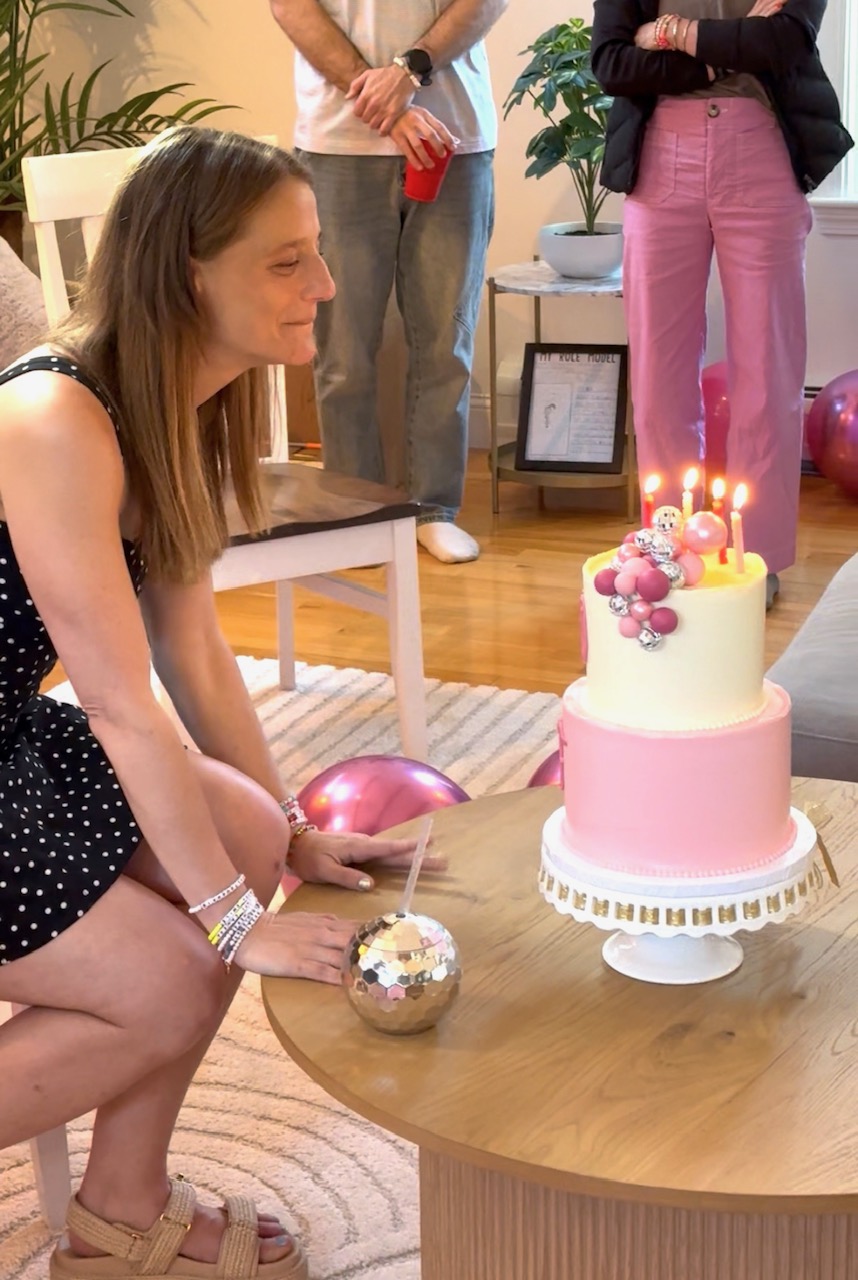
I loved the happy look on Ali’s face as she contemplated her birthday wish. There are so many good things ahead for her, and she deserves them all.

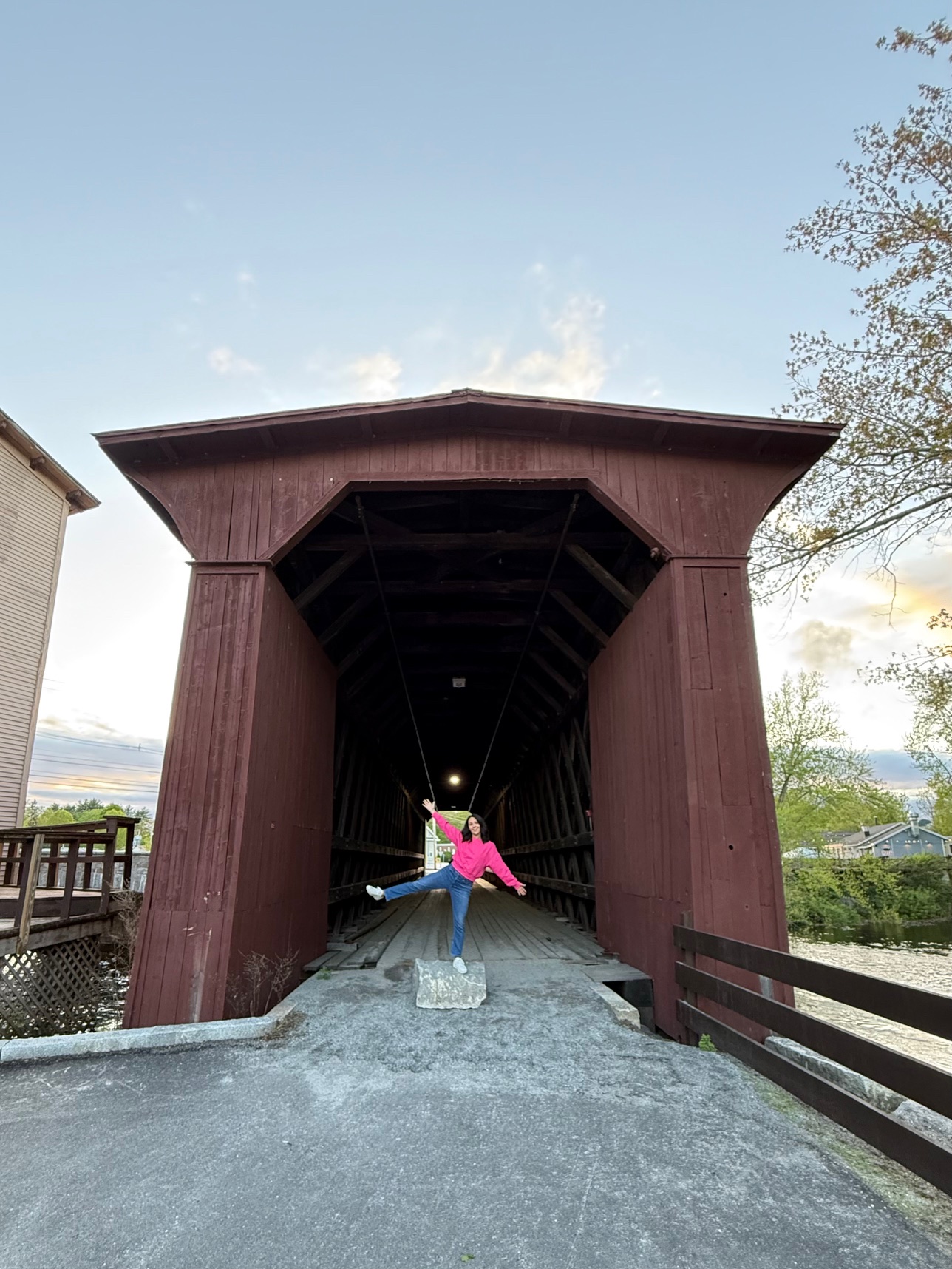
The weather had been rainy my entire time in New Hampshire, but finally cleared up on Saturday evening. Zach, Greg Laraia, and I took a little break from the party to drive back to Gould Hill Farm to see the beautiful view we’d missed on Friday night, and to check out a covered bridge. Lovely!
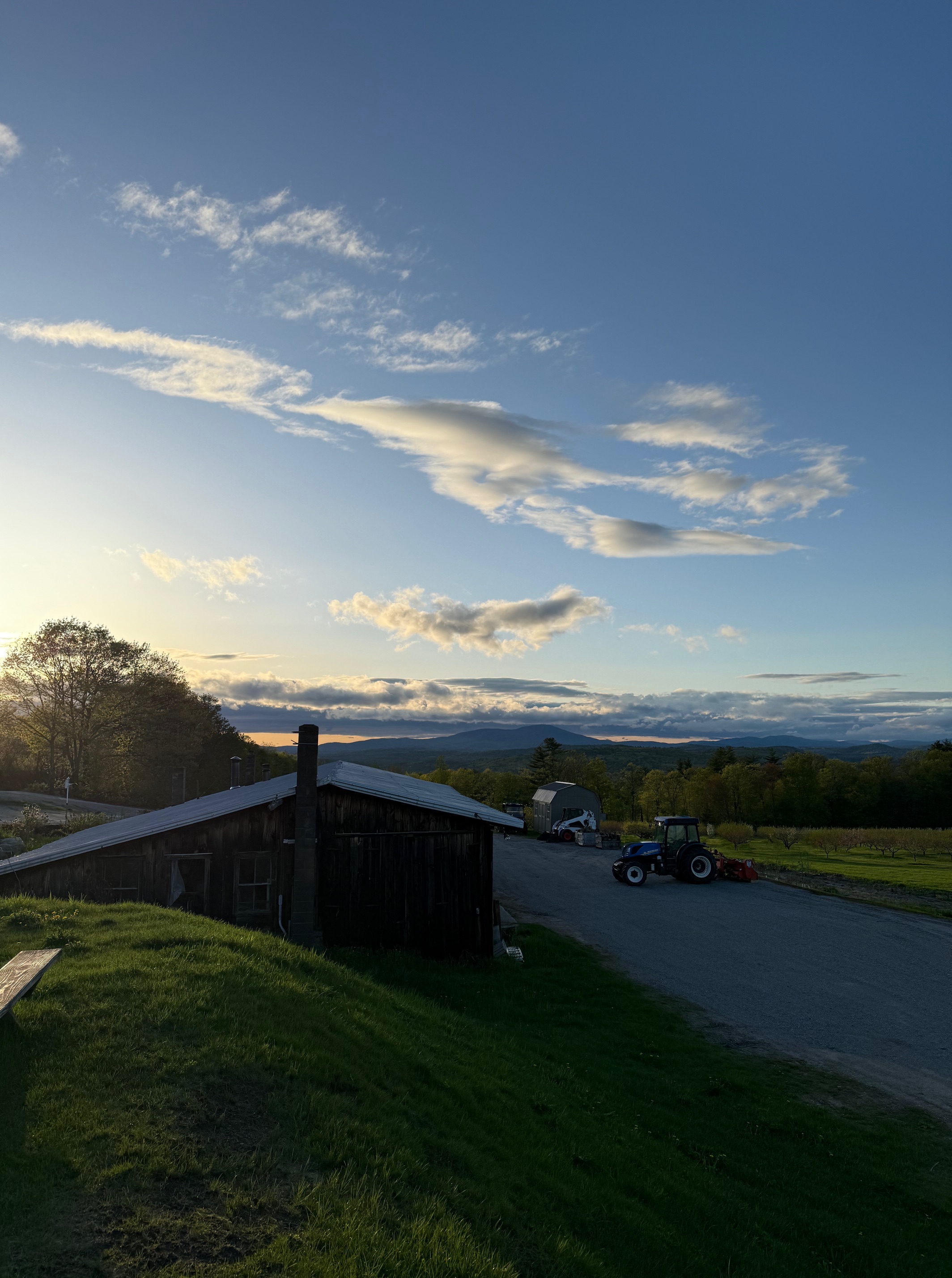
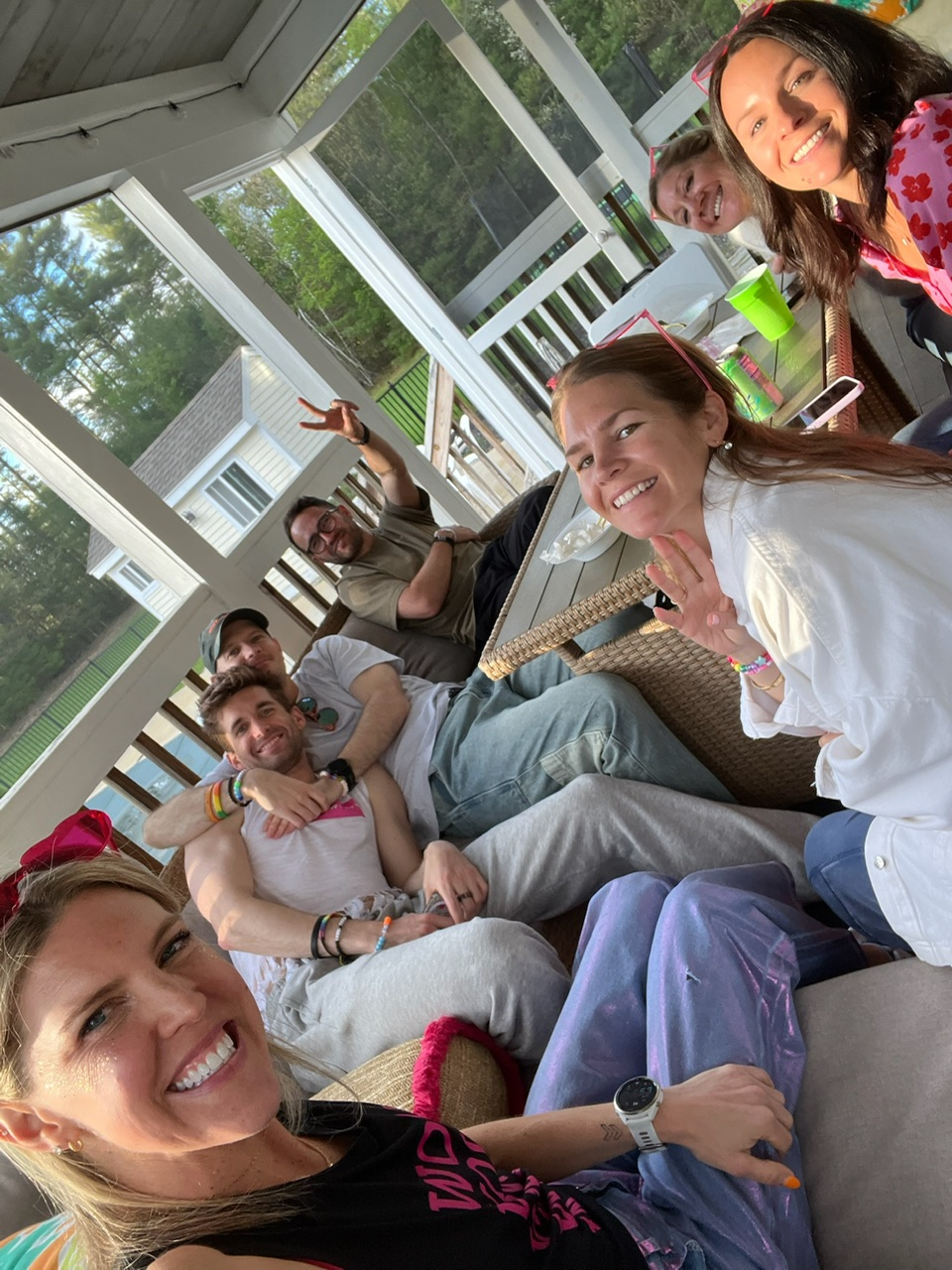
The party went well into the night, then wound back down to the core group that was staying at the house. That chill, sweatpants hangout time was among the most fun, even though I felt like I was quieter than most, given the limited capacity of my social battery. I was just happy to be there!
After helping clean up and saying my goodbyes to everyone past midnight, I was up at 5:30 on Sunday morning to hit the road back to Boston and catch my flight home. I didn’t get a lot of sleep over the weekend, but all the fun was well worth it. I’m so glad I could play a (very small) part in making the weekend special for Ali.

I took away so many lessons from the experience:

Friendship comes in many forms. Embrace them all.

Surround yourself with people who’ll be there for you in the best and worst of times.

Tell those people you love them, early and often.

You can find joy in anything, even laundry.

Celebrate everything enthusiastically and unabashedly, especially birthdays.

And at forty, life’s just getting started.

Experience

My mother-in-law Greta used to shower us with gifts like I’d never experienced before. At Christmas, piles of presents carefully chosen, wrapped and scrawled with our names awaited us under her perfectly decorated tree. Opening gift after gift felt almost dizzying. I was used to my parents asking me what I wanted and sending them Amazon links—a light variation on simply shopping for myself. Greta never asked what we wanted but always seemed to know, and then added a few more things on top of that just because.

Now that she’s retired and we’ve all collected more things than we could use in our lifetimes, she’s shifted her gifting strategy to experiences: ballet tickets, cooking classes. They are things we can keep in a way that don’t collect dust around the house. Things we can revisit again and again in our minds, remembering the way we dressed up in velvet and high heels and shared a special holiday outing, or remembering the smell of freshly whisked chimichurri and steak sizzling on a grill. They represent togetherness, memories—things we want to hold onto forever.

Greta treated me to an incredible Argentine cooking class for my birthday this year.

I liked her strategy so much that I wanted to give my stepdad an experience gift for his 74th birthday. I came across the concert lineup at Chateau Ste. Michelle, a winery in my hometown that hosts a popular series of outdoor shows every summer, and saw Jon Batiste was coming to play the week of his birthday—perfect.

I was in awe of Jon Batiste after listening to him on Armchair Expert and watching American Symphony, a documentary that follows him composing his first symphony while he experiences professional highs (winning a Grammy for Album of the Year) and personal lows (the resurgence of his wife’s leukemia). I watched American Symphony for a second time with my stepdad and we both connected with Jon’s unflinching attitude in the face of life-threatening illness. “You have to confront the brutal reality,” he says, “but at the same time, have completely unwavering faith.”

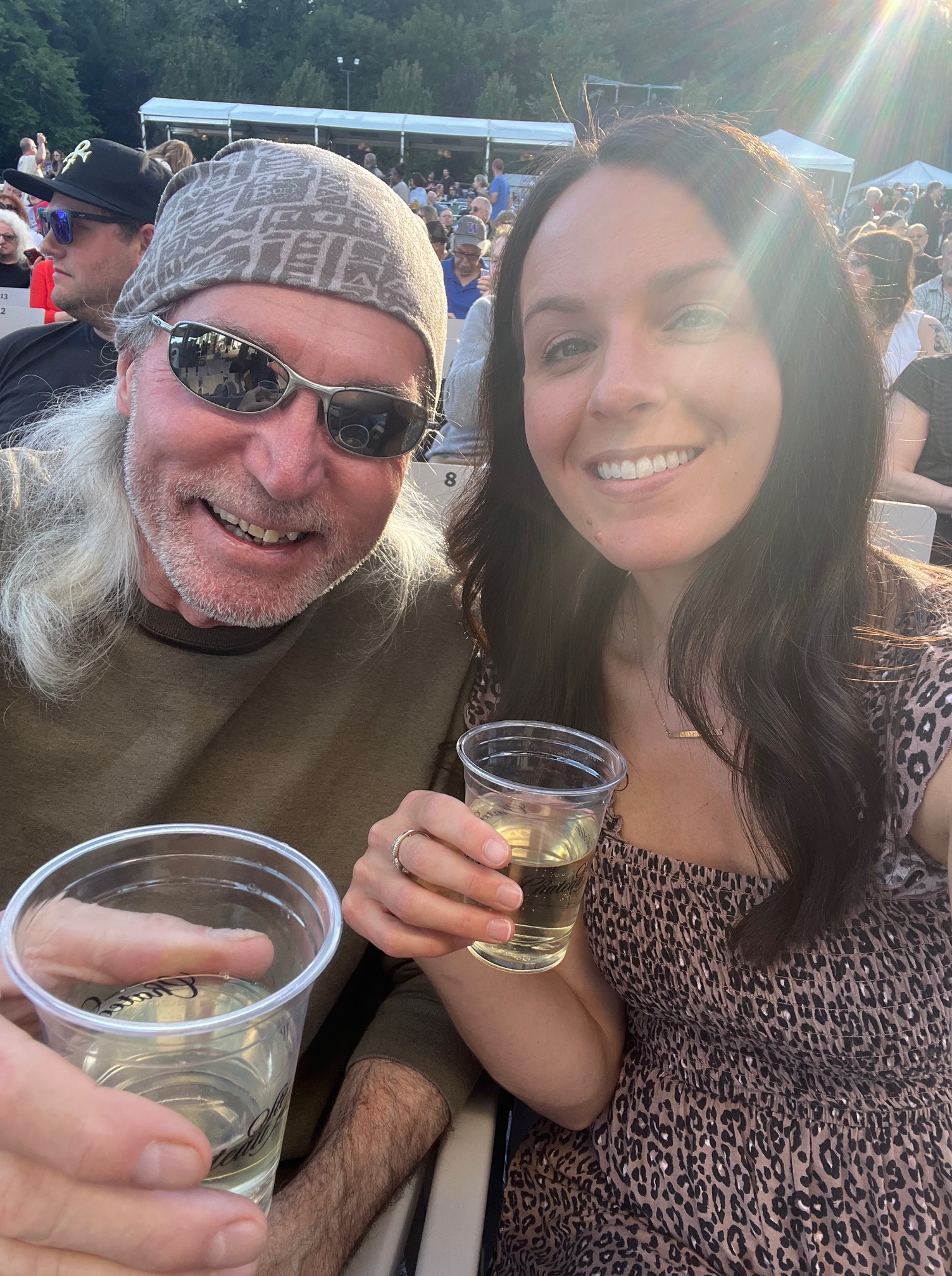
I sprang for great seats—all part of the experience—and my stepdad was thrilled. He even called his brother in Virginia to brag about how close to the stage we were. We arrived when the venue opened and had plenty of time to eat dinner and share a bottle of crisp white wine in plastic cups. My stepdad started singing Bill Withers’ “Lovely Day,” and it was—a balmy, cloudless evening in early June.

“Mom would be so proud of us,” I said. The past five years have been filled with crushing stress and grief. My stepdad is completely devoted to my mom and continues to work a physically taxing job in order to offset the massive cost of her care. Other than working, visiting her and taking care of their house, he doesn’t go out, socialize or do anything enjoyable for himself. He was long overdue for some fun.

With an hour to go before the show was set to start, we bought another bottle of wine—and why not? We were celebrating! My stepdad kept refilling my cup as we waited and chatted with fellow concertgoers. When the start time came and went, we bought a third bottle—not a great call, but not disastrous yet. And a few songs into Jon Batiste’s set, I saw my stepdad making his way to buy a fourth bottle as I stared at him in disbelief and shook my head, “Nooooo!” It’s the last thing I remember.

Before the blackout.

Past midnight, I woke up on the living room floor of my mom and stepdad’s house with my cheek nestled in a spray of vomit. My stepdad wasn’t doing much better. I staggered over to the kitchen sink, washed as much sickness out of my hair as I could, then chugged some water and went back to sleep in an actual bed. When my phone alarm woke me up at 6am, I was still drunk.

I’m thankful we got home safely—we assume security dumped us into an Uber—but I was horribly sick and hungover for the entire next day. I repeated “I’m never drinking again” over and over, and I meant it. I felt ashamed that I missed so much of the concert I’d been looking forward to, and embarrassed that I got blackout drunk at age 37. In my early 20s, this would have been just another night out—something to laugh about with my friends—but as a full-blown adult and mother, I thought I was well beyond that level of poor judgment.

“Mom would be so ashamed of us,” I said as my stepdad drove me to my car after we sobered up.

It scared me to lose control like that. So many terrible things could have happened. I’m lucky the worst of it was feeling sick and full of regret over ruining and missing what was supposed to be a memorable night. If Alzheimer’s has taught me anything, it’s that memories are beyond precious.

I’ve had 160 alcohol-free days to process this experience, and I now give a lot of grace to two deeply hurting people who were just trying to have some fun amidst so much sadness in their lives. Wine gave us a glorious, weightless feeling; we just wanted to hold onto that as long as we could. The problem is that one bottle wasn’t enough to ease the excruciating pain of losing my mom. 100 bottles wouldn’t be enough. Rather than trying to erase the weight of this hellish journey, we need to hold each other up, help shoulder the load.

I put a lot of work into keeping myself afloat and not sinking into depression. I work out, eat (mostly) well, talk to a therapist and write, but I still feel like I’m always teetering on the edge of a cliff, vulnerable to being knocked over the edge by a single blow. Misusing alcohol felt like giving up all my hard work and throwing myself off the cliff. It was not compatible with who I want to be and how I want to live.

Since this experience, I have not once wanted to drink alcohol again. My choice to stop drinking has freed up so much mental space. I no longer have to think about whether or not I’ll drink in any given situation; how much I’ll drink; whether or not I’ll be able to drive; whether or not I’ll feel sick or hungover afterward. I thought I’d miss the social lubrication that alcohol provides, but I haven’t at all. I’ve actually enjoyed going into situations 100% as myself, summoning my own courage to be friendly and talkative and interesting around people I don’t know very well.

I don’t describe myself as “sober” since I do like to take half a cannabis gummy—to relax or to enhance a funny movie, not when I’m sad—a few times a month. I say I’m “free from alcohol” because that’s exactly what it feels like.

I have enjoyed this freedom during a girls’ trip to Las Vegas to see Adele in concert; during a 50-mile bike ride that included several stops at dive bars; at a wedding with an open bar; at dinners, birthday parties and still more concerts where alcohol is flowing all around me. I have no problem if others want to drink and am happy to be the designated driver. I have discovered a new appreciation for sparkling water, root beer, iced tea, non-alcoholic beer and some really tasty mocktails. I have never felt left out. I have never regretted not drinking.

At 37, I know myself quite well. I know what is for me and what is not for me. It feels really great to cut things out of my life that are not for me, making room for all the better things. There are so many better things.

In early September, my stepdad and I returned to Chateau Ste. Michelle to enjoy a Gregory Alan Isakov concert free from alcohol.

Someone blames me for what happened last time.

It was another lovely day. We sat near two-time Oscar-winner Hilary Swank! I remember it all, I drove us home, we weren’t sick. A fun memory firmly in the bank.

Mom would be so proud of us.

I am so proud of us.

A New Path

Today marks five years since my mom’s Alzheimer’s diagnosis and the second time I have quit my job in pursuit of a dream.

The first time was in 2011, when I quit my proofreading job at an ad agency to travel around the world solo. My trip ended after three months when I badly sprained my ankle in Thailand. I came home, reunited with Aaron, got a job as a copywriter at a tech startup and got engaged. Things were starting to sour at that job by the time Aaron and I got married in 2014, and when we wanted to start trying for a baby in 2015, I knew I had to find a different job first—one I’d actually want to go back to after maternity leave.

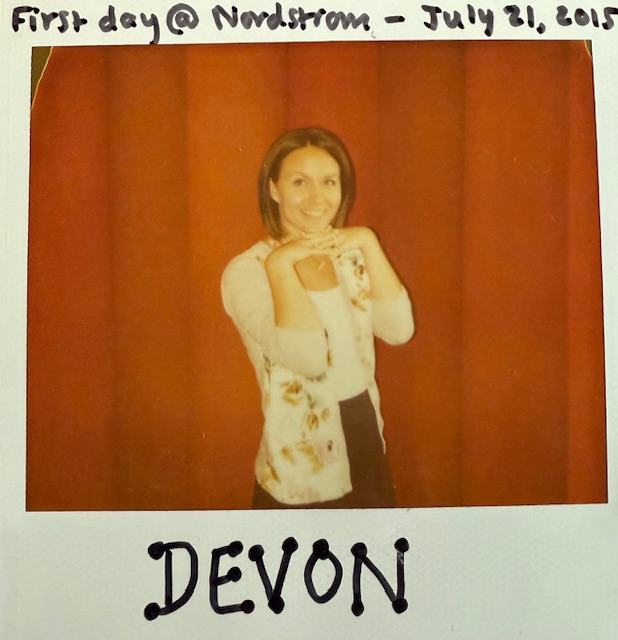
My former boss—who had already escaped the sourness—actually found the Nordstrom job listing and sent it to me: “You’d be perfect for this.” I started my new job writing product descriptions for Nordstrom.com in July 2015 and was pregnant by August.

Around my daughter’s first birthday, I moved to the marketing team to write web campaigns and emails, which is what I’ve been doing ever since. My career at Nordstrom has spanned Evie’s entire life, including in utero. Until now.

I wrote in March about feeling destabilized after layoffs impacted many of my co-workers and I was moved to a different team. It happened at the same time my mom was kicked off hospice, and both sudden changes left me feeling helpless and abandoned. I tried to focus on being grateful I still had a job and dove into my new role, but it quickly became clear it was not a good creative fit for me. I starting looking at job listings and even applied for some, but mostly just wished I could go back to my old team.

In May, my old team was struggling—they’d lost me, but not my workload—and reached out to my new team for help. I talked my way into being loaned back to my old team to help out through the busiest time of year. When I was told I had to go back to the new team at the end of September, I thought about how unhappy I was doing work I didn’t enjoy and how relieved I felt when I resumed the work I do enjoy. The only thing running through my mind, over and over, was Kamala Harris’ campaign slogan: “We are not going back.” It was time for me to leave.

There were many conversations about my decision over the course of a few weeks, but my gut reaction remained the same, and I submitted my resignation in mid October. I knew in 2015 that a big change was necessary, and I knew it again now. Back then it was so I could become a mother. This time, it’s so I can become a mother again, but to a different kind of baby: a book.

In January, I started writing a book proposal and researching the process of querying literary agents. I started to believe I could actually do this big, scary thing I’d always wanted to do, but never felt confident enough to try. Then everything flipped upside down in February and I put the project on the back burner. But all year long, that book has been tugging at my brain. I’ve been shaping the narrative and writing chapters in my head. I’ve been dying for the time to finish the proposal and start making my dream a reality.

I’m tremendously lucky to have Aaron’s support in leaving my job and throwing all my energy into writing this book and getting it published. When I asked him if he was okay with the idea, it took him about half a second to say, “Of course.” I think he and my close friends are sick of hearing me talk about it and thrilled that I’ve finally got the guts to do it. Their instantaneous and unwavering support has been invaluable. The hardest part of all of this has been giving myself permission.

Just as in 2011, it was incredibly difficult to walk away from the security of my job. If I hadn’t been moved to a different team, I probably never would have left. I believe in signs from the universe and feel the move put me at a crossroads and forced me to make a choice: Follow the path of safety and regret, or forge a new path of uncertainty and personal fulfillment.

Before I submitted my resignation, I took the dogs on a long walk so I could think about everything. We took a different route than usual and happened upon a house with several painted rocks nestled in a planter next to the sidewalk. My eyes went straight to this one.

I later returned to claim this rock, and I’ll keep it next to my laptop as I write and face uncertainty and write and deal with rejection and write and hopefully get a big win eventually. I know in my bones I’ll never regret trying, and that’s enough for me.

So what’s the deal with this book? It’s a memoir about my mom, of course, and about me as well. I’m far from the first person to feel compelled to write about a dying or dead parent, but I’ve struggled to find a book that captures the unvarnished experience of early onset Alzheimer’s. And five years into this, as I continue to sort through hundreds of her photos and letters—my mom kept everything—I’m learning more about her life in the only way I still can.

She hid the most tender parts of herself even when she was well, so I only knew the tough exterior she chose to show the world. A lifelong quilter, she spent thousands of hours stitching her stories with fabric and thread—a language I don’t speak. I’ll share what I learned when dementia began to unravel the truths she sought to keep hidden. I’ll also recount my own truths I’ve never written about before. If the ravages of Alzheimer’s await me, I want my daughter to know who I really am.

It’ll be a memoir about autonomy won and lost; about self-determination, resilience and the power of the mother-daughter bond; about all the joys and sorrows that are sewn together to tell the stories of our lives—and make them worth remembering.

I have no illusions that this will be a quick, easy or even profitable journey. Luckily, I’m well trained in mental and emotional endurance. My plan is to put my head down and write, write, write through November—which, coincidentally (or not?), is National Novel Writing Month—and see how the story takes shape, then finish my book proposal and start querying literary agents in the new year. I only need a few sample chapters to send out with my memoir proposal (whereas novels require a completed manuscript), but I want to get into the habit of writing every day and honing the best material.

It would be so chic and cool to not tell you about any of this and then suddenly post about signing with an agent or scoring a book deal, but my biggest wins come from declaring I’m going to do something that feels scary and impossible, then using the adrenaline from making my goal public to power through and actually do it.

And I could really use your support and belief in me. I know a number of you have been following along with my story for more than a decade. I hope you’ll come along as I write the next chapters.

New-Year Goals & The Case for Damp January

On New Year’s Eve, I deleted Instagram, Facebook, TikTok and Reddit from my phone and resolved to take January off from social media.

I found myself spending hours a day on these apps, endlessly scrolling in search of… what? Staying so up-to-date on other people’s lives and constant commentary left me feeling empty. I resented the nagging drive to share content on Instagram Stories, and the guilt I felt if I didn’t post about something — a friend’s party, my daughter’s dance recital — in a timely manner, or at all. I wanted to shut down my virtual world and live entirely in the real world for a month.

The first few days, I compulsively picked up my phone whenever I wanted to procrastinate from working, and it took me a second to realize I didn’t have any of my go-to apps to open. Instead, I checked the weather a lot. At any given moment, I could tell you the exact temperature and when it was going to rain next. I allowed myself to scan the headlines of People.com to get my celebrity news fix, and to Google Taylor Swift to see what she was up to. I also gave myself unlimited access to the New York Times app so I could read news stories and, you know, learn stuff. I don’t get sucked into those resources or lose hours to them over the course of a day like I do with social media.

Soon I reached for my phone less and less often. Instead of opening it, I’d just click the side button to see if I had any texts or missed calls. If not? Back to work, or whatever else I was doing.

My 9-to-5 window became way more productive. I got ahead on my work and had plenty of time to exercise most days at lunchtime. In my off time, because I wasn’t concerned with what everyone else was doing, I had the mental space and clarity to think about what I want to do.

I’m super inspired by the musician Jon Batiste and highly recommend listening to his interview on “Armchair Expert” and watching his documentary “American Symphony.” This quote from the podcast stood out to me:

“If you stop seeing yourself, you stop being yourself, and then you can’t create the thing that’s the most resonant that only you can create.”

Jon Batiste on “Armchair Expert”

I feel more like myself than I have in a long time, and I’m excited to have the time and motivation to create. My goal in 2024 is to write and submit at least one essay or article each month for publication somewhere: a newspaper, magazine or website other than mine.

I wrote two pieces in January and have good ideas for a third and fourth. I submitted one piece and got my first rejection, which just put me one “no” closer to a “yes.” I reworked the piece and submitted it elsewhere.

I’m really excited about the second piece, but need to hold onto it until the time is right. If I can’t find a home for it, I’ll eventually publish it here. That’s the great thing about this goal: The only thing I stand to lose is a bit of ego, and nothing I write will go to waste. I already make a living writing, so I don’t need the validation of getting published to know that I’m a good writer. It would just be icing on the cake; a bit of life extra credit.

Even though I don’t have an objective win yet — that is, a published piece — I’m riding a high from accomplishing what I wanted to do in January, and I’m driven to keep going.

I’m not eager to reinstall any apps to my phone. When I do, it’ll just be Instagram, and I’ll turn off push notifications. I want to use it mindfully, not whenever the app tries to suck me in. And I’ll probably mute or unfollow a bunch of accounts. There’s just a handful of people I found myself wondering about in January, and I only want to spend time keeping up with those I’m truly invested in.

***

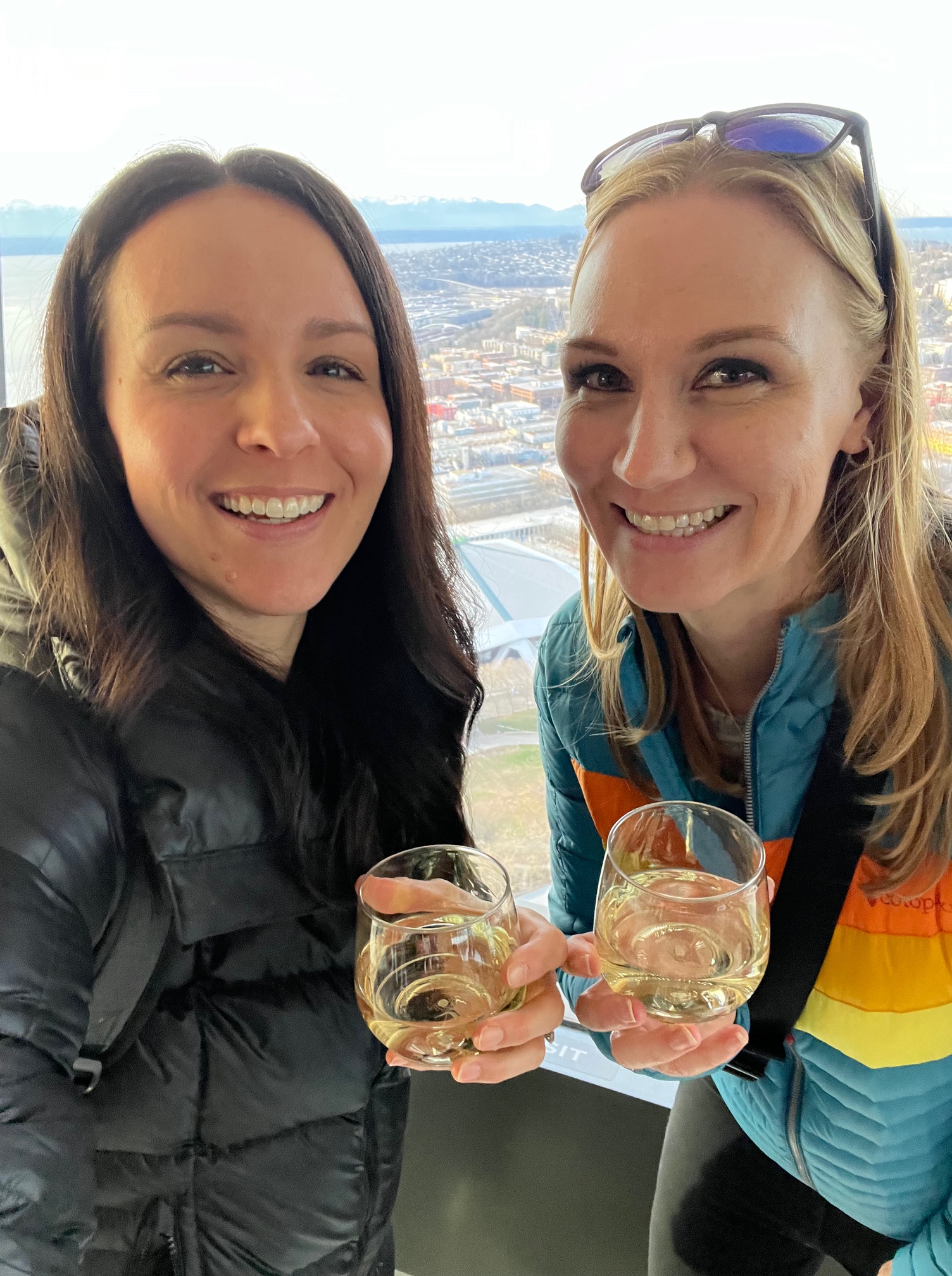
I also set out to do Dry January — no alcohol for the entire month. I always enjoy a reset after the boozy holiday season. This time I made it to January 15 — Martin Luther King Jr. Day — when Evie and I went with another family to the Pacific Science Center, then found ourselves at the top of the Space Needle taking in a gorgeous 360-degree view of Seattle. The other mom — my friend Kyra — was going to get a drink from the bar, and I thought it sounded pretty fantastic to watch the sun start to set with a bit of sauvignon blanc in hand. We toasted to being Dry January dropouts. (At least the wine was dry!)

I enjoyed it without guilt. Because I’ve done Dry January many times before, I don’t need the validation — again! — to know I can do it. Now the goal is more about drinking mindfully and not falling into a pattern of drinking more than I really want to just because alcohol is around. I enjoyed three more drinks in January, each time while I was out doing something fun with people I love.

When it comes to what I put into my body, moderation and intention feel good and healthy; rigid restriction does not. I want to be in control of my life, but also to enjoy it. I know all too well that it can be much too short.

If you’re a Dry January devotee, good on you — especially if it’s the first step on a path to sobriety. But if you enjoy drinking in moderation, consider Damp January (or February, or whenever). Shift the focus to intention, and don’t worry about failing at an all-or-nothing goal.

I’m lucky and grateful to be able to have one drink, enjoy it, then stop. (This was not the case in college, but luckily I grew out of that.) I find Instagram to be far more addictive. Is it a thing to be social-media sober? I’m not willing to entirely give up on sharing photos and keeping up with online friends, so I’ll work to find a balance.

***

I’m sure some people thought my unexplained absence from Instagram meant something happened with my mom, but she’s still with us and nothing much has changed. She has been re-certified for hospice a second time and seems just a little worse every time I see her. I’m moving forward with life and even have a few trips planned this year; I’ve given up on planning for the unknowable.

Less drinking. WAY less scrolling. Much more writing. That’s my 2024 so far.

2023 New York City Marathon Recap: Part 2

Start with Part 1.


When I launched my Alzheimer’s Association fundraising in April, I declared my intention to run a PR in New York City. “I ain’t flying across the country for a fun run!” I wrote.

Well, life happened, and I indeed flew across the country for the most fun run I’ve ever done—and I wouldn’t have had it any other way.


I jumped into training at the beginning of July with speed work, strength, the whole nine yards. I was determined to make this my best training cycle ever. But a few weeks in, I went for an easy five-mile run with my friend Hallie and noticed my right knee wasn’t tracking properly. I stopped to stretch, thinking it was due to a tight muscle. I was able to complete the run without pain, but my knee still felt off.

This strange feeling continued for several runs until July 26. Five and a half miles into a six-mile run, I felt sharp knee pain and immediately stopped to walk the rest of the way home. My knee felt fine just walking; it was the impact that made it hurt. The next morning, my knee started clicking and popping frequently—but painlessly—with normal movements when it never did before.

I visited my chiropractor hoping he’d be able to fix me, but he recommended I see an orthopedic surgeon to make sure it wasn’t anything serious. On July 31, an orthopedic surgeon diagnosed me with patellofemoral pain syndrome, or runner’s knee—a common injury caused by overuse and/or weak thigh and hip muscles, among other things. He wrote a referral for physical therapy and advised me not to run for six weeks.

At the same time, we were enrolling my mom in hospice care and thinking she was going to die within weeks. Take running away from a runner on a good day and it’ll mess with their head. Take it away when they’re in crisis and it’ll fuck ’em right up.

I started physical therapy on August 3 and told Julya, my PT angel: “I’m good at following directions; I’ll do whatever you say. Please, just get me to the New York City Marathon start line, and I’ll figure out how to get myself to the finish line.”

Julya and my other PT angel Stephanie worked with me twice a week, teaching me a full routine of foam rolling and strengthening exercises. They taped my knee with KT tape and showed me how to do it myself at home. Luckily, I was able to ride my Peloton without pain, so I started doing Power Zone rides with Matt Wilpers to try to keep up my cardio fitness.

Only a week into PT, Stephanie watched me run on a treadmill for a few minutes and, when that didn’t hurt, encouraged me to try a run the next day. I was thrilled that she believed in running through recovery as long as there was no pain. I was able to complete the run—but then picked up a cold from Evie and got super sick. One step forward, two steps back.

When I was finally healthy again, I felt really out of shape and struggled through a few Peloton classes and one or two runs per week. I worked my way up to a 10-mile run at the end of August, which felt like a huge victory—but far from where I needed to be to train for a marathon.

All I really cared about were getting in quality Sunday long runs along with a few shorter weekday runs, and I managed to do 12 miles, then 15 miles. My knee was still clicking and popping like crazy but was pain-free. However, my other leg developed painful posterior tibial tendonitis from ramping up mileage too quickly and compensating for my weaker leg, so my PT team showed me exercises and massage techniques to keep that at bay.

On September 17, I ran 17 miles and finally booked our flights to NYC. I knew that day that I could run the marathon—not a PR by any means, but I could get from the start to the finish. And over the following six weeks, I successfully completed what felt to me like the bare minimum of training: four days of running with one hilly run per week, zero speed workouts, topping out at 40 miles during peak week.

My knee actually didn’t bother me at all, but the tendonitis was a daily battle. I continued going to PT once a week through September just for that. Run, massage, stretch. Rest as much as possible. Just hang in there, please.

This race didn’t need to be pretty. I just needed to do it for me and prove that grief could not stop me. Runner’s knee could not stop me. Tendonitis could not stop me.

After an emotional year filled with uncertainty and the weight of making such hard decisions about my mom, I needed running, this thing I love so much, to be my anchor and beacon of hope. I needed a day of pure happiness and sunshine and smiles.

Somehow, I got it.


BOOM went the start cannon, and it was time to RUN!

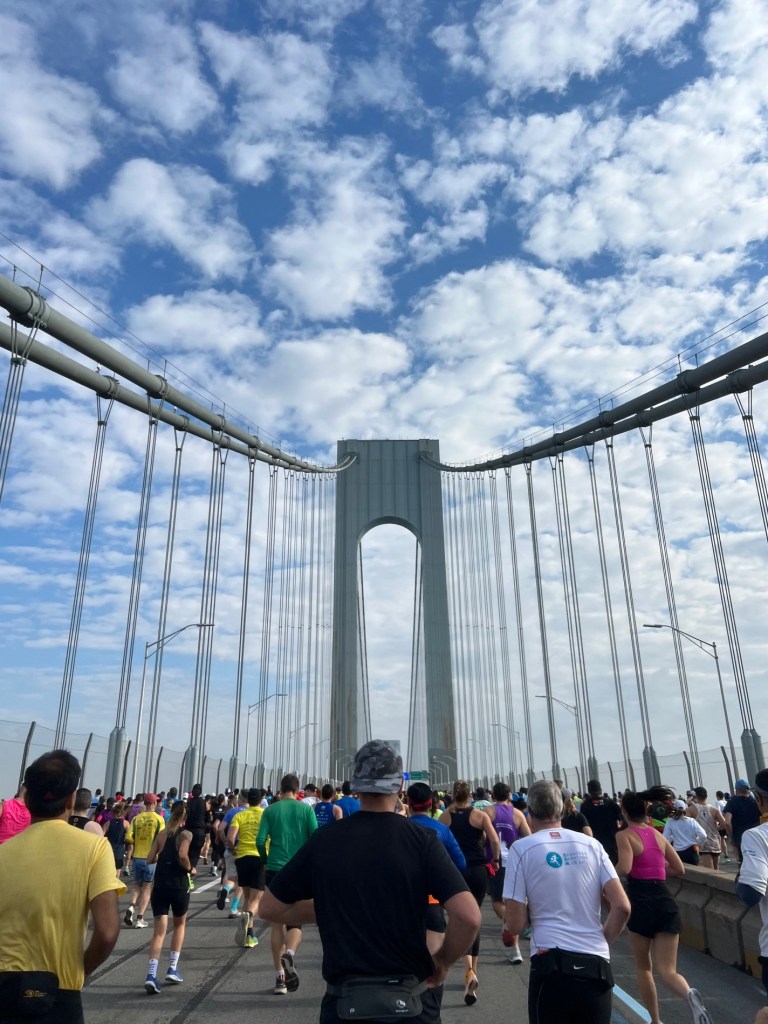
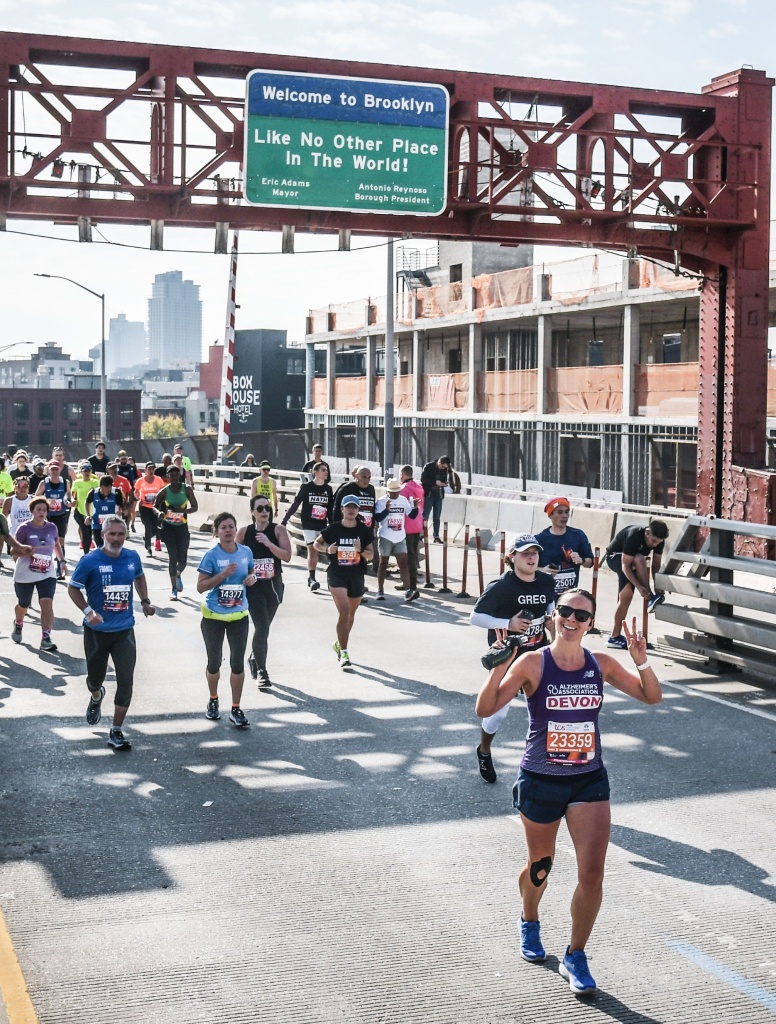
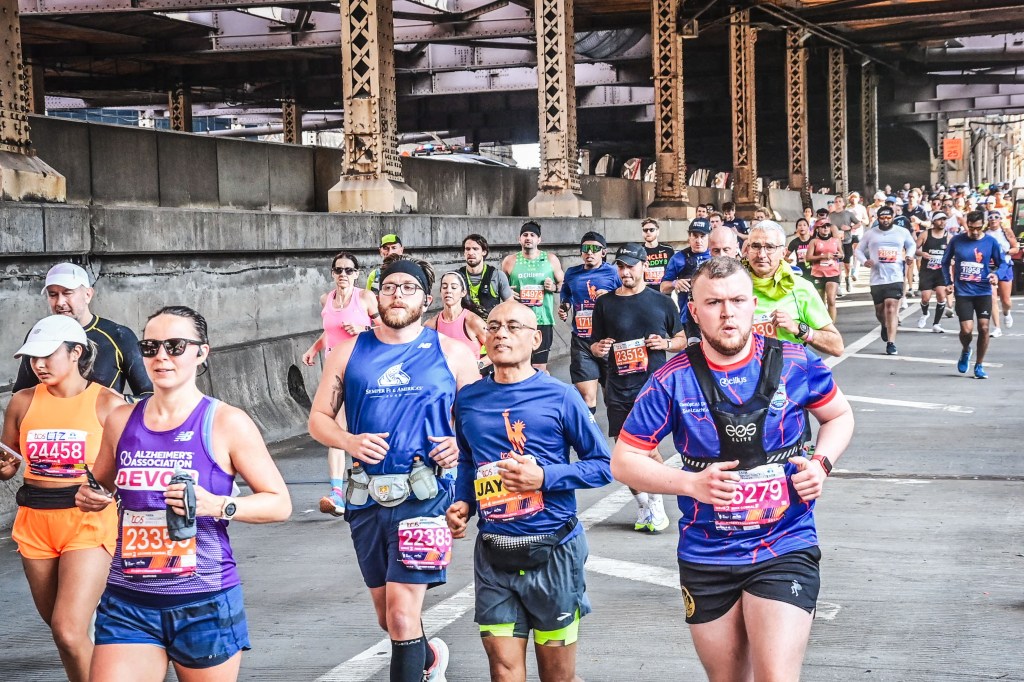
I smiled like a fool all the way across the Verrazzano-Narrows Bridge, as one should when they’re running the greatest marathon in the world.

I smiled in disbelief, gratitude and pride. I admired the view of the Manhattan skyline to my left, stared in awe at the suspension cables ahead and soaked up the energy of exuberant runners all around me. This was what I’d fought so hard for. Nothing could ruin this run!

Well… it was a little warm.

The sunshine that had felt so nice in the charity village felt a bit hotter now that I was running up a decent incline in the first mile of the race. I felt very grateful for the handheld bottle I’d purchased at the last minute after hearing Jess Movold, Meghann Featherstun and Meaghan Murray-Neuberger talk on their pre-race Instagram Live about how they all planned to at least start the race with a handheld. I took sips of Nuun and thought of Emilia Benton emphasizing the importance of electrolytes the previous morning during our shakeout run. I had three more Nuun tablets in a baggie tucked into the narrow pocket of the handheld and figured it would be a good idea to use one per hour.

It felt lovely to run downhill in the second mile on the bridge, and I made sure to keep my pace feeling easy; I didn’t want to destroy my legs when I knew there were many more hills to come.

I was pleasantly surprised that I had plenty of room to run. I worried that a race of more than 50,000 runners would feel claustrophobic, but having each wave separated into three colors—orange on the left side of the bridge, blue on the right side and pink on the bottom deck—helped keep us from running on top of each other.

I had also been worried about starting with faster runners since I registered with 3:45 as my estimated finish time, but I was able to go my own pace and not get swept up. Plenty of people ran slower than me and plenty of people fully stopped to hop up onto the median of the bridge and take pictures.

It was thrilling to make our first borough transition into Brooklyn. I knew I’d see Aaron there somewhere, since he’d rented a Citibike and ridden to Brooklyn first thing in the morning.

The spectators in Brooklyn were a welcome sight, and I busied myself searching their faces for my husband. I saw him around mile three, between miles four and five, and between miles seven and eight. It was so exciting to see him each time!

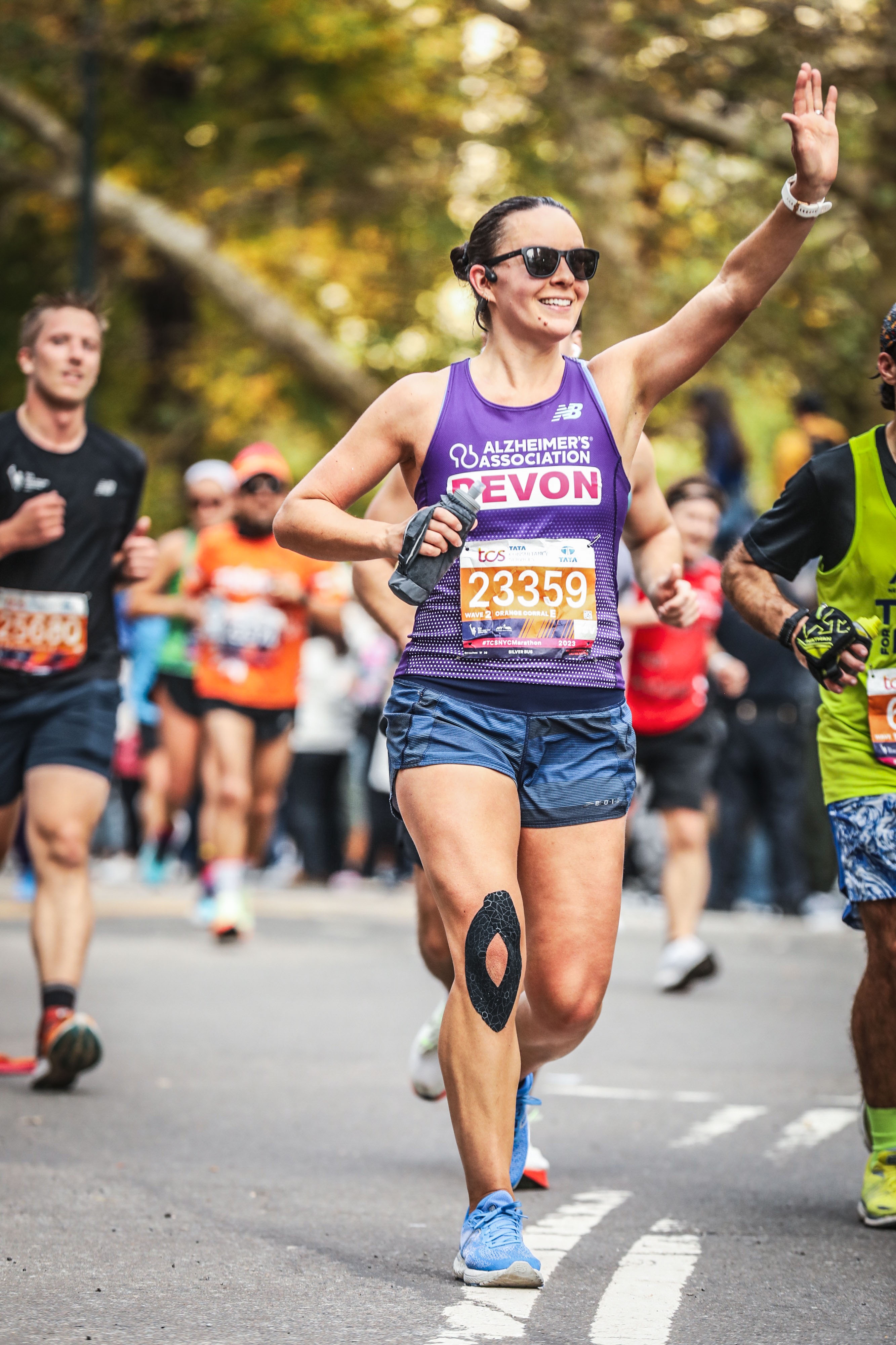
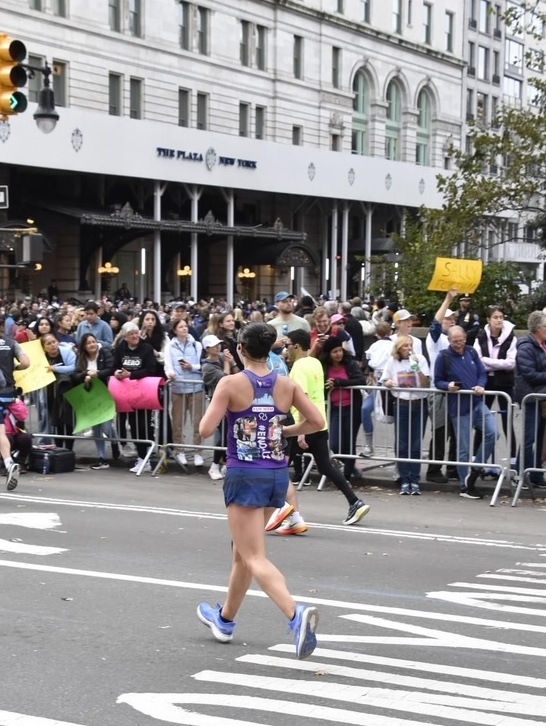
But the crowds were entertaining in their own right, cheering, blasting music, holding up signs and calling out to everyone who had their name written on their shirt. This was my first marathon with DEVON printed on my singlet and I felt like a rock star. I had 1989 (Taylor’s Version) queued up on Spotify so that I could easily start listening to music whenever I wanted, but I didn’t need to for a good long while.

In different parts of Brooklyn, I heard music that reminded me of my mom and made me feel like she was with me. A man sang “Take Me Home, Country Roads” into a microphone, which my mom used to sing to me and now I sing to Evie at night. And a bagpiper took me back to my childhood days of Scottish Highland dancing—a passion of my mom’s that I promptly quit the moment she let me. I got choked up both times, and many more random times throughout the race, just feeling very lucky and supported.

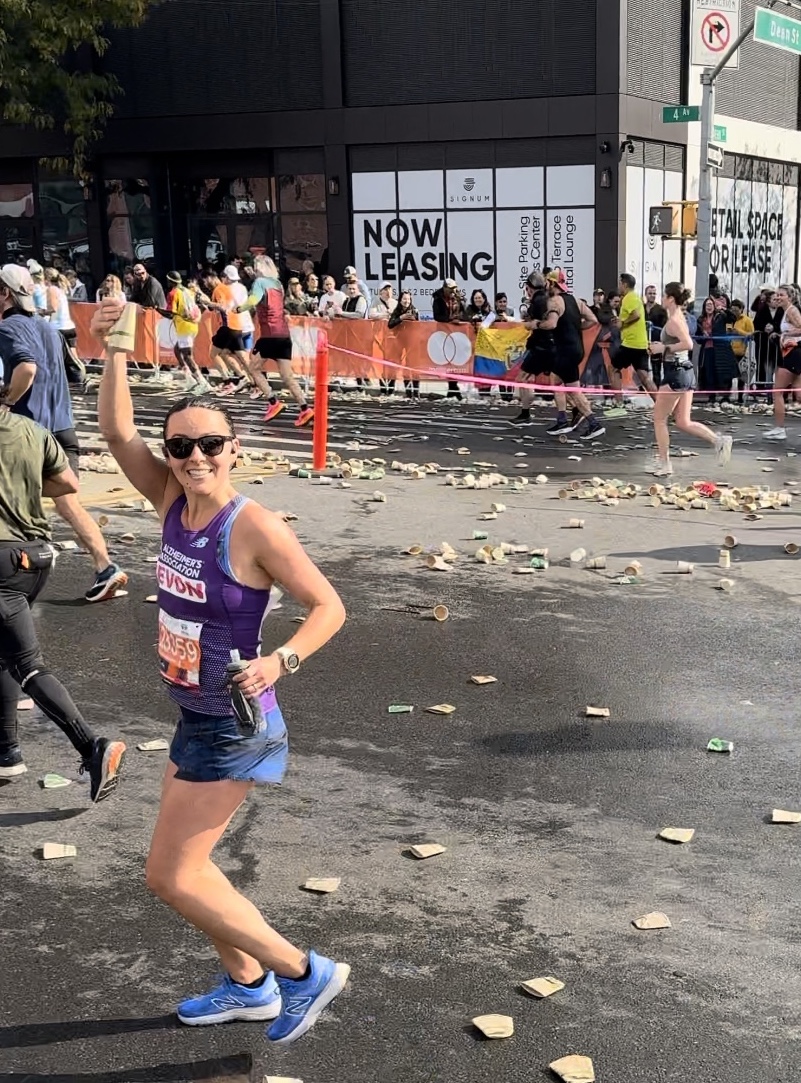
I stayed on top of my fueling and hydration, eating a UCAN Edge every four miles (about every 40 minutes, based on my pace) and grabbing water at every station to refill my bottle and drink an extra cup. I dropped another Nuun tablet into my bottle when I hit one hour of running. I had felt the hint of an urge to pee in the first few miles of the race, but figured it would go away and it did. No bathroom stops—hooray!

Brooklyn was a party the whole way through, but it became a real rager starting in mile eight. The race course narrowed to just one lane of the road, so spectators were super close to us on both sides and they were wild. It reminded me of the Tour de France, like one of those little mountain towns where people absolutely lose their minds as the world’s best cyclists race to finish a stage. I’d read about the crowd support at the NYC Marathon, but nothing can prepare you to actually experience it. In the words of Rihanna / Nils Sjöberg / Taylor Swift: “Baby, this is what you came for.”

After that, I think I turned on my music for the first time running through a quiet Orthodox Jewish neighborhood. Listening to “Welcome to New York” in New York while running the New York City Marathon? Chef’s kiss.

I crossed the half-marathon timing mat in 2:08:05 and felt great, both physically and about my pace. I was treating it like a long run and keeping my bus seat-mate’s advice about running on a leash for the first 18 miles in the back of my mind. I hoped to have the energy to bust through the wall at mile 20 and maybe even pick up the pace a little after that. (LOL!)

Note who’s right in front of me in the photo above: a woman named Janet, of course!

After crossing the Pulaski Bridge, we were only in Queens for a few miles, and I have no distinct memories of it. I did stay with a friend in Queens during my first-ever trip to NYC in 2011, so I was like, “Hey, I’m back!”

Then the Queensboro Bridge—the second longest in the race—carried us into Manhattan. I listened to more music and marveled over how 1989 is just front-loaded with banger after banger. I’m pretty sure I heard “Out of the Woods” on this bridge and it really hit.

Coming off the bridge, I heard the infamous First Avenue wall of sound and searched the crowd for my dad, since he said he’d be at mile 16. There were sooo many people, though, and I didn’t see him. Turns out the marathon app was a bit wonky and showed me in a different spot than I actually was, so we missed each other. Oh well! The search kept me busy for the first few miles of the long trek up First Avenue.

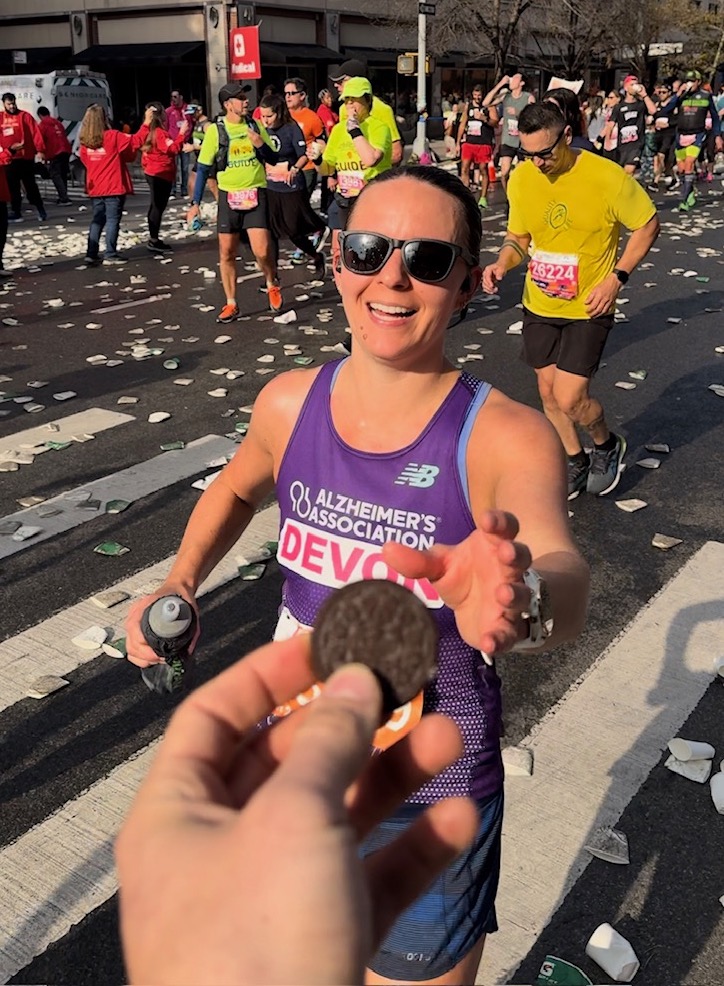
I saw Aaron again at mile 17 or 18, and he gave me an Oreo, per my pre-race request. The problem was that my stomach felt great and I didn’t want to potentially mess it up with a lot of sugar, so I just held onto it for a few miles before tossing it.

It was not hot, per se, but warmer than I’d like and I remember looking for shade to run in at this point and for the rest of race.

First Avenue seemed to drag on forever, so it was awesome to see the Alzheimer’s Association cheer squad at mile 19. They tracked every single one of the runners on our team and gave us a hero’s welcome as we passed by—so lovely.

Over the Willis Avenue Bridge to hit miles 20 and 21 in the Bronx—great music there!—then over the Third Avenue Bridge to head back to Manhattan for the final time. Someone had a sign that said “LAST DAMN BRIDGE!” and thank goodness, because I was wondering.

My legs started feeling really dang tired in Harlem. I started walking through water stations and treating myself to a little walking here and there where there was shade. I started dumping a cup of water over my head at each station, too.

I saw Aaron again at mile 23, took another Oreo (only ate half) and told him I was taking walk breaks. He said, “Not anymore! 5K left, go, go go!” I wanted to run the rest of the way, but my little walk breaks felt sooo nice. And the race atmosphere was so incredible—a once-in-a-lifetime experience for me—that I didn’t mind taking a bit longer to enjoy it.

Fifth Avenue was kind of a blur. I ran out of Nuun (had dropped the last two tablets into my bottle at the two- and three-hour marks), so I started drinking Gatorade at the aid stations. As diligent as I tried to be about electrolytes, I could feel a crust of salt on my temple and knew I needed more. I ate my last UCAN Edge at mile 24. We entered Central Park, which was super cool, and I tried to limit my walking after that.

My watch was measuring more than a half-mile ahead, so seeing mile 25 pop up on my watch but knowing I had so much farther to go until the actual mile 25 marker was torturous. I wish I’d hit the manual lap button at each mile marker instead. Next time!

I thought my dad was going to be at mile 25 and was bummed when I didn’t see him. I didn’t want him to have come all the way to NYC and miss me completely during the race. I did see my Instagram friend Grace, though, which was unexpected and awesome!

I picked up the pace as much as I could and continued to scan the crowd for my dad. People were packed in like sardines and I had no idea how to spot him, but then I realized he’d probably be the only guy wearing a mask. Sure enough, closer to mile 26, I spotted him wearing a blue surgical mask and smiled the biggest smile. I ran closer to him and waved, then rode that burst of energy toward the finish line.

I saw a sign that said 800 meters to go, but that last stretch felt more like 8 miles. I was on a tear and tried to pass as many people as I could. It took forever, but I finally saw the finish line ahead and couldn’t believe it—I was actually going to finish the New York City Marathon.

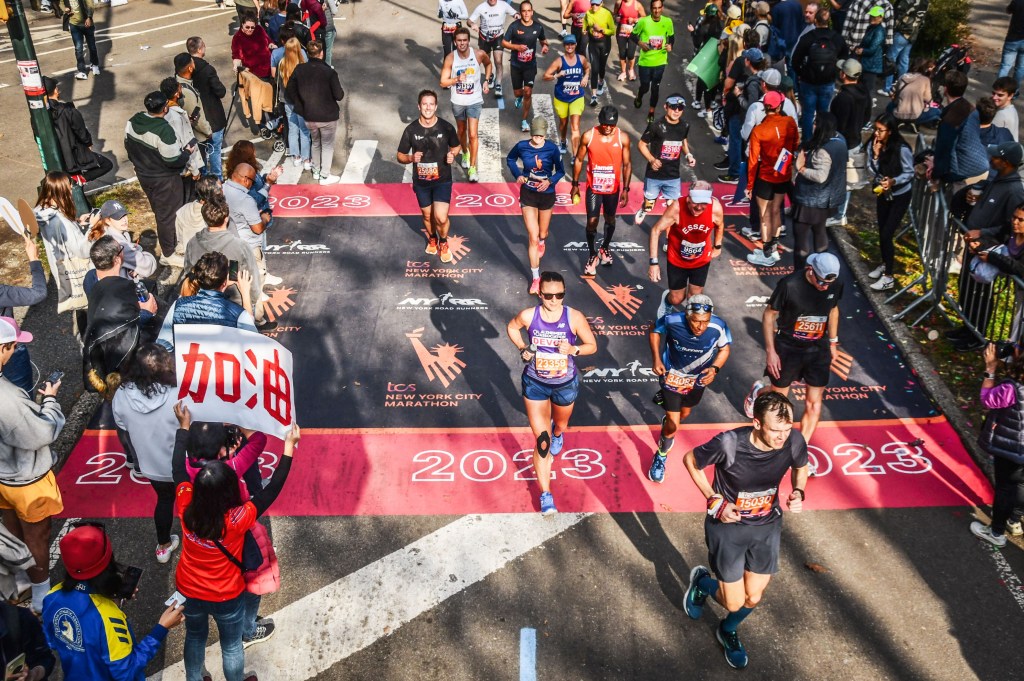
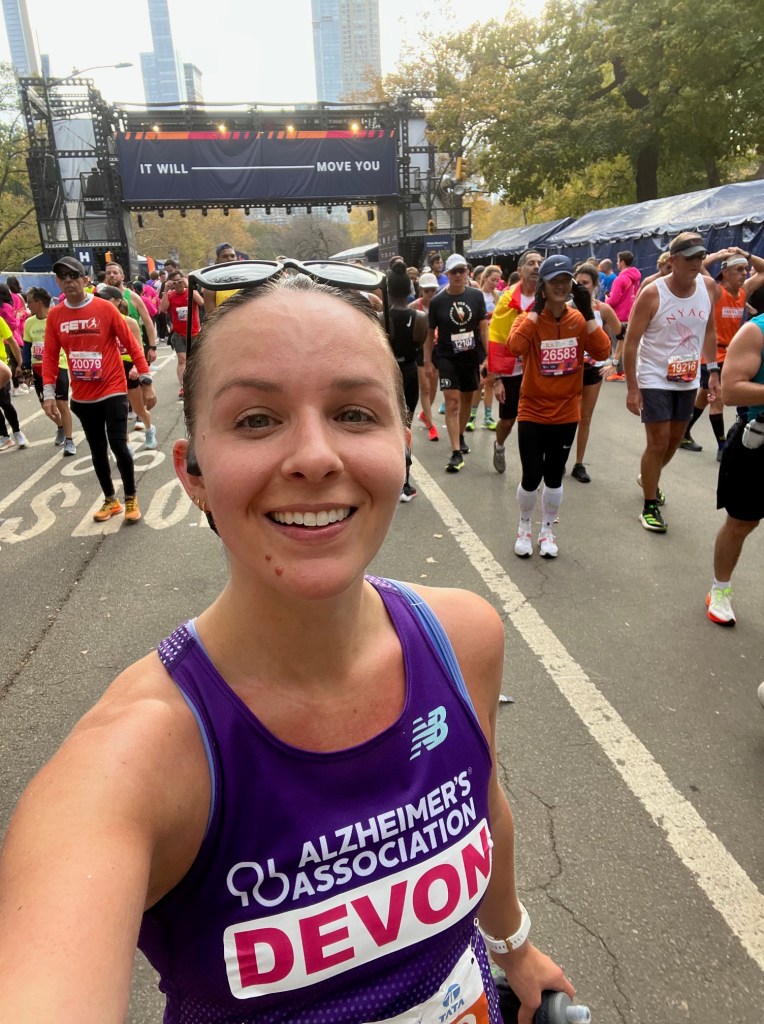
I pushed my sunglasses on top of my head, smiled my biggest smile, threw my arms up and crossed the timing mat in 4:22:07 (10:00 average pace). I had hoped to finish under 4:30, so I was thrilled!

DONE. So. Freaking. Happy!!!

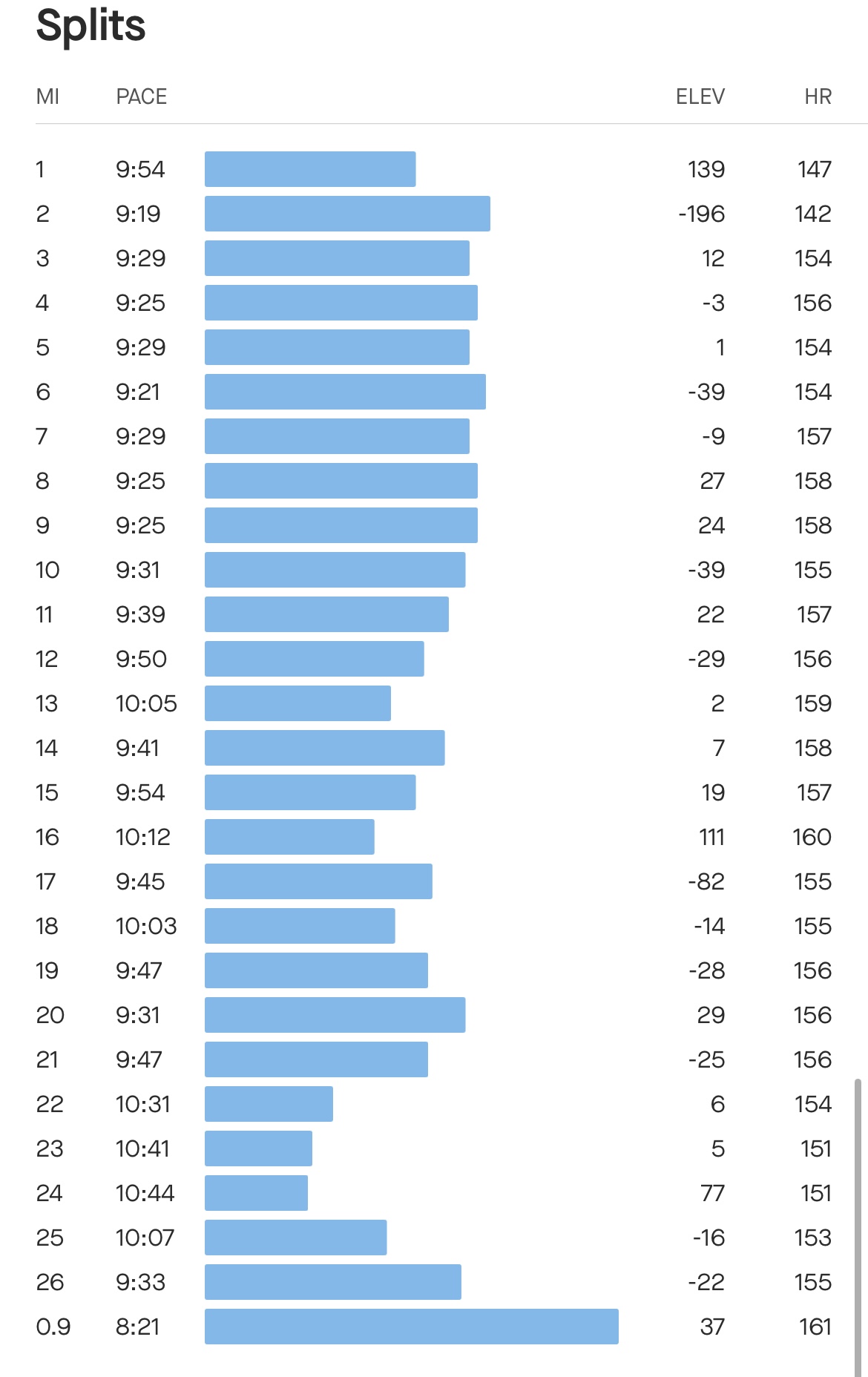
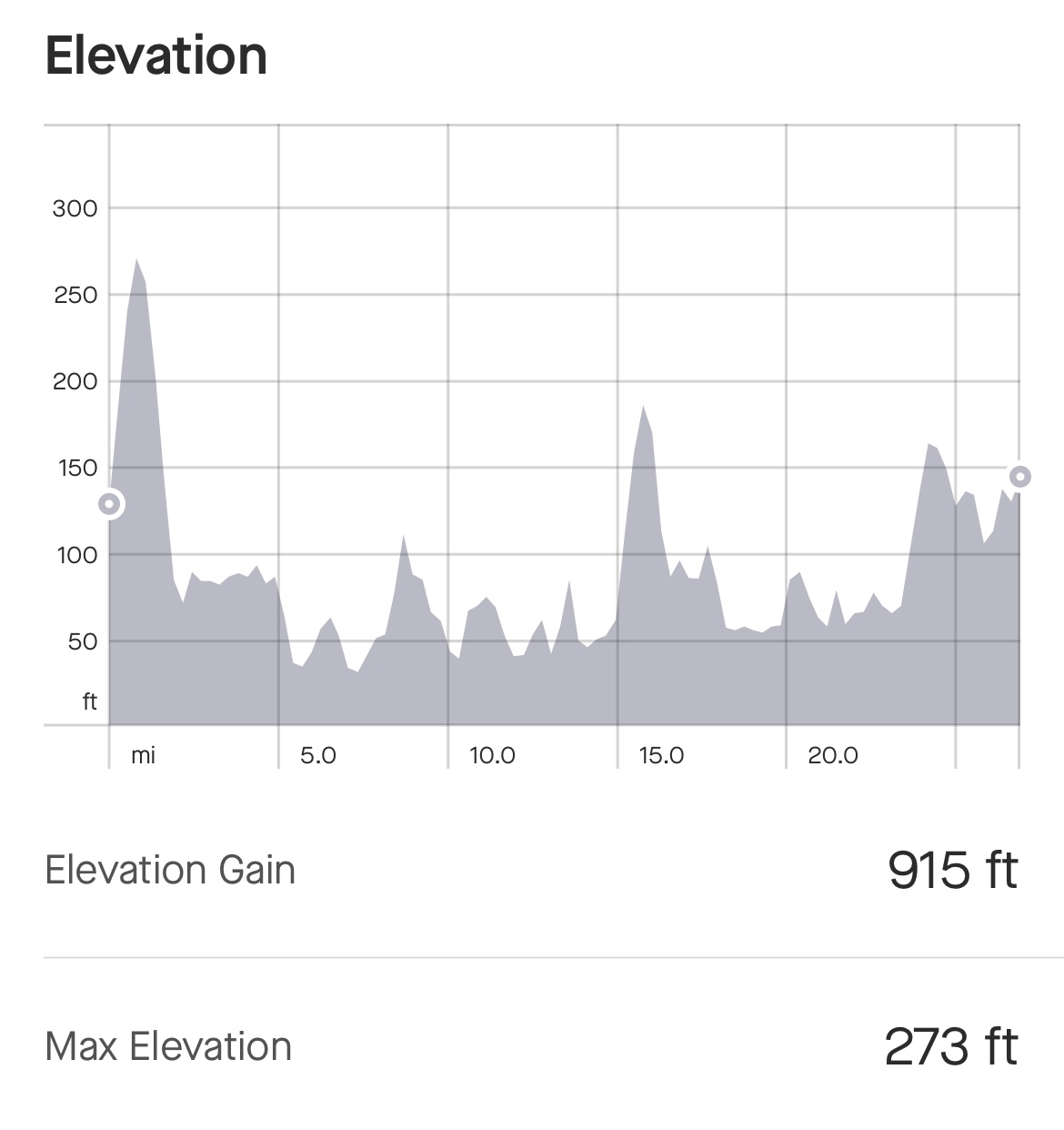
My Garmin splits are way off, but at least you can see what I was seeing on my watch, and that I did manage to speed up somewhat for the last bit. And the hills—no joke.

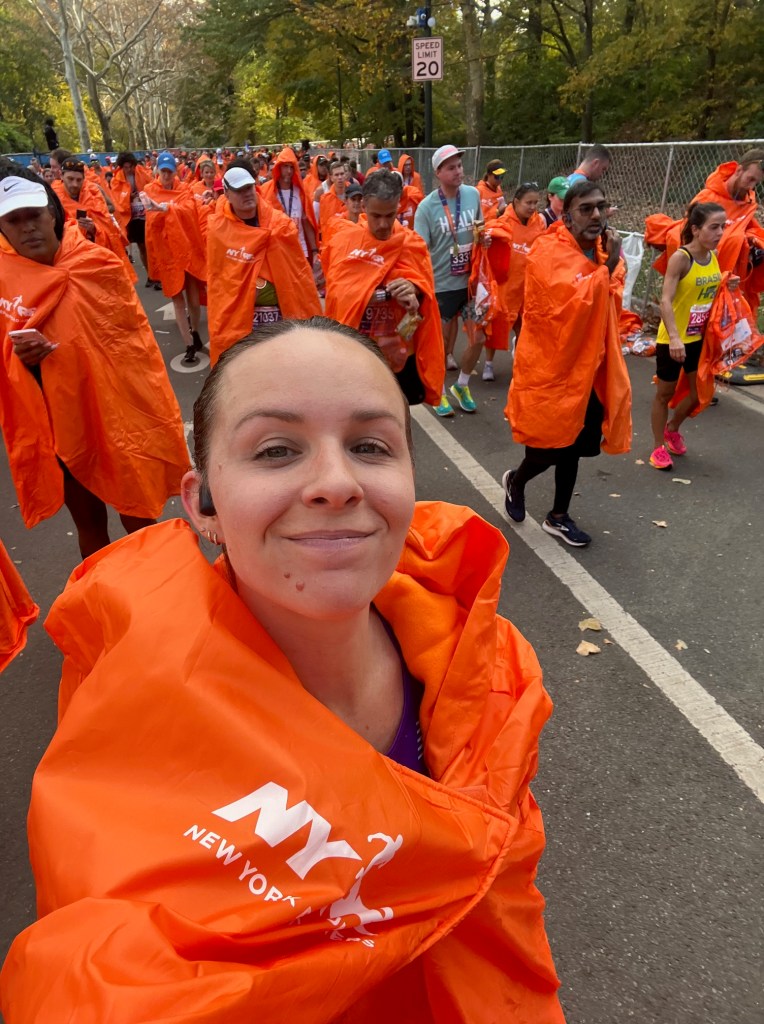
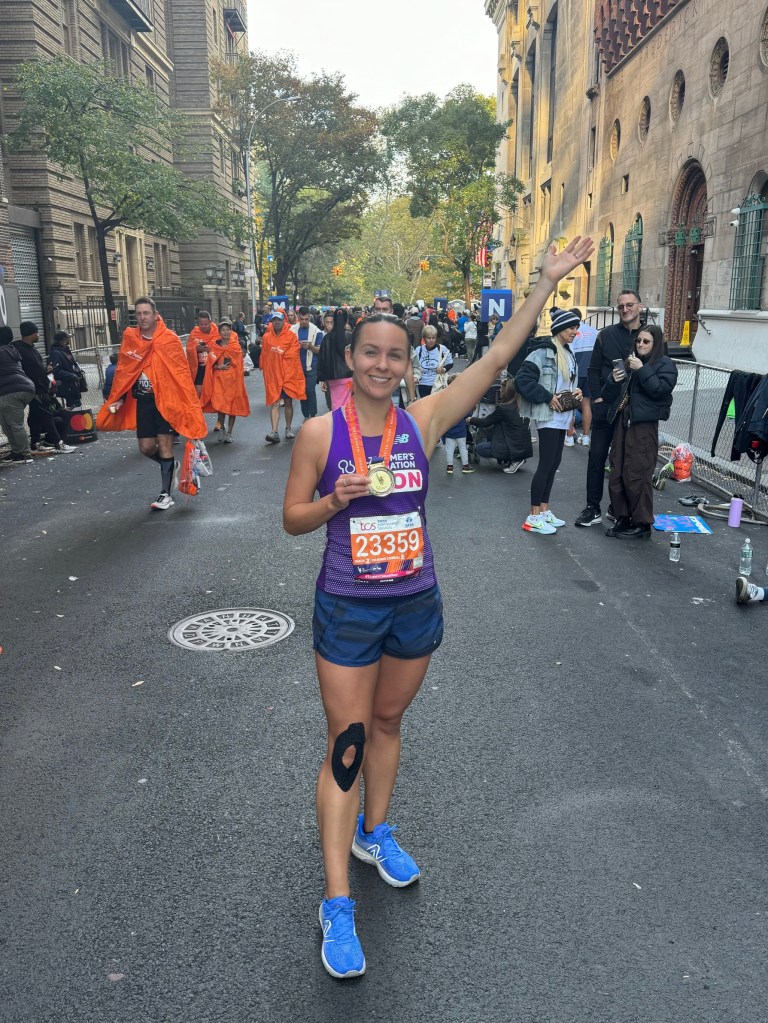
My legs actually didn’t feel too bad afterward and it was nice to keep moving as I walked to collect my medal, bag of goodies and fleece-lined poncho. I was hungry so I had a couple of pretzels from the goodie bag, but they were like dust in my mouth. Then I felt like I might puke and the only place it seemed feasible to do that was in one of the plastic bags tied to the fence to collect bottles and garbage. I kind of hunkered over one of those bags for a few minutes until the feeling passed.

The walk out of Central Park and to the family reunion area took a long time. I crossed the finish line at 2:12 and the photo with Aaron below has a 2:53 timestamp. I’m sure Aaron was sick of waiting for me, but I didn’t mind the time to walk and process what just happened. I would have felt differently if it was cold or rainy out, I’m sure.

I got teary eyed when I saw Aaron, and fully burst into tears when we met up with my dad. He said he was proud of me, and that my mom was proud of me, too. I know she would have loved to have been there.

Aaron was the MVP of the day. He rode 56 miles (!) on a non-electric Citibike to see me at so many different parts of the course. When we got back to our hotel, he also went and stood in line for 40 minutes at The Halal Guys across the street because a beef gyro platter sounded sooo good to me (and it was). He was probably just as tired as I was. Best husband ever.

I cleaned up and we went to Morandi for dinner with my dad. I enjoyed a long-awaited glass of champagne and the most delicious lasagna. J. Smith-Cameron, who played Gerri on Succession, was there, too!

Even though my body was exhausted, my mind was buzzing with excitement and I could barely fall asleep that night. Despite being the second slowest of the nine marathons I’ve run, it was by far my favorite and the one I’m most proud of.

Part of me wishes I’d been able to have a stronger training cycle, but perhaps things worked out as they should have. I’m sure, with my mom beginning hospice care, the last thing I needed to do over the past few months was put myself through the wringer in pursuit of a PR. And if I’d been focused on my time during the race, I’d have missed all the magic New York City has to offer.

I have so much to be thankful for, especially that the injuries that plagued my training never made themselves known during the race. My knee behaved perfectly, and the tendonitis—what tendonitis? Even in the days after the race, the only thing I felt was soreness in my quads from all the hills. Thank you to my PT angels, to my foam roller and resistance band, and to all the beautiful rest I enjoyed while tapering.

Everything was perfectly imperfect, just how it was.


I look back on this experience, and the last four years, and think: Alzheimer’s has taken so much from us. It stole my mom, Evie’s nana, Don’s wife. It will take Janet eventually.

But it couldn’t stop me from having the best day in New York.

I will hold on to that for a very, very long time.

2023 New York City Marathon Recap: Part 1

I must begin with a huge THANK YOU for helping me exceed my $10,000 Alzheimer’s Association fundraising goal—$10,535, to be exact! I am in awe of your incredible support. Thank you for believing in me and caring enough to make a difference. ❤


Aaron and I began our New York City adventure with an early morning flight out of Seattle on Friday, November 3. I considered booking a Thursday-night red eye instead to give us more time in the city on Friday, but my Instagram friends convinced me not to. That may have been the right decision in terms of getting quality sleep before the marathon, but I was sad to miss the Ali On the Run live show with Ellie Kemper on Friday afternoon; we were just landing at JFK as it began.

After an hour-and-a-half taxi ride to Manhattan—during which I became incredibly grateful Aaron’s mom Greta was babysitting Evie back home, since she would’ve hated such a long travel day—we checked into the Hilton Midtown around 6pm.

Immediately, I spotted professional runners Keira D’Amato and Colleen Quigley in the hotel lobby and knew I’d booked the right hotel! I was too exhausted and shy to approach anyone, but internally fangirled very hard. Aaron and I dropped our bags off in our room and headed to LumLum, where we enjoyed incredible Thai food for dinner.

I didn’t go out of my way to carb load for this race after I had a terrible experience trying to majorly carb load for a half marathon in the spring. My meals and snacks were just a bit more carb-y than normal and it worked out great for me.

I was in bed by 9:30pm (which felt like 6:30 to my body) to try to get on East coast time. I fell asleep immediately, but woke up around midnight to use the bathroom and lay awake for at least an hour afterward. Dang it!

On Saturday, I woke up at 6:30 feeling somewhat refreshed, ate a couple of Superhero Muffins from my stash (a must for destination races) and ran a few blocks to Central Park to meet up with Emilia Benton for a shakeout run.

Emilia and I became Instagram friends a while back after I heard her on the Ali On the Run Show talking about her career as a freelance journalist and running her first Boston qualifier at the Houston Marathon. We cheered each other on throughout NYC training and I was thrilled to finally meet her in person.

Our run flew by and I wished we had so much more time to chat. I told her about my obsession with Liquid I.V. and how I wasn’t sure I should use it every day, but had been the past few weeks to stay hydrated. She dropped this bit of wisdom that wound up really helping my race:

“My friend Starla [Garcia], who’s a dietician, says you can’t really overdo it on electrolytes.

Thank you, Emilia and Starla!

I headed back to the hotel, grabbed oatmeal and fruit from the lobby restaurant, then showered and got ready for the day. First we made a quick stop at the marathon expo to pick up my bib and shirt. We crossed paths with the Peloton instructor Olivia Amato on our way in!

Then we headed to Bacall’s for the Alzheimer’s Association team lunch. It was so nice to meet the Alzheimer’s Association folks I’d been corresponding with all these months and see a lot of the team in person. We shared a table with a woman named Donna and her husband. Donna has been running marathons—mostly Boston, where she lives—for the Alzheimer’s Association for many years and estimates she has raised more than $200,000 in total. She was diagnosed with breast cancer earlier this year and continued training through her treatment—incredible!

With our bellies full of pasta, we headed back to the hotel to relax before dinner. Another Instagram friend, Grace, stopped by the lobby with her adorable son to say hi and deliver some Levain Bakery cookies—so sweet! We also fangirled over retired pro runner Meb Keflezighi, who gave us big hugs and was so nice. His brother and manager Hawi took our photo, and I made sure to let Hawi know I knew all about him from Ali’s podcast so he wouldn’t feel like we only cared about Meb. 🙂

Then I texted Ali Feller herself, queen of NYC Marathon weekend, to see if she was around. She was staying at the same hotel and I was determined to sneak in a quick hug since I knew she was incredibly busy. The only time I’ve spent with Ali in person was in NYC in 2015, when she ran 13 miles of a 19-mile run with me, but I’ve also had the honor of being a guest on her podcast and guest-hosting an Ask Ali episode.

It was Zac Clark’s episode of Ali’s podcast that had me in tears last year and inspired me to run the NYC Marathon. And this year, Ali has been undergoing treatment for breast cancer. I wanted to give her a hug even more than I wanted to get one from her.

Alas, she was not around, but she promised to text me when she was.

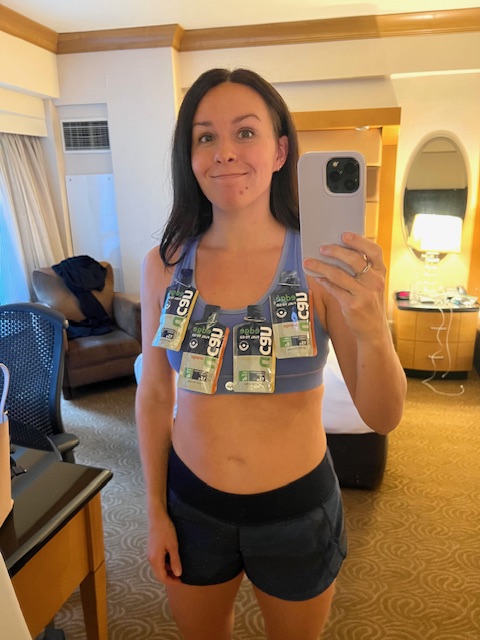
I laid out my race outfit and executed my, um, interesting fuel-carrying strategy. I could only fit two UCAN Edge packets in my shorts pockets, so I pinned the other four to my sports bra. I’d never tried this before, but my race singlet seemed to be snug enough that the packets wouldn’t bounce when I ran. Fingers crossed!

Aaron and I met up with my dad for dinner at Au Cheval, a restaurant famous for its double cheeseburger. We fell in love with the burger at the original Au Cheval in Chicago in 2015, and Aaron was eager to eat it again. Luckily, a big, greasy hamburger and fries is my go-to pre-race meal! We can confirm it still hits.

My dad was in town to sightsee in addition to spectating the marathon, so it was fun to hear all about his adventures. I feel very lucky he came all that way to cheer for me.

I didn’t get in bed that night until about 10:30, but the end of Daylight Saving Time was on my side; we “fell back” overnight and gained an extra hour of sleep. Hooray! It took me a long time to quiet my mind and fall asleep, so the extra hour was probably a wash.

I woke up at 4am full of nerves and excitement. I was never nervous about the race itself; it was more about the logistics of making sure I had everything I needed and getting to Staten Island.

I quietly got ready in the bathroom while Aaron slept. I drank a full bottle of Liquid I.V., ate two Superhero Muffins and did my business. I was just finishing getting ready when I got a text from Ali asking if she could meet me in the lobby at 5:15. I was planning to leave at 5:00, so I assumed we wouldn’t catch each other and wished her luck on her broadcast. She replied: “I’m coming down to give you a hug.”

Due to my last-minute triple-checking that I had everything I needed, I was NOT in the lobby at 5:00 and Ali was—oops! I finally made it down at like 5:08 and got teary-eyed in the elevator. As soon as I saw her, I ran into her arms and fully burst into tears. Dramatic. I was feeling all the emotions of race day and finally getting to hug a friend who has been going through a lot. We only had a minute or so before I had to leave and she had to run back up to her room, but I will never forget that moment, captured here in a chaotic blur.

I hightailed it to the Silver Level charity buses at 59th & 7th, which was really just a few minutes’ walk. The buses were scheduled to depart at 5:45 and I wanted to give myself plenty of time. I hopped on one that was nearly full and it left right away. I chatted with the woman next to me the entire time, so the ride went quickly. She dropped another bit of wisdom that I carried with me during the race:

“Run like you’re on a leash for the first 18 miles.”

We arrived at Fort Wadsworth on Staten Island around 6:15 and walked like a herd of cattle through security and into Athletes’ Village. I saw the silhouette of the Verrazzano-Narrows bridge against the sunrise and got so happy and excited. I was finally there and just had to wait until it was my turn to run!

I had a few hours to kill before the Wave 2 start at 9:45, and I was very thankful for the accommodations we had in the Silver Charity Village. The Alzheimer’s Association team had its own tent filled with chairs, and the village had plenty of porta-potties, bottled water, coffee and bagels. As the sun rose, it was warmer and nicer outside of the tent, so we pulled the chairs outside and sat and talked. I ate a banana and continued to drink water to stay hydrated.

I had a nice chat with Alissa, who was in Wave 1 and was treating the marathon like a long run in her buildup to a potential sub-3:00 at CIM. We shared our names so we could track each other, and it was only after she messaged me on Instagram shortly after she headed to her corral that I realized her last name—Kolarik—was so familiar to me because I already followed her!

Around 8:00, I ate a peanut butter and honey sandwich I’d made the night before. I kept drinking water and used the porta-potty two or three times. My physical therapy for runner’s knee included foam rolling before every workout, and since it wasn’t practical to bring a foam roller to the start, I brought a Stick with me. I’d had it for many years and rarely used it, so I didn’t mind tossing it. (You can’t check bags at the start, so anything you bring to Staten Island and don’t take with you on the run gets donated or thrown away.) I started rolling out all my leg muscles around 8:45.

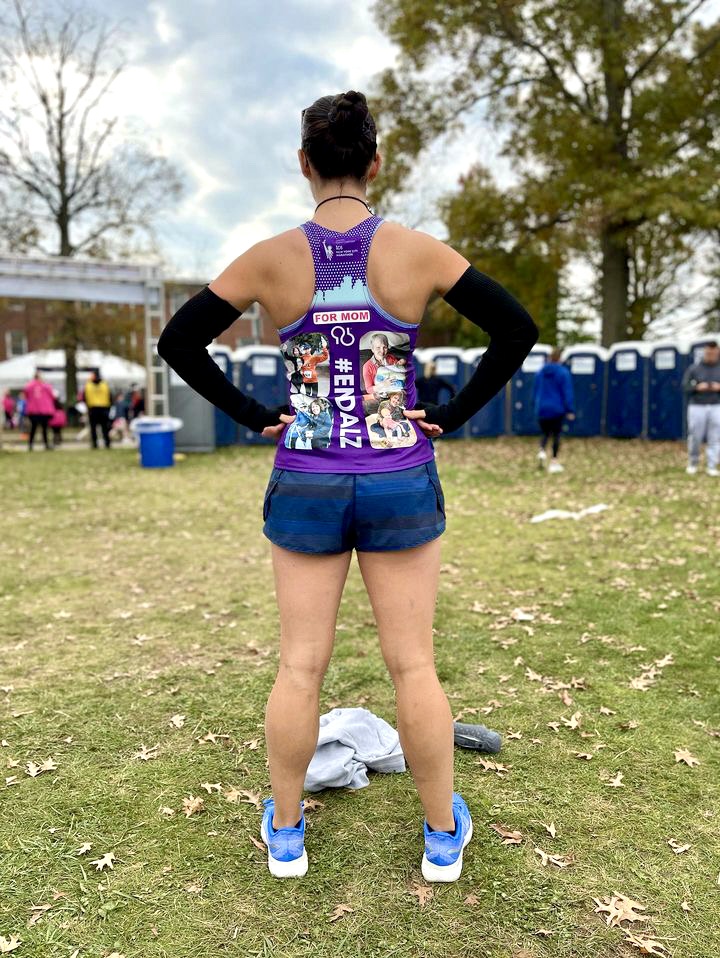
When the Wave 2 corrals opened at 9:05, I did my dynamic stretching routine in the charity village and used the bathroom one more time. I stripped off my throwaway clothes and bequeathed the Stick to my teammates to use before their waves started. One of the Alzheimer’s Association folks stopped me to take this photo. I ironed photos of my mom onto the back of my singlet so that she’d be with me the whole time.

The entire team cheered for me as I left the village, which made me smile so big! I absolutely loved my whole experience running with a charity team and highly recommend it.

The weather was a dream: in the high 40s when I arrived on Staten Island and in the 50s by the time the Wave 2 corrals opened. I brought a throwaway hat and gloves, but didn’t use them. I wore arm warmers as I walked to my corral, but didn’t really need them and ditched them before starting.

Once I got into Orange Corral E around 9:20, I immediately got in line for the porta-potties to go one last time. The corrals closed at 9:25, I did my business, and I was out and eating my pre-race UCAN Edge by 9:30. I ran into my college friend Jesse, so time flew by as we chatted and walked slowly in the herd of runners toward the start line. I used to party at Jesse’s fraternity in college, so I found it hilarious that we’d meet again at the start of a marathon!

Shoutout to NYRR: Everything about Athletes’ Village, the three starting colors (orange, blue and pink) and the corrals was super organized, clearly marked and easy to find—and ran perfectly on time. These people know what they’re doing!

Finally I heard the National Anthem, then Frank Sinatra singing “New York, New York.”

BOOM went the start cannon, and it was time to RUN!

Stay tuned for Part 2.

Rollercoaster Road

When my mom began hospice care in July, I believed she would die within a month—not because I’m naive to how long the hospice period can last, but because the hospice nurse said as much.

During our initial meeting with the nurse and social worker, they walked us through a binder of information and asked us if we had any questions. Of course, we wanted to know if they had any idea of how long she had left—and, of course, they declined to estimate. Hospice is for people who likely have six months or less to live, but I wanted all the answers I could get. Nobody has a crystal ball, though, so fair enough.

That changed once the nurse got a good look at my mom. As my mom slowly paced the memory care dining room with Don trailing to make sure she didn’t trip over anything, the nurse quietly said to me: “With how frail she is, I don’t expect this to go on very long.”

“Do you mean months or weeks?” I asked.

“Weeks,” she said.

I believed her.


At 97 pounds, weak and hunched over, it seemed miraculous my mom was still alive at that point. She hadn’t eaten a full meal in several months. When her weight dropped drastically earlier in the year, we gave the okay for her facility to obtain a doctor’s order that would allow them to offer her an Ensure shake with each meal, and that became her primary source of nutrition. But at 220 calories a bottle, it wasn’t enough to help her gain a significant amount of weight, even if she drank every last drop. She ultimately qualified for hospice due to malnutrition.

In the spring, we made some changes to my mom’s medication after many long discussions and consulting with her doctor. We decided to taper her off the Alzheimer’s drugs she’d been on since she received her diagnosis. They are intended to improve mental function and confusion related to Alzheimer’s disease, but are by no means treatments or cures. The hope is that they can slow the progression, but there’s really no way to know if they do. We had reached a point where we no longer wanted to slow the progression, as it would only prolong her suffering.

Her doctor also prescribed an antidepressant to help with my mom’s mood. She sobbed every single time we visited, which was just horrible. I worried about medicating her into oblivion, but the doctor assured me an SSRI would simply level her out.

Changes in medication can affect appetite, so once she was off the Alzheimer’s drugs and on the SSRI, the doctor adjusted the dosage to see if she could find a level that would help boost her appetite—or, if that didn’t work, she would determine the lack of appetite was unrelated and make the hospice referral.

We know how that turned out.


The decision to stop the Alzheimer’s drugs was agonizing. Then, with hospice, came the question of whether we should continue with the Ensure. I understood Ensure to be a nutrition shake you could buy without a prescription at any grocery or drugstore—and I ordered a month’s supply at a time to be delivered from Costco to her facility—but they treat it as a medication and keep it locked up with the other drugs. Hospice considers it to be a life-prolonging supplement, and therefore does not cover the cost of it like it does her hospital bed rental and supplies like briefs and wipes.

“Life prolonging” and hospice don’t really go together. Our goal had changed. But the idea of cutting off my mom’s near sole source of nutrition, and thus being responsible for hastening her death, weighed on me. The decision belonged to three of us—Don, my brother and me—but I was the one starting these conversations, determined to do the right thing for my mom—what she would have wanted if she could have chosen.

I pored over her advance directive, which, unsurprisingly, addressed none of these intricacies of the final stage of dementia. I recalled a conversation we had after her breast cancer treatment, where she regretted only doing a single mastectomy and worried about the cancer coming back in her remaining breast. Chemo had ravaged her. “I won’t go through that again,” she told me. At the time, I couldn’t believe she wouldn’t pursue treatment, wouldn’t jump at the chance to live longer and spend more time with her family. Now, I understand some things are worse than death.

Many conversations. Research. Soul searching. Tears. We decided to stop Ensure. The hospice team seemed relieved. They didn’t want to give their opinion, but it became clear after the decision was made.

“Weeks,” she said.

I believed her.


It was one thing to start hospice. It was another to come to terms with the fact that my mom could be gone so soon.

I shifted into survival mode, thinking about what I needed to do in the weeks leading up to her death and the weeks after. I notified close friends and family in case they wanted to plan any last visits. I looked in dismay at the trips I had planned over the next few months, not sure whether to cancel or wait and see.

My therapist and I discussed what a “good death” would look like; what I wanted to say to her before she went, whether she could understand or not; whether I wanted to be there when she died; whether she would want me to be there when she died. I ordered and devoured a book by a hospice nurse, which brought me great peace. I started looking on the bright side: if my mom were to die soon from malnutrition, she (and we) would skip some of the most agonizing steps of her dying from Alzheimer’s. Yay, I guess?

I thought about how beautiful that summer had been, and felt comforted by the fact that if my mom died soon, I could still go into my backyard and lie down on the toasty patio pavers for a few minutes, turning my face up toward the sun and letting its warmth seep through my skin and into my bones—something I often do after therapy.

I’ve noticed the seasons and weather have had a greater impact on my mood these past few years, and I have no doubt it’s because of this prolonged experience of losing my mom. Everything is sadder when it’s gloomy; everything feels more hopeful when the sun shines. I’d give anything to warm my bones on the darkest days.

A week into hospice, I wrote this through tears in the middle of the night:

I hope you die on a summer day

so your last breaths aren’t shattered by raindrops

but harmonized with birdsong.

I hope your body is drenched in light

impossibly aglow

a celebration of life

and whatever comes next.

I hope you ascend on a sunbeam

migrate with the butterflies

tumble along a breeze like a dandelion seed

look down on the world in all its beauty and think

how lucky was I to be alive

just a little bit

and see myself out amid clear skies

75 degrees

a high like no other.

That’s me projecting what I think a “good death” would look like. It’s also me working to accept, to look on the bright side, to find a way to make this very sad thing feel kind of beautiful. In any case, it’s probably the nicest thing you’ve ever read that starts with “I hope you die.”

My mom did not die on a summer day.

You know what she did do?

She started eating.


Maybe my mom’s body finally squared up with the medication changes. Or maybe it’s an example of us making plans and God laughing. Or maybe, like the badass she always has been, she pulled an Arya Stark and said, “Not today.”

I don’t know how to explain it, but the day after her supply of Ensure ran out, she ate three square meals like it was her job—and she has ever since.

You’d think this would be a happy turn of events, but it’s a real mindfuck to go from “weeks” to “???” I had accepted, looked on the bright side, found a way to make it beautiful. It felt like a relief to have an end to this nightmare in sight. But still, we go on.

Just because my mom is eating doesn’t mean everything is peachy. She has only gained a few pounds and is still slowly descending through this final stage of dementia. All of those most agonizing steps of dying from Alzheimer’s loom before us. She has become very unsteady on her feet, but still walks up and down the halls of her facility constantly—a recipe for disaster that has caused many falls. I worry I’ll get a terrible phone call one of these days.

She was recently reevaluated and recertified for hospice, for which I’m grateful. The team’s support has been invaluable, and I’d hate for her to graduate from hospice only to have to inevitably reenroll. It’s a trauma I don’t wish to repeat.

I still struggle with uncertainty. I worry about getting through the holidays this year. I worry about her dying on a winter day; where will I find the warmth to get through it? Maybe she’ll die next spring. Maybe next summer. I don’t get to decide. I just need to gather the strength.

The good news is: we didn’t kill her. We agonized over the Ensure, but maybe stopping it was actually the best thing we could have done. I know we made the right decision with utmost love for her. Maybe this is her way of lifting that burden from us.

The other good news is: she doesn’t cry anymore. The SSRI indeed leveled her out, so her mood ranges from placid to happy. Despair seems to be a thing of the past. That, too, feels like a huge burden lifted. I used to need the rest of the weekend to emotionally recover from our Saturday visits. Now, the sadness is manageable.
Seeing her is still tough. I notice her physical appearance changing week by week. Although she’s a bit stronger and more energetic than she was in July, her temples and eyes now appear sunken in. It’s getting more difficult, too, to physically and verbally direct her when I’m helping her in and out of the car, or feeding her, or helping her in the bathroom. A few months ago, I offhandedly said “Janet” and she whipped her head around toward me in a way she never did when I said “Mom.” So now, she is Janet, which makes sense because that’s who she was long before she was Mom. And it helps me a bit to separate the two. Mom has been gone for a while; now I’m helping Janet through this last phase of her life.

Despite the hard parts, I treasure my time with her. We listen to music in the car—her same favorites, over and over—and she still loves the Backstreet Boys. We watch romantic comedies. She recently stayed awake through the entirety of “Crazy, Stupid, Love” and laughed her mostly silent laugh at all the funny parts, of which there are many. She gets a kick out of me good-naturedly making fun of Don. In those moments, the light comes back into her eyes, and she’s Mom again.


Aaron, Evie and I recently visited Leavenworth on one of those trips we didn’t have to cancel because my mom is still alive. On the drive there, I always look for landmarks that indicate we’re nearing the Bavarian-themed town. One of them, if you’ve come over Blewett Pass, is Rollercoaster Road, just to the left before you reach Highway 2. I’ve never been down Rollercoaster Road, but I always thought it must be fun.

“I’ve ridden it on my bike,” Aaron told me. “It’s not fun on a bike.”

That makes sense. I imagine relentless ups and downs, probably some twists and turns. It’s like this Alzheimer’s journey. It’s like life. Fun if you’ve got the right equipment, if you’ve willingly gone down it. Not so fun when you’re pedaling as hard as you can, when you’re not sure where it’ll go next or when it’ll end.

For now, I’m still on my own Rollercoaster Road. After so many ups and downs and twists and turns this year, it feels like I’m cruising through a fairly level section, with no idea what comes next. I’m doing my best to hang in there. Next week is November 1, four years since my mom’s diagnosis. I’ll have earned my bachelor’s degree in Alzheimer’s, and I guess I’ll be going for my master’s. There’s certainly much more to learn.

I’ve also got the New York City Marathon coming up on November 5, which has been a powerful beacon through all of this—something to work toward and look forward to. A reason not to drown. A bout of runner’s knee threatened to take this race away from me, but nine weeks of physical therapy and a bit of determination saved my training. I hope reaching the finish line will feel like a real triumph—physically, mentally and emotionally. I worry about what comes after, but I try to put that aside so I can just enjoy.

I tell myself that someday, Rollercoaster Road will once again just be a thing I drive past on my way to somewhere better.


Thank you for reading. I’m 82% of the way to my $10,000 fundraising goal for the Alzheimer’s Association. If you’d like to donate, you can do so here before the NYC Marathon on November 5. Thank you so much for your support. ❤

Fundraising Update + NYC Dreams

First of all: WOW. I’m overwhelmed by the response to my previous post and the support you’ve shown for my NYC Marathon fundraiser for the Alzheimer’s Association. The fundraising commitment to earn my spot on the team was $4,200; you all exceeded that in nine hours! 🤯

Given that more than six months remain until race day, I’d be remiss not to increase my goal and create space for more donations. My new goal is to raise $10,000 by November 5. If you haven’t already donated and would like to, you can do so here.

To everyone who already donated: thank you, thank you, THANK YOU! I wanted to create a tsunami of funding to help wipe out Alzheimer’s; you all did that and then some. Your support means more than I can put into words. 💜

So many of you reached out via Instagram DM to share kind words or your own stories about parents lost too soon to Alzheimer’s, cancer and other illnesses. Each story touched me deeply. This lonely journey of losing a parent is made better by connecting with and learning bits of wisdom from those who’ve walked it before. I have found it so therapeutic and freeing to write about the hardest parts of this experience and then release them into the world; it’s almost a physical relief to gather up these things that weigh on me—grief, guilt, helplessness—and get them out of my body. Thank you for reaching out and trusting me with the things that weigh on you, too. I’m happy to help carry your load.


I’m so excited to share all about my NYC Marathon training once it begins. After my very flat half marathon on May 6, I’m going to start running hills like there’s no tomorrow. I’m thrilled to have access to the Alzheimer’s Association team coach, Amanda LaVergne, for all the info and training tips I need to run my best race.

NYC isn’t the easiest course, but make no mistake: I will be running for a PR. I want to soak in all the sights and sounds and excitement of one of the greatest marathons in the world, and I want to absolutely crush it. I ain’t flying across the country for a fun run!

I know I haven’t reached my full running potential yet, and I’m excited to chase it. I still want to qualify for the Boston Marathon someday. I’ve got 13 minutes and 26 seconds to chip away at over the next marathon (or two, or three, or more), at least until I turn 40 in 2027; then I get an extra five minutes. It seems quite doable to me if I put in the work, and I’m laser focused this year on working harder than I ever have before.

With the support of the Alzheimer’s Association team and all of you who’ve given me such a boost with your donations and words of encouragement, I’ll have the metaphorical (and hopefully literal) wind at my back on November 5. Plus, my mom will be with me every step of the way. For her, I’ll run like hell.

Is This the Year My Mom Will Die?

“No matter how prepared you think you are, nothing prepares you for the death of someone you love. No amount of time. No amount of suffering. No amount of wishing for the end to come. It still feels unexpected. It still seems sudden. It still hurts like hell.”

Lauren Dykovitz, When Only Love Remains: Surviving My Mom’s Battle with Early Onset Alzheimer’s

Before Christmas, I talked with my therapist about my mom’s drastic decline in 2022. Shortly after we moved her into a new memory care facility in March, she lost the ability to feed herself and required an aide to feed her at every meal. In the fall, she became incontinent.

“I haven’t been keeping close track of her progression,” I said. “What stage would you say she’s in?”
My therapist, who previously worked for the Alzheimer’s Association, referred me to the Global Deterioration Scale for primary degenerative dementia. As we read through the characteristics of each level, we agreed that my mom was transitioning from stage six to seven—out of seven total.
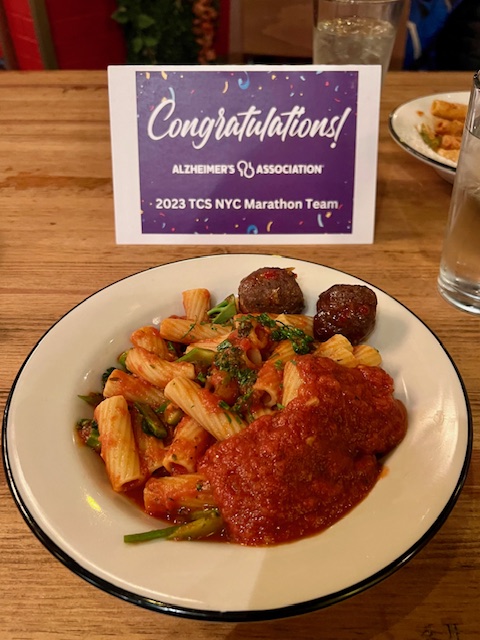
I was shocked. My mom was diagnosed three and a half years ago, in November 2019. The neurologist told us that people with Alzheimer’s can live from two to 20 years after diagnosis, and the younger they are, the longer they’re likely to live. I’ve met a handful of Alzheimer’s daughters online and their parents seemed to live about 10 years beyond their diagnosis. I’d been gearing up for a long haul.

The realization that she might die much sooner, maybe even in 2023, smacked me across the face.

Death aside, the deterioration that occurs in level seven is incredibly sad:

All verbal abilities are lost over the course of this stage. Frequently there is no speech at all—only unintelligible utterances and rare emergence of seemingly forgotten words and phrases. Incontinent of urine, requires assistance toileting and feeding. Basic psychomotor skills, e.g., ability to walk, are lost with the progression of this stage. The brain appears to no longer be able to tell the body what to do. Generalized rigidity and developmental neurologic reflexes are frequently present.

The Global Deterioration Scale

Of course I don’t want my mom to die. But she is going to die—there’s no way around that—and this is no way to live. My feelings are complicated.

Is this the year my mom will die? Maybe. If not this year, then certainly the next, or the next after that. The disease is progressing so quickly. How do I prepare for the end?

Should I pre-write her obituary? It feels wrong to write about her in the past tense while she’s still alive. But in many ways, her story has ended; there are no more achievements to come. In an episode of the hilarious and moving Apple TV+ series Shrinking, Jason Segel’s character pages through a scrapbook his late wife made chronicling their relationship. He’s looking at the photos with tears in his eyes when, suddenly, he flips to the first of many blank, unfilled pages. “I guess that’s all we get,” he says.

Should I start going through the boxes and closets of her things that we didn’t move with her into memory care, that sit untouched and remind my stepdad every day of her absence? Or should I just try to live in the moment, enjoy the time I have left with her, and not wish it away by jumping forward to the inevitable end?

My instinct is to work ahead on the things I know will hurt more to do after she’s gone. But it hurts now, too. The worst is finding unused items in those boxes and closets: a brand-new Clinique eyeshadow palette; a woven leather handbag with the tag still attached; so many pristine three-packs of her favorite socks ready to replace the ones with holes in the bottoms. All emblems of the life she won’t get to live.

I have an unworn black dress in my own closet, still wrapped in plastic. I won’t open it until I need to.


I steeled myself for Christmas. I was determined to be present, take lots of pictures and videos, and soak everything in on what could very well be the last Christmas we’d celebrate with my mom at her house. Once she’s unable to walk, it might be too physically and emotionally stressful for her to travel. We can visit her in memory care, of course, but it won’t be the same.

In reality, that Christmas celebration was a stark reminder of all that had been lost. We still enjoyed a nice dinner and exchanged gifts and admired the Christmas tree, but my mom—previously the orchestrator of festive fun—was a blank-faced bystander to it all. Rather than being present and soaking everything in, I felt myself mentally curl up into a protective ball.

When my mom is gone, I’ll try to skip over the memories of that evening and live instead in the warm glow of Christmases past. My job, now, is to create that magic for my own daughter, so that her holiday memories will be just as wonderful as the ones I cherish.

The longer my mom is ill, the farther away the mom I used to know—my Real Mom—seems. I hope when I do sort through her things, I’ll be able to piece together who she was through the things she loved. I hope to find her in her vast collection of quilting fabric, her books about English gardens and the royals, her memorabilia marking her time as a tour guide at Disneyland. I hope to find things she’s written, things that will help me see her in a new light and answer questions I can’t ask her anymore. I hope, instead of despairing over the emblems of her stolen years, I will feel something akin to happiness sitting amongst piles of evidence of the life she lived.


“How will she die? “I asked my therapist. “Will she forget how to swallow and just starve to death?”

Maybe, she said. Often, people with Alzheimer’s have more and more difficulty chewing and swallowing, and will aspirate a piece of food into their lungs, where it can lead to pneumonia—the ultimate cause of death.

My mom frequently coughs after being fed bites of food. Every time she does, I wonder: Is this it? Is this stupid chunk of chicken the one that will end it all?

So far, she’s made it through our Saturday lunches unscathed. But each time I see her, she is noticeably thinner.

Before we first moved her into memory care in 2021, she’d wasted away to 99 pounds—frightening for her 5’5″ frame. She ate well after the move and packed on nearly 30 pounds. She continued to do well in early 2022, then began to eat less once she needed to be fed at every meal. Over the past few months, her weight has dropped precipitously. We’re back to where she was when she first forgot how to prepare food, whether she had already eaten or not, and whether she was even hungry. Her caregivers report that she only takes a few bites at each meal.

We used to be about the same height, but I’ve noticed her head drooping lower and lower, and her neck and shoulders hunching farther forward, so she now looks primarily at the ground. My mom, who was once roughly my physical equal, is shrinking in every direction.

How long until she disappears?


My mom is going to die, probably much sooner that I thought, and it’s going to be horrible to watch. What I want more than anything is for the end to be as pleasant as possible for her, on the inside. When the time comes, I hope she will slip into a coma and go on a nice journey, like Rebecca Pearson does in the penultimate episode of This Is Us. I hope it’s like “The Train.”

For my part—and I’m painfully aware of how self-absorbed this sounds, worrying about surviving this thing when my mom is the one suffering and dying—I hope I feel at peace. Maybe even happy for her. Her confusion, aimlessness, loneliness and frustration over not being to hold a thought long enough to properly express or act upon it are completely gutting. She sobs every time we visit. It is heartbreaking to the highest degree, and the best I can do is hold her hand and tell her that I’m here, that everything is going to be okay.

Nothing is okay about any of this.


I knew 2023 was never going to be the best year ever. If my mom survives it, she’ll be a shadow of the person she was even at the end of 2022. She may be in a wheelchair. She may not be able to communicate at all.

The thing I feared most—my mom forgetting who I am—may never come to fruition if she completely loses the ability to indicate recognition or the lack thereof. Her communication is limited as it is. She may very well already think I’m a kind stranger who makes her lunch and paints her nails on weekends. I don’t ask, and I don’t care. As long as she feels loved and comforted by me, that’s enough.

It turns out that bearing witness to her ongoing physical and emotional suffering is far worse than that clichéd Alzheimer’s milestone anyway. Despair threatens to drown me some days; lately, more often than I care to admit.


I need to keep busy to stay afloat. I’ve got a lineup of fun trips to look forward to this year—LEGOLAND with my little family, a Scottsdale spa weekend with my best friends, and more—plus some big running goals to tackle. I’m training to PR in the half marathon at the Snohomish Women’s Run on May 6, and I’m thrilled and honored to be part of the Alzheimer’s Association team to run the TCS New York City Marathon on November 5.

It was last fall, while listening to an Ali On the Run Show episode about the NYC Marathon, that I was moved to tears by the guest’s experiences at the race and vowed to run it myself. My mom’s decline has given me a hunger for more challenges, more adventures, more life. The NYC Marathon is a once-in-a-lifetime experience, at least for this West Coaster. I don’t want to wait until I can no longer run 26.2 miles and always wish I’d made that journey on foot through the city’s five boroughs.

Fundraising for the Alzheimer’s Association adds meaning and purpose beyond measure. When I ran the California International Marathon in 2021, I had an amazing experience raising money for HFC—Seth and Lauren Miller Rogen’s charity that supports Alzheimer’s families and caregivers with support groups and respite care grants. I set out to raise $2,500 and exceeded $5,000 by race day, thanks to so many generous Internet friends and real-life loved ones. I felt my mom with me through every mile of the race, and finished strong with nearly a six-minute PR.

The Alzheimer’s Association is tackling another side of the disease. As the largest nonprofit funder of Alzheimer’s research, the Association is committed to advancing vital research toward methods of treatment, prevention and, ultimately, a cure. It’s also the leading voice for Alzheimer’s disease advocacy, fighting for critical Alzheimer’s research and care initiatives at the state and federal level. And, like HFC, the Association helps provide care and support for those affected by Alzheimer’s and other dementias with support groups, a 24/7 helpline (800.272.3900), and more.

I know donating to nonprofits like this can feel like a drop in the bucket toward tackling a massive problem. But for my mom, for families like mine, for your grandparents and parents, and eventually for you and your kids and grandkids—every donation counts. Let’s make it rain and build a tsunami of funding to wipe this thing out for good. Nobody should have to suffer like my mom, and I have to believe treatment methods and a cure are out there, waiting for a team of neuroscientists to hit the jackpot. I’m happy to throw money at that if it means other families won’t have to walk this devastating path in the future. More life for everyone.

I’ve made the first donation toward my $10,000 fundraising goal (extended since we exceeded my initial $4,200 goal in 9 hours!). If you’d like to join me—in support of my NYC Marathon training, in support of my mom, in honor or memory of someone you love, as a big FUCK YOU to Alzheimer’s, or all of the above—please donate here.

If it’s not within your means to donate right now, I’m also accepting good vibes for a successful marathon training cycle and a beautiful NYC Marathon experience. Bonus points if you can manifest perfect running weather for me and approximately 49,999 other runners on November 5.

No matter how you show it, thank you, as always, for your support.


For me, 2023 is a year of pain and uncertainty. It’s also a year of endurance and resilience. I’m determined to feel all the feelings, the unimaginable lows and the euphoric highs—all the things that make up this singular human experience. I want to navigate it in a way that would make my mom proud. She’s the one who prepared me for this life. In honor of her, I refuse to drown.

A Month of Eating Vegan

Aaron and I usually do Whole30 and dry January to reset our eating and drinking habits after the holidays, but this year I suggested we try going vegan.

Ever since my mom was diagnosed with Alzheimer’s disease at age 61, I’ve done a lot of reading about how to maximize my healthspan, and nearly every resource has encouraged eating more plants and fewer or no animal products. I wanted to commit to a month of eating vegan to find out how it made us feel and whether it was a sustainable way for us to eat long term.

I believe everyone needs to find their own way of eating to feel their best. No matter how desperately I wish I could enjoy dairy, it will always make me feel miserable the next day thanks to increased phlegm and post-nasal drip, so I choose to avoid it while many people can eat it and feel just fine. Food is a touchy subject and I’m not here to advocate for a single best diet for everyone; I’m just exploring for my own health and happiness.

There are also plenty of moral arguments around eating animal products, but for the purposes of this experiment and post, I’m not going to touch those. I welcome you to do your own research and do what you think is right.

I’ll also say that I wasn’t 100% perfect and did eat a few animal products in January, but I didn’t stress about it; the perfect is the enemy of the good. But for transparency, here’s what went down:

  • On January 2, we went out to happy hour with friends and I had tomato soup that probably had cream in it.
  • I had a bunch of Superhero muffins in the freezer that I made in December with eggs in them, and I wasn’t about to waste those; I typically eat one first thing every morning before I walk the dogs. It helps get things moving, if you know what I mean.
  • I made a triple batch of Superhero muffins in January and used eggs again since I didn’t want to experiment with flax eggs and potentially ruin them; all that almond flour is expensive!
  • On January 29, we celebrated a friend’s birthday and I ate beef and pork at the catered taco bar. The margaritas were flowing and it was nearly the end of the month anyway. Sue me!
  • On January 31, I majorly craved a salmon filet and made one from our freezer for dinner. It was so, so good; no regrets.

When we went out to eat, I also didn’t go so far as to question whether vegetables were cooked in butter or if French fries were fried in beef fat or anything like that. We didn’t eat out often, so it wasn’t much of an issue.

HOW I FELT

In short: great!

I didn’t feel depleted or lacking nutrients. I didn’t even crave anything non-vegan until the very last day, when that need for salmon took me out.

I felt energetic, well-fueled and light in the sense that no meal felt like a brick in my stomach afterward the way a meal with meat sometimes can.

I had no trouble ramping up my running in January from less than 15 miles a week to 25+ miles a week. I noticed it was easier to keep my heart rate low (under 145 bpm) on easy runs than it had been previously. I have no idea if this is connected to the way I ate, but wanted to note it since it was unusual for me.

My, um, bathroom output was fantastic.

I did not lose weight, nor was that my intention.

I embraced processed carbs in a way that I haven’t in a long time. I got on a grilled-vegan-cheese sandwich and tomato soup kick for a while, and started eating bagels with vegan butter a few times a week to fuel longer runs.

I also tried (and really liked) some vegan processed foods, like Impossible plant-based chicken nuggets. It’s probably not something one should eat every day, and I sometimes went a little hard on processed stuff as comfort food when I was feeling low. Just because something is vegan doesn’t mean it’s healthy, and you can certainly follow a vegan diet but eat like total garbage if you want. The more I stuck with whole plant foods—like stuff from the produce section—the better I felt.

HOW I’LL EAT GOING FORWARD

I continued to eat mostly vegan through the first half of February since I felt so great. Then we went to Phoenix for a week, and I wanted to try all the delicious foods at a bunch of restaurants, as I always do on vacation, without any limits. That kind of reset me to an anything-goes (minus dairy) mentality ever since.

But ideally, I would like to eat a plant-based diet—which is different than vegan, I discovered, even though I feel like the terms are often used interchangeably. According to the fine folks at Harvard:

“Plant-based or plant-forward eating patterns focus on foods primarily from plants. This includes not only fruits and vegetables, but also nuts, seeds, oils, whole grains, legumes, and beans. It doesn’t mean that you are vegetarian or vegan and never eat meat or dairy. Rather, you are proportionately choosing more of your foods from plant sources.”

Katherine D. McManus, MS, RD, LDN

That sounds great to me. I couldn’t say I’ll never eat meat again, and I wouldn’t want to live without seafood (salmon! sushi! yum). I avoid dairy, but I’ll often have a slice of regular birthday cake at a party or eat regular ice cream on vacation. Being strict about not eating something feels so restrictive, which will ultimately not work for me personally. Again: The perfect is the enemy of the good.

I would like to eat mostly vegan at home, and sometimes eat seafood and less often eat meat. When I eat at a friend’s home, I’d like to eat what is served and not make a bunch of requests. When I go out to eat at a restaurant, I’d like to eat whatever sounds good to me; probably something I wouldn’t normally prepare at home.

People really like to identify with and advocate for the specific way they eat, which is fine. My approach is: You do you, I’ll do me, let’s all mind our own business and be happy. (Should I put that on a T-shirt?!)

WHAT I ATE

When it came to planning meals, I really only had to figure out dinner since my go-to breakfast and lunch are already vegan (aside from the aforementioned Superhero muffins).

BREAKFAST

After my morning workout, I’d make a green smoothie. See recipe below in the Instagram caption!

I switched to vegan protein powder for January, and I liked Four Sigmatic plant-based protein powder in Creamy Cacao so much that I continue to order and use it today.

My favorite non-dairy milk for smoothies is Milkademia macademia milk or So Delicious unsweetened coconut milk (both found at Costco), but choose your own adventure!

I also started adding Kuli Kuli moringa powder after I heard about its brain benefits on the Huberman Lab podcast. You can read more about it on Good Housekeeping as well. It’s important to note that you shouldn’t use it while pregnant or nursing.

Finally, sometimes I use blueberries instead of strawberries, or a combo of the two. You could also substitute your favorite fruit, like pineapple, mango, raspberries, etc. Go wild!

I didn’t track calories or macros in January, but one day I input all my food into My Fitness Pal to see how much protein I was getting. I discovered this smoothie is indeed a meal in itself with 610 calories and 31 grams of protein. I find it very filling. If I have a lighter workout or am not super hungry, I leave out the almond butter, and then typically eat almond butter with an apple as a snack between lunch and dinner.

LUNCH

I’m a creature of habit and have eaten the same salad for years.

Some of the veggies vary, but it usually consists of:

  • 1 small head Romaine lettuce, chopped
  • 1 carrot, grated
  • 2 ribs celery, chopped
  • 1/2 bell pepper, chopped
  • 3-4 white button mushrooms, chopped
  • 1/2 avocado, mashed
  • 2 Tbsp hemp hearts
  • 2 Tbsp nutritional yeast
  • 2-3 Tbsp homemade lemon Dijon dressing
  • Salt to taste (I do 5 turns of a sea salt grinder)

Specific! I’ve honed it to perfection.

The homemade lemon Dijon dressing is based on the lemon-miso dressing from Run Fast, Eat Slow. I used to make it as written, but discovered in 2019 that garlic gives me terrible intestinal gas pain and was the reason I felt bloated and like I needed to lie down after lunch every day. So, I started leaving that out, and the dressing was still delicious. Then I did Whole30 and had to swap Dijon mustard in for miso to be Whole30 compliant, and I liked it so much that I kept it.

Here’s my version of the recipe; I always double the following amounts so I have a lot on hand:

  • 1/2 cup olive oil
  • 1/3 cup fresh lemon juice
  • 2 tsp Dijon mustard
  • 1/2 tsp sea salt
  • 1/4 tsp ground pepper

I use an immersion blender to combine the ingredients, but you could also whisk vigorously or shake in a jar to emulsify.

The dressing is pretty tart, and the key for my salad enjoyment is mashing up the avocado and mixing all the ingredients well so the avocado, nutritional yeast and dressing combine to make more of a creamy/cheesy/lemony dressing. Hard to explain, but trust me, it’s good!

The salad pictured above also contains a serving of black beans (1/2 cup), which I added the first few days of January to get extra protein, but it made the salad way too filling. It’s hard to tell in the photo, but this salad fills a medium-sized mixing bowl, so it’s already quite satiating due to the sheer volume of food. If I were in the middle of marathon training and running a ton, the addition of black beans might be just right. Again: choose your own adventure.

DINNER

This is where it was fun to try new recipes and make some of our old faves vegan. I usually double recipes to make a ton of leftovers so we can eat the same dinner 3-4 nights in a row.

Clockwise from top left:

Pinch of Yum red curry lentils. This has been a favorite for years! I like to stir in chopped kale at the end.

Figs Not Pigs unstuffed pepper skillet. My vegan friend Hallie recommended this and it’s so good! We’ve made it multiple times. Aaron isn’t a huge fan of vegan cheese, so I leave it off of his half.

Minimalist Baker tomato soup and grilled cheese sandwich made with with Violife vegan cheese slices and Miyokos spreadable oat-milk butter. This combo is the ultimate comfort food for me; I crave it on rainy days and after a hard workout or long run. The tomato soup recipe is top notch and even drew wild compliments from my picky Italian stepdad. The Violife cheese slices get nice and melty and approximate real cheese just fine for this former cheese lover. I could (and for a few weeks in January did) eat this every day.


With so many amazing food blogs out there dishing up free vegan recipes and plant-based food products tasting better than ever, it’s never been easier to be vegan (or vegan curious). If you have any vegan favorites you’d like to share, please send them my way via a comment below or on Instagram. I always love to try new things!

This post contains Amazon affiliate links.