A New Path

Today marks five years since my mom’s Alzheimer’s diagnosis and the second time I have quit my job in pursuit of a dream.

The first time was in 2011, when I quit my proofreading job at an ad agency to travel around the world solo. My trip ended after three months when I badly sprained my ankle in Thailand. I came home, reunited with Aaron, got a job as a copywriter at a tech startup and got engaged. Things were starting to sour at that job by the time Aaron and I got married in 2014, and when we wanted to start trying for a baby in 2015, I knew I had to find a different job first—one I’d actually want to go back to after maternity leave.

My former boss—who had already escaped the sourness—actually found the Nordstrom job listing and sent it to me: “You’d be perfect for this.” I started my new job writing product descriptions for Nordstrom.com in July 2015 and was pregnant by August.

Around my daughter’s first birthday, I moved to the marketing team to write web campaigns and emails, which is what I’ve been doing ever since. My career at Nordstrom has spanned Evie’s entire life, including in utero. Until now.

I wrote in March about feeling destabilized after layoffs impacted many of my co-workers and I was moved to a different team. It happened at the same time my mom was kicked off hospice, and both sudden changes left me feeling helpless and abandoned. I tried to focus on being grateful I still had a job and dove into my new role, but it quickly became clear it was not a good creative fit for me. I starting looking at job listings and even applied for some, but mostly just wished I could go back to my old team.

In May, my old team was struggling—they’d lost me, but not my workload—and reached out to my new team for help. I talked my way into being loaned back to my old team to help out through the busiest time of year. When I was told I had to go back to the new team at the end of September, I thought about how unhappy I was doing work I didn’t enjoy and how relieved I felt when I resumed the work I do enjoy. The only thing running through my mind, over and over, was Kamala Harris’ campaign slogan: “We are not going back.” It was time for me to leave.

There were many conversations about my decision over the course of a few weeks, but my gut reaction remained the same, and I submitted my resignation in mid October. I knew in 2015 that a big change was necessary, and I knew it again now. Back then it was so I could become a mother. This time, it’s so I can become a mother again, but to a different kind of baby: a book.

In January, I started writing a book proposal and researching the process of querying literary agents. I started to believe I could actually do this big, scary thing I’d always wanted to do, but never felt confident enough to try. Then everything flipped upside down in February and I put the project on the back burner. But all year long, that book has been tugging at my brain. I’ve been shaping the narrative and writing chapters in my head. I’ve been dying for the time to finish the proposal and start making my dream a reality.

I’m tremendously lucky to have Aaron’s support in leaving my job and throwing all my energy into writing this book and getting it published. When I asked him if he was okay with the idea, it took him about half a second to say, “Of course.” I think he and my close friends are sick of hearing me talk about it and thrilled that I’ve finally got the guts to do it. Their instantaneous and unwavering support has been invaluable. The hardest part of all of this has been giving myself permission.

Just as in 2011, it was incredibly difficult to walk away from the security of my job. If I hadn’t been moved to a different team, I probably never would have left. I believe in signs from the universe and feel the move put me at a crossroads and forced me to make a choice: Follow the path of safety and regret, or forge a new path of uncertainty and personal fulfillment.

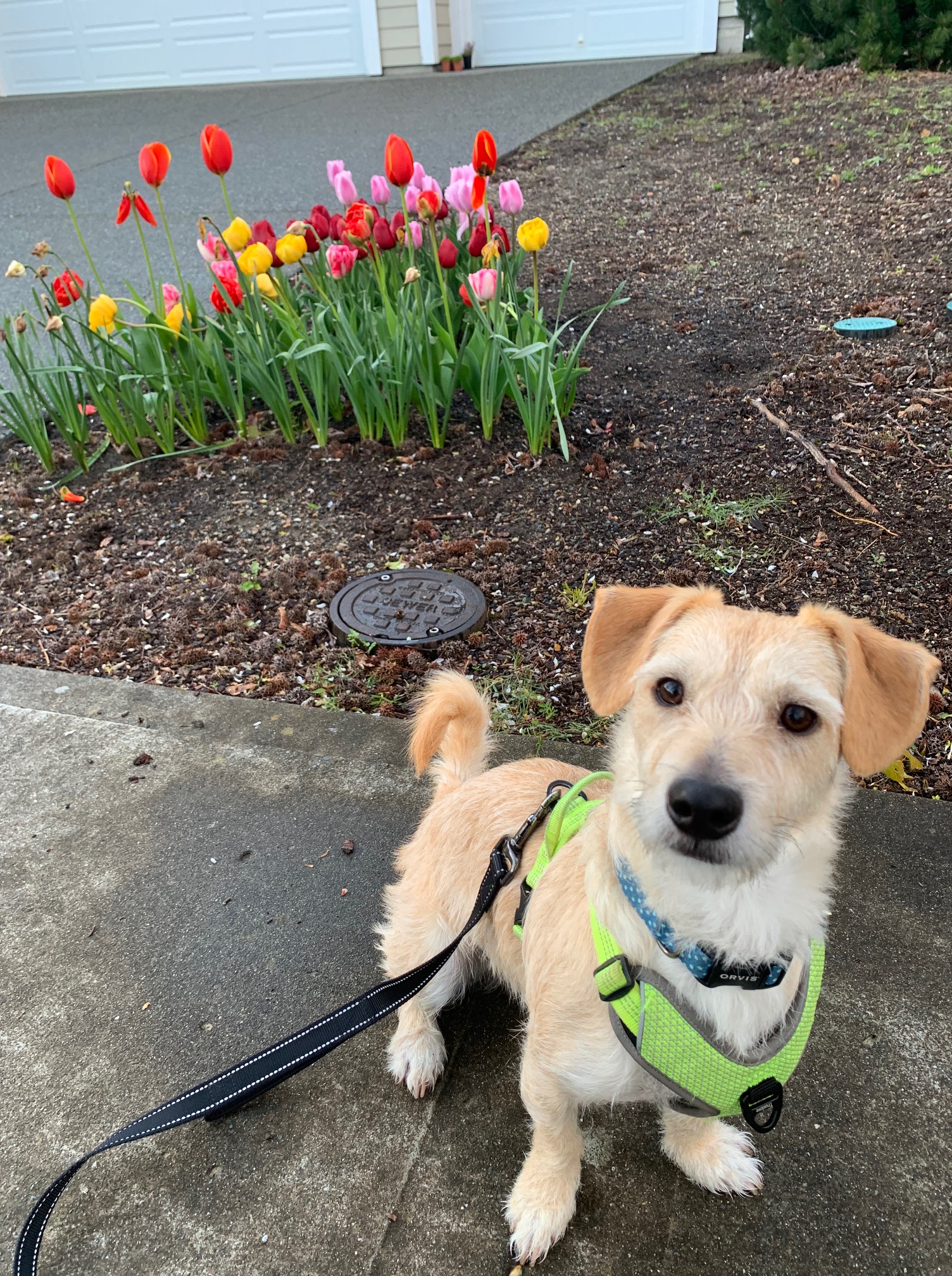
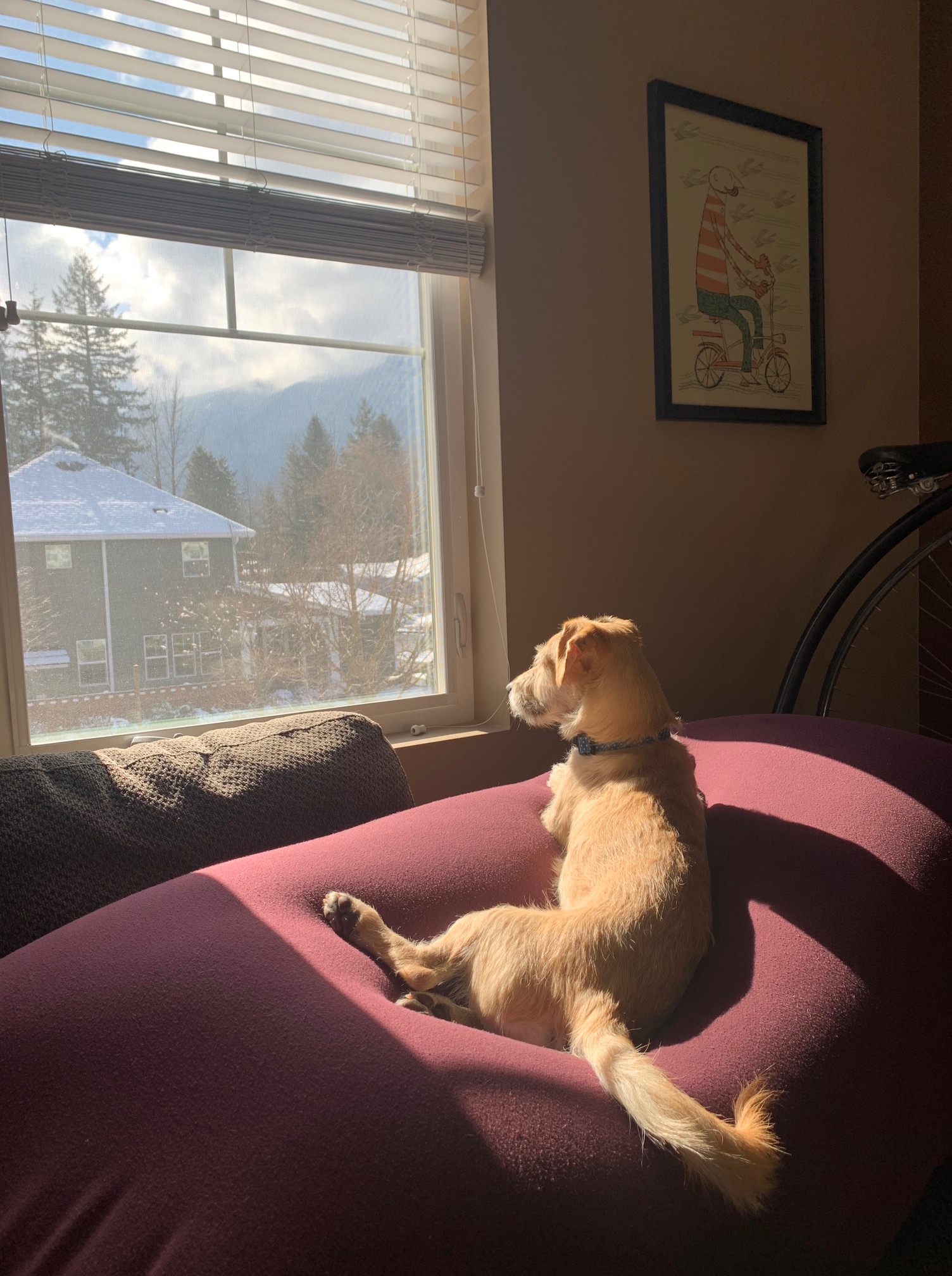
Before I submitted my resignation, I took the dogs on a long walk so I could think about everything. We took a different route than usual and happened upon a house with several painted rocks nestled in a planter next to the sidewalk. My eyes went straight to this one.

I later returned to claim this rock, and I’ll keep it next to my laptop as I write and face uncertainty and write and deal with rejection and write and hopefully get a big win eventually. I know in my bones I’ll never regret trying, and that’s enough for me.

So what’s the deal with this book? It’s a memoir about my mom, of course, and about me as well. I’m far from the first person to feel compelled to write about a dying or dead parent, but I’ve struggled to find a book that captures the unvarnished experience of early onset Alzheimer’s. And five years into this, as I continue to sort through hundreds of her photos and letters—my mom kept everything—I’m learning more about her life in the only way I still can.

She hid the most tender parts of herself even when she was well, so I only knew the tough exterior she chose to show the world. A lifelong quilter, she spent thousands of hours stitching her stories with fabric and thread—a language I don’t speak. I’ll share what I learned when dementia began to unravel the truths she sought to keep hidden. I’ll also recount my own truths I’ve never written about before. If the ravages of Alzheimer’s await me, I want my daughter to know who I really am.

It’ll be a memoir about autonomy won and lost; about self-determination, resilience and the power of the mother-daughter bond; about all the joys and sorrows that are sewn together to tell the stories of our lives—and make them worth remembering.

I have no illusions that this will be a quick, easy or even profitable journey. Luckily, I’m well trained in mental and emotional endurance. My plan is to put my head down and write, write, write through November—which, coincidentally (or not?), is National Novel Writing Month—and see how the story takes shape, then finish my book proposal and start querying literary agents in the new year. I only need a few sample chapters to send out with my memoir proposal (whereas novels require a completed manuscript), but I want to get into the habit of writing every day and honing the best material.

It would be so chic and cool to not tell you about any of this and then suddenly post about signing with an agent or scoring a book deal, but my biggest wins come from declaring I’m going to do something that feels scary and impossible, then using the adrenaline from making my goal public to power through and actually do it.

And I could really use your support and belief in me. I know a number of you have been following along with my story for more than a decade. I hope you’ll come along as I write the next chapters.

Conversations I Wish We Had About Dementia

Like many millennials whose Sisyphean task is to assist their boomer parents with technology, I visited my mom in January to help facilitate a video call with a nurse practitioner. I found her pacing up and down the hallway.

“Hi, Janet!” I greeted her. “I’m your daughter Devon.”

“Oh!” she said, as if she knew she should recognize me, but did not. I asked her how she was doing. “I feel scared,” she replied.

“Why do you feel scared?” Her answer was a nonsensical jumble of words. She was able to articulate her feeling, but not the underlying reason. I venture she was scared because she didn’t know where or when she was. I’d be scared, too.

During the video call, I cringed as the nurse practitioner explained my mom would be reevaluated for hospice in the coming weeks. I tried not to say the word “hospice” in front of her, even though she’d been on it for six months. I glanced at her nervously, wondering if the word penetrated her consciousness. She stared out the window of her room, clenching the wooden slats of the blinds with both hands. When she’s nervous or upset about what’s going on around her, she tends to grip the nearest object. Her entire world has slipped away; she is desperate to hold onto something. 

I’ve spent the last six years watching my mom deteriorate, and it’s been five years since we discovered why. 

At 37, I am an early survivor of this specific hell. It’s quiet here. After her diagnosis at age 61, it took me more than a year to be able to speak the words aloud: “My mom has Alzheimer’s disease.” Even then, I could only whisper it between sobs.

Eventually I found a virtual support group for adult children of parents with early onset Alzheimer’s—the kind that strikes before the age of 65—and a handful of us whispered to each other over Zoom once a month. I began sharing my experiences on social media and more people my age came out of the woodwork to say they, too, are slowly and silently losing a parent. 

“She’s in the end stage now and it’s the worst thing I’ve ever seen,” one woman in her thirties wrote to me about her mother. “I haven’t met anyone else with a similar experience.”

Alzheimer’s was never on my radar; there is no record of it running on either side of my family. My mom was a highly capable executive assistant who spent her free time quilting and tending to her vegetable garden. She looked forward to retirement and becoming a grandmother. I’ll always remember how she danced around my living room in 2015 when I shared the news of my pregnancy. I didn’t expect to rejoice over my daughter learning how to use the toilet, dress herself and read at the same time my mom lost those abilities.

We certainly never discussed how things might play out if she were to develop dementia. It’s a conversation I didn’t think to have—and might have been afraid to have, as if saying “Alzheimer’s” aloud could conjure it into reality. Still it crept up on my mom, stealthy and vicious, and stole her from me piece by piece.

My friends—most of whom have healthy parents who host holiday dinners and babysit their kids on weekends—sympathize, but can’t relate. It’s my lonely reality right now. But like the Stark family in “Game of Thrones,” I issue an ominous warning to my fellow millennials: Dementia is coming. 

I’ve seen it with my own eyes; I’ve heard it in the whispers. And the statistics are grim. The Alzheimer’s Association estimates 6.9 million Americans age 65 and older are living with Alzheimer’s dementia in 2024. It projects this number will balloon to 12.7 million by 2050.

I worry about the onslaught of devastation that’s coming for boomers and their millennial children. Our parents are the ones who swept us back into the nest during the Great Recession, kept us on their health insurance plans until we turned 26, and opened up guest rooms and basements to us temporarily—and not so temporarily—during the pandemic. Many of us are still paying off decades-old student loans. We’re unprepared to not only lose our parents’ support, but to muster all our energy and resources to support them. 

How many boomers have long-term care insurance or the savings to fund long-term care? How many of their children realize they will be the ones to provide or pay for this care? Are there enough neurologists to diagnose millions of new Alzheimer’s cases? Enough home health-care workers to support family caregivers? Enough memory-care facilities to house patients? Enough therapists to help families survive the excruciating experience of losing a loved one over many years?

To echo my mom, I feel scared. 

I’m not equipped to fix our health care system’s current and future failures around caring for Americans living with dementia and supporting their families, but I do have some advice on a personal level for families who may face this fate. It all starts with a conversation.

My family was completely unprepared for all the challenges of Alzheimer’s disease. Nothing will ease the heartbreak of an Alzheimer’s diagnosis, but making key decisions ahead of or shortly after a diagnosis can ease some heartache down the road for loved ones. 

When my mom was diagnosed in November 2019, I thought we had plenty of time before we needed to discuss the details of her inevitable decline and confirm her wishes. But the initially slow progression of her disease accelerated into a freefall during the first year of the pandemic, and we were left scrambling for solutions from a place of panic. Once the window has closed for someone with dementia to make informed decisions about their future, loved ones are left to make their best guesses. 

A survey by the Kaiser Family Foundation found that fewer than half of adults have seriously discussed long-term care plans with a loved one—including who will help take care of them and how they will pay for health care and other support they’ll need if they become seriously ill. And nearly 7 in 10 boomers will need long-term care in their remaining years according to the U.S. Department of Health and Human Services. Families should have open conversations now about the future, whether or not there is a history of dementia in the family. 

Get real about finances. 
Discuss the resources you’ll have available to pay for care. The cost of caring for someone with a progressive neurodegenerative disease is staggering, and the truth about who pays for it can be summed up by one of fellow millennial Taylor Swift’s songs: “You’re On Your Own, Kid.” 

Medicare only pays for long-term care if you require skilled services or rehabilitative care in a nursing home for a maximum of 100 days; that hardly scratches the surface of the amount of care needed for someone with dementia who typically declines over several years. Medicaid may cover some long-term care costs, but only for those with very limited financial means. Long-term care insurance can help, but be sure to review policy details and coverage limitations. Veterans may be eligible for benefits through the Department of Veterans Affairs. My friend Lauren, who cared for her grandmother with Alzheimer’s and previously worked for the Alzheimer’s Association, advises to “check out your state’s aging department or your local Area Agency on Aging (AAA). Each state is different and some have bridge programs for people with Alzheimer’s or other diseases that can be a stipend to pay for assisted living or memory care until someone qualifies for Medicaid. In some cases there are home-care grants, and others will pay for facility-based care.”

But many families—like mine—rely on personal savings and home equity to pay for care. My mom’s husband Don was initially determined to care for her at home, but in the darkest days of the pandemic, the emotional and physical toll it took on him was clear and cruel. “We can’t save her,” I told him, “but maybe we can still save you.” We moved her into a memory care facility near Seattle, which over the past four years has drained hundreds of thousands of dollars from the retirement savings they worked so hard to build. The monthly cost has risen to more than $13,000. We are counting down the months until we’ll need to sell their home. 

It’s a stark reality many Americans face, as detailed in the New York Times series “Dying Broke,” and few people realize it until it’s too late to prepare. Try calculating the median costs of care in your area—including in-home care, adult day care and full-time care in a facility—and consult with a financial advisor to get personalized guidance based on your circumstances.

Talk through medical options. 
Alzheimer’s disease is invariably fatal, but there are medications and experimental treatments that may help manage symptoms or slow the progression. Discuss whether or not you’d want to take medications or participate in a clinical trial. 

My mom began taking two medications immediately after her diagnosis. I realized in the spring of 2023 that her quality of life had declined to the point where it no longer made sense to attempt to slow the progression of the disease and, after many discussions with family members and her doctor, we tapered her off the medications. Even though I felt this was the right decision—the one she likely would have made if she could—making it was agonizing. My mom had a standard advance health care directive, but it did not account for the nuances of dementia care. How I longed for a clear record of her wishes.

Consider filling out the dementia-specific advance directive created by Dr. Barak Gaster, an internist at the University of Washington Medical Center. Discuss it with loved ones, and share copies of it with them and with health care providers. The Conversation Project also provides a guide to determining what matters most to someone living with dementia so they can have a say in their health care.

I agonized for months over whether my mom needed to endure her decline at all. Would she have wanted to end her own life instead? Should I have helped her explore options while she was still capable of carrying out a plan? The answer, it turned out, was no. Once I felt brave enough to broach the topic, Don assured me her Catholic upbringing made the idea impossible. Having no religious roots myself—and having witnessed her suffering up close—I can’t say I’d have the same answer if I find myself in her shoes someday.

It’s worth discussing where you stand on the idea and considering the options, which do not include medical aid in dying in the U.S. Even in the states where it’s legal, people with dementia are excluded from utilizing it due to two of the requirements: once they have less than six months to live, they are no longer able to make and communicate an informed decision to health care providers.

However, it filled me with great peace to read Amy Bloom’s beautiful memoir “In Love,” which chronicles her husband’s decision following an Alzheimer’s diagnosis to end his life with the help of Dignitas, a Swiss nonprofit organization. I also learned about voluntarily stopping eating and drinking, and read with great interest “The Last Day of Her Life,” a New York Times Magazine feature about how Cornell psychology professor Sandy Bem orchestrated an early exit on her own terms.

Complete and share important paperwork.
In addition to having a standard will and estate plan in place, it’s crucial to record all financial and health care wishes in the following legal and medical documents. Consider working with an attorney who specializes in estate planning or elder law to cover all your bases.

Discuss the details of these documents with the people who will be responsible for carrying out your wishes, and share copies with them and with health care providers. Don’t skip the sharing part; no one can follow your directions if they don’t know they exist.

Durable financial power of attorney: Designate an agent (and at least one backup) to make decisions regarding your money, property and belongings if you lose the capacity to do so. Following a dementia diagnosis or other mentally incapacitating health event, the agent should contact every entity involved with your finances—including Social Security, Medicare, the IRS, insurance companies, banks and utilities—to complete any paperwork required for them to recognize the agent as the sole executor of your accounts. For example, the Treasury Department doesn’t recognize power of attorney for handling federal payments like Social Security; one must separately apply to serve as a person’s representative payee.

Don described the entire process of taking control of my mom’s finances as a total nightmare. He was met with red tape at every turn, and had to physically bring my mom to several offices along with documentation from her neurologists regarding her diagnosis and mental incapacity. It was incredibly stressful for both of them. “If she had been any more incapacitated”—at the time, she was still able to hold a normal conversation and sign documents—“I don’t know how I would have possibly done it,” he said.

Advance health care directive or living will: Specify what actions should be taken for your health if you lose the capacity to make decisions. Make clear your wishes regarding artificial life support and more.

Durable health care power of attorney: Designate an agent (and at least one backup) to make health care decisions for you if you lose the capacity to do so. Discuss your wishes with these agents and make sure they are comfortable carrying them out.

Do not resuscitate (DNR) order: This medical document instructs health care providers not to perform CPR or other life-support procedures if your heart or breathing stops. Discuss your wishes with your physician, who will fill out the form.

Portable medical orders (POLST): This medical document is more specific than a DNR or advance health care directive and is for people who already have a severe illness, like dementia. The form and its exact name vary by state, but it communicates your wishes as medical orders, including whether or not you want CPR, to be transported to a hospital and to receive medically assisted nutrition. Discuss your wishes with your physician, who will fill out the form.

Millennials: Plan for your future now.
The longer we live, the more our risk of dementia increases. The time is now for millennials to prepare for our own potential long-term care needs.

If you’ve held off on contributing to a 401(k), IRA or other retirement savings plan: start today. If you already contribute and are able to increase the amount: start today. If you’ve never even heard of long-term care insurance or looked into applying for it: start today.

I felt hopeful in 2019 when Washington state established the WA Cares Fund, a first-in-the-nation mandatory long-term care insurance program, but almost laughed when I saw the maximum benefit is $36,500 (adjusted up to inflation). It’s a drop in the bucket for someone with dementia. But still, it’s better than nothing, and far more than what many Americans have planned for their long-term care.

If you have any assets, a spouse or children, it’s essential to have a will and estate plan in place, and to create a record of your financial and health care wishes before you’re no longer able to do so. You can always change them later. 

Let’s break the silence.
Alzheimer’s is the most-feared disease of older Americans, and the only one of the top 10 causes of death in the U.S. with no known cure. The stigma around Alzheimer’s causes people to live with it in silence and shame, and their families to grieve in silence and shame as well. Some call it a family disease because of the devastating impact it has on loved ones’ mental and physical health.

I’m done whispering. Now I’m yelling: Dementia is coming, but we don’t have to suffer through it alone.

I’m encouraged by my generation’s propensity to share our struggles, thanks to social media, and to embrace therapy and support groups. I believe many of us will cope with losing our parents by shedding light on our darkest experiences. It makes a world of difference to connect with others enduring the same heartbreak. The Alzheimer’s Association has a 24/7 helpline (800.272.3900) and offers support groups and a free online community for people living with dementia and their loved ones.

The greatest tragedies are made even worse by our failure to learn from them. And the lessons we learn are made even more valuable when we share them.

I still can’t save my mom, nor the millions of boomers who will be diagnosed with Alzheimer’s in the coming decades. Maybe I can, in some small way, help save the people who love them.
A Julia Child Christmas

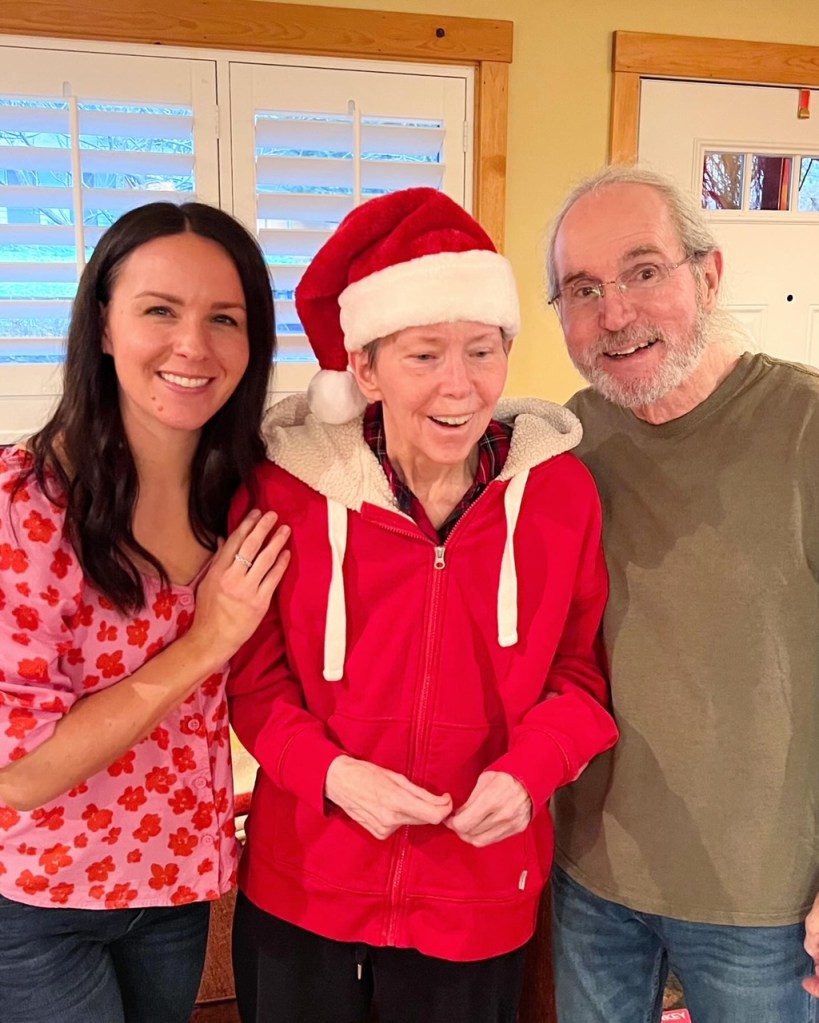
The holidays are a tricky time for many people, for so many reasons. I learned from last year’s heartbreak to go into this year’s celebrations with zero expectations. The result: a happy Christmas with my mom, who smiled all evening.

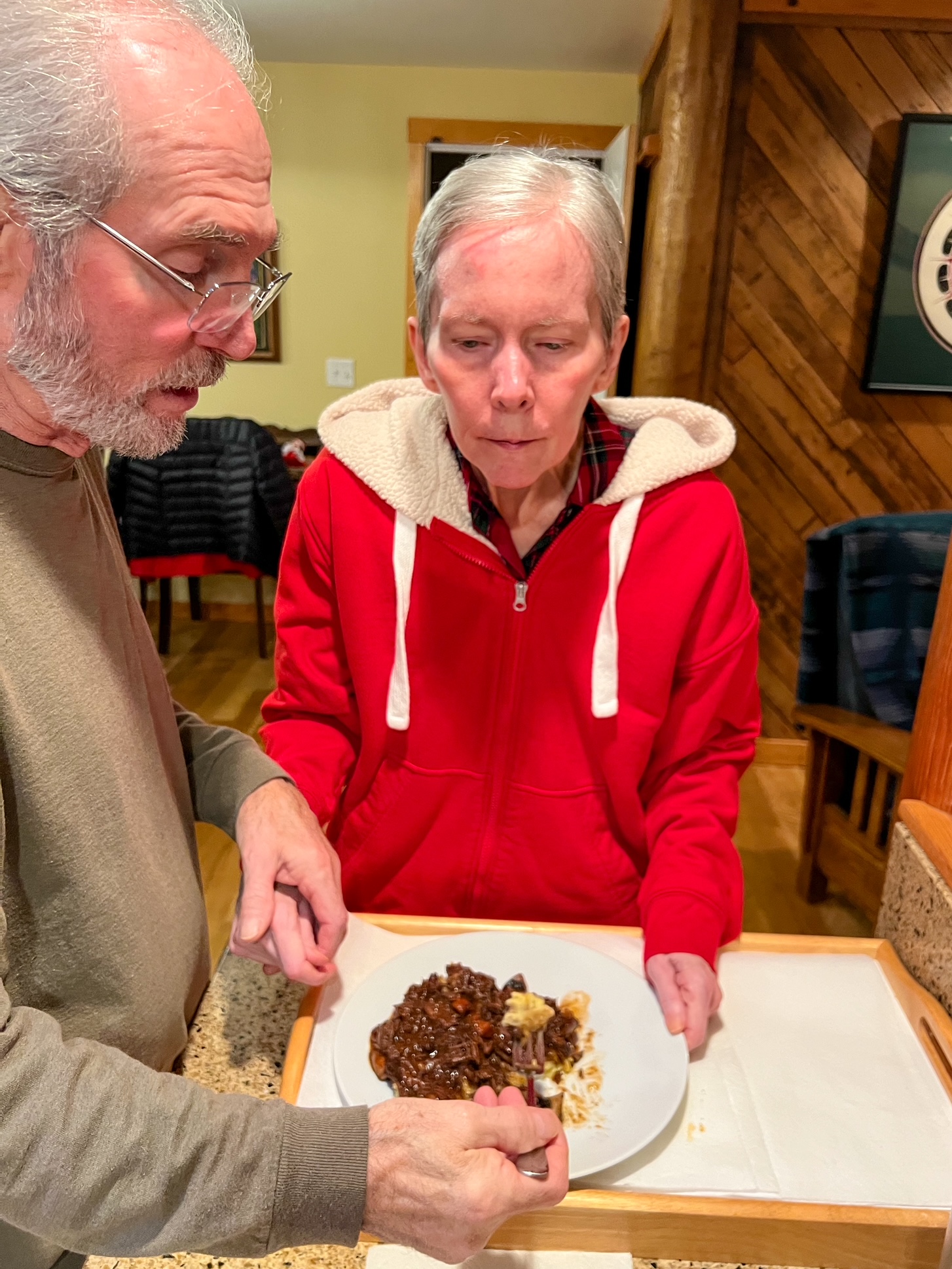
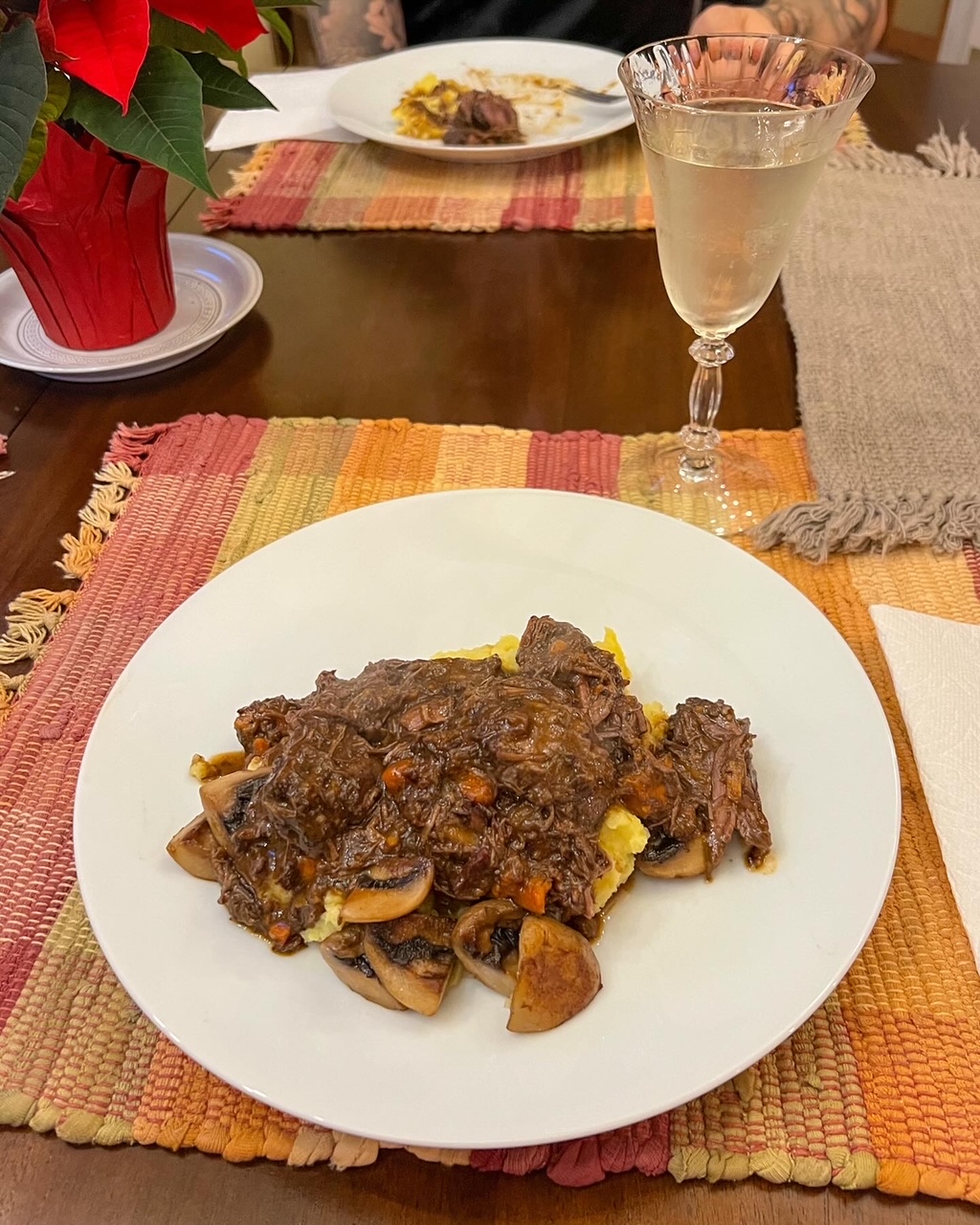
Last year, I gave her a fleece blanket printed with family photos, and she had no reaction at all when I helped her open it. This year, I put my energy into making something she could still enjoy: Julia Child’s bœuf bourguignon, a dish we made together for Christmas dinner in 2010. It’s a labor-intensive endeavor with incredible results.

At 23, I needed my mom’s guidance to make it. It felt good to work my way through the steps we once followed together and realize, at 36, I am more than capable of doing it on my own. Her gift to me then, my gift to her now: a dish filled with love and endless patience, made richer over time.

The night ended in tears all around because we knew this might have been her last Christmas. I hope it was. I would have been ashamed to say that once, but I say it with my full chest now. Nothing good awaits. I would love for my memories of her enjoying this Christmas to be the ones that endure.

I go through periods where I’m unable to read about others’ experiences with dementia because I don’t have the capacity to absorb anyone else’s pain. Other times, like now, I feel nourished by seeing my darkest feelings reflected on the page. “Dementia sucks you in with a terrible centrifugal force,” Suzanne Finnamore writes in her new book My Disappearing Mother. “It puts you in the position of wishing your own mother dead.” On top of the emotional agony of watching a parent wither away over many years, the shame around having feelings like this is unbearable. I vow to leave it behind in 2023.

I love my mom and I wish for her suffering to end. I am a good daughter and I will be relieved when she dies. 

Dementia is an endurance sport, and right now feels like mile 20 of a marathon. The toughest bits stretch far ahead; the finish line keeps moving, and a different pain awaits there. I will do whatever it takes to continue on, side by side with my mom. 

At 23, I needed her guidance. At 36, I am more than capable. My gift to her now: a journey filled with love and endless patience.

Hot Tub Time Machine

“We still need things from our parents—some understanding, some piece of love, whatever it is. There never comes a time when you … don’t sort of hope, even in their decline, that they can still be there for you.”

Anderson Cooper on anticipatory grief

This is a story about getting drunk in a hot tub, but it’s not quite as exciting as the circumstances imply. For that, please proceed directly to a very different corner of the internet.

It was a Thursday, two days before my thirty-fifth birthday. I had a shitty workday and, by quitting time, needed to soak in our hot tub with a big glass of sparkling rosé in hand.

We hung out in there for a while as a family, and I had such a lovely buzz going that I fetched another glass and returned to the hot tub as Aaron and Evie got out. I sipped and scrolled on my phone as both forms of bubbles melted away my tension. I must have exhausted the content on my social media feeds because I ultimately found myself in my voicemail archive, staring at dozens of entries indicating messages from my mom.

Since her early onset Alzheimer’s diagnosis in 2019, my mom has slowly slipped away. It happened so gradually that every time I visited, her general reticence and increasingly jumbled words seemed normal. But I remembered, staring at those voicemails, that she was once upbeat and articulate. She once knew how to call me, and did so often to confirm plans, thank us for coming by the house, or check on us during inclement weather. And she always called on May 21 to sing happy birthday to me.

Two habits that drive Aaron crazy—my tendency to keep my phone on silent and never answer calls, and my total disinterest in deleting anything—proved valuable in that moment. My voicemail archive held pieces of mom I thought were lost forever.

I began listening to her messages and transported back in time. It was 2018, and my mom was wondering what time we were meeting at the mall for our Mother’s Day shopping trip. It was 2019, and she needed to know my Social Security number to update her beneficiary information for a new insurance plan. It was 2020, and had I heard about this virus going around?

I closed my eyes and listened to the mom I used to know, the mom who no longer existed—at least in any way she could communicate to me. I let my now intense buzz convince me that I had just missed those calls, that she was still the same. I could call her back right now and say, yes, I will stop by the store on my way over and pick up a bag of ice; no, don’t worry about paying me back.

And then I listened to the birthday messages. She and my stepdad sang an exaggerated version of happy birthday, with my mom replacing “dear Devon” with “dear sweet Devie Doodle Bug.”

It was then I started crying, realizing I’d never get a birthday phone call or voicemail from her again.

This is a small loss in the grand scheme of everything Alzheimer’s has stolen from us. But that evening—thanks in part to potent rosé—it unleashed a tsunami of grief.

In an effort to Be Okay and enjoy my life, I rarely tap into that deepest level of hurt. I’ll shed a few tears every now and then, particularly during therapy, but mostly I keep things tight. With my defenses down, I gasped for air as sobs overtook me.

I found myself wrapped in a towel, crumpled on my bedroom floor, raging over the phone to my stepdad about how fucked up this whole situation is. Why her? Why us? He understood and talked me down from the height of my hysteria.

Eventually I pulled myself together enough to get dressed and take Wally for his nightly walk. As we set out around the neighborhood, I called my mom on the off-chance she’d answer the phone. I just wanted to hear her voice. I just wanted to know she was still here.

She didn’t answer my call. Normally I would leave it at that, but something compelled me to try again.

“Hi, Mom?” I said, my voice cracking. “How are you?”

“What’s wrong?” she asked, concerned. I couldn’t believe she’d recognized the heartbreak in my voice.

“I just miss you,” I replied. “You… live so far away.” Our physical distance wasn’t the problem, but I didn’t want to mention the real issue.

“I know,” she said. “I miss you, too.”

I started crying again, struck by her clarity. It was 8:30pm and she was probably exhausted, yet she was able to express herself in a way I hadn’t witnessed in a long time.

Our phone conversations—on the rare occasions she answers—typically last about five minutes. I tell her everything that’s happened in the few days since I saw her last, then run out of things to say. She doesn’t contribute much, and there’s only so much silence I can bear to let hang between us.

On this night, we talked—like, a real back-and-forth conversation that mostly made sense—for 19 minutes.

We talked about my birthday coming up in a few days, and she asked how old I was turning. “Thirty-five,” I said, and she laughed: “How can that be? I still feel about forty!”

We talked about memories from when she really was forty and I was eleven, which were much more vivid for her than anything that happened in the past week. We talked about how she was worried that she hadn’t heard from Don lately, even though I know he calls her multiple times a day, every day. And we talked about how we missed each other, and how she was sad to hear me sounding sad. We said we loved each other, and that we’d talk again soon.

After we hung up, I took huge, deep breaths and tried to memorize everything about what had just happened. I had taken a photo of a stunning sunset during our chat. I took a screenshot of the call log. I wanted tangible evidence that I had gotten my mom back, if only for 19 minutes.

It struck me that I hadn’t been mothered in a long time. It’s not something I really appreciated when I did experience it, and it’s not something I realized I’d missed until that moment. My mom and I always had a good relationship—except for a few teenage years, when my hormones may as well have been napalm—but it’s not like I constantly turned to her with my boy troubles or friend drama. I didn’t seek from her the words of parental wisdom you hear at the end of every Full House episode.

But she was always there for me for the big things, like when my BAC was higher than my GPA the first quarter of college and I was hospitalized with pneumonia from wearing only skimpy going-out tops to freezing frat parties. Or when I wanted to go on the pill and asked her to take me to the doctor since I was still on her health insurance, and she did so without judgment. Or when I revealed I was thousands of dollars in credit-card debt after graduation, and she helped me make a plan to pay it all off instead of admonishing me for my stupidity. (She was relieved since she thought my big secret was that I was pregnant—which I never was, thanks to the pill.)

I still try to rely mostly on myself (and my therapist) to manage life’s everyday struggles. I like to keep my sadness contained, not wanting to infect others. Keep things tight, right? But it turns out I do still need my mom.

I went on to have a lovely birthday weekend, celebrating in person with friends and all different parts of my family, including my mom. I didn’t get a happy-birthday voicemail, but I did get an in-person rendition, which is definitely better. Someday that will be gone, too.

As a mother, I now understand my birthday means even more to my mom than it does to me. It’s my birthday, but it’s her Birth Day. I think about how April 29, 2016, is the most special day of my life, and figure May 21, 1987, must be right up there for my mom. I’m her second kid, but she made it no secret she wanted a girl and would keep trying until she got one. I may have come bursting out before she could get a desperately wanted epidural, but I think I made up for it with the fact that she’d never have to go through that again.

I try to be grateful for what I have left of my mom and not focus on what we’ll lose next, or guess at when she’ll leave us for good. I’m conflicted between wanting to keep her earthside forever and wanting her to be released from her pain.

She endured my excruciating arrival; I’ll endure her excruciating departure. Love is at the center of it all.

I don’t know what happens to us after we die. I’m humbled enough by the magnitude and mysteries of the universe to admit that. I respect anyone who possesses the faith to be certain that heaven or hell or some other manner of afterlife awaits us. There is safety in certainty. I prefer to marvel at all the possibilities.

My mom has always said, half jokingly, that she’ll haunt me when she’s gone. If she has any choice in the matter, I’m sure she will. But if there is some grand plan for our existence, I don’t believe hanging around my house and flickering the lights is her destiny. I like to think she’ll move on to something better.

I hope her energy, unleashed from the plaques and tangles that choked it in this lifetime, finds freedom as something wonderful in the next. Maybe she’ll be a bird or a butterfly. Maybe the universe has a sense of humor and she’ll be an elephant. Or maybe her energy will disperse, becoming one with the elements. Maybe it will coalesce, on occasion, when it feels some force pulling it back together and toward something it once knew.

When my mom is gone, on my birthday, I’ll listen for her. Maybe I’ll let my skin go wrinkly in the hot tub and remember that night it was a time machine. Maybe a spring breeze will tickle my neighbor’s wind chime. Maybe I’ll close my eyes and believe it’s my mom calling to sing to me.

Wally: Part 2 (and More Life Stuff)

Start with Wally: Part 1.

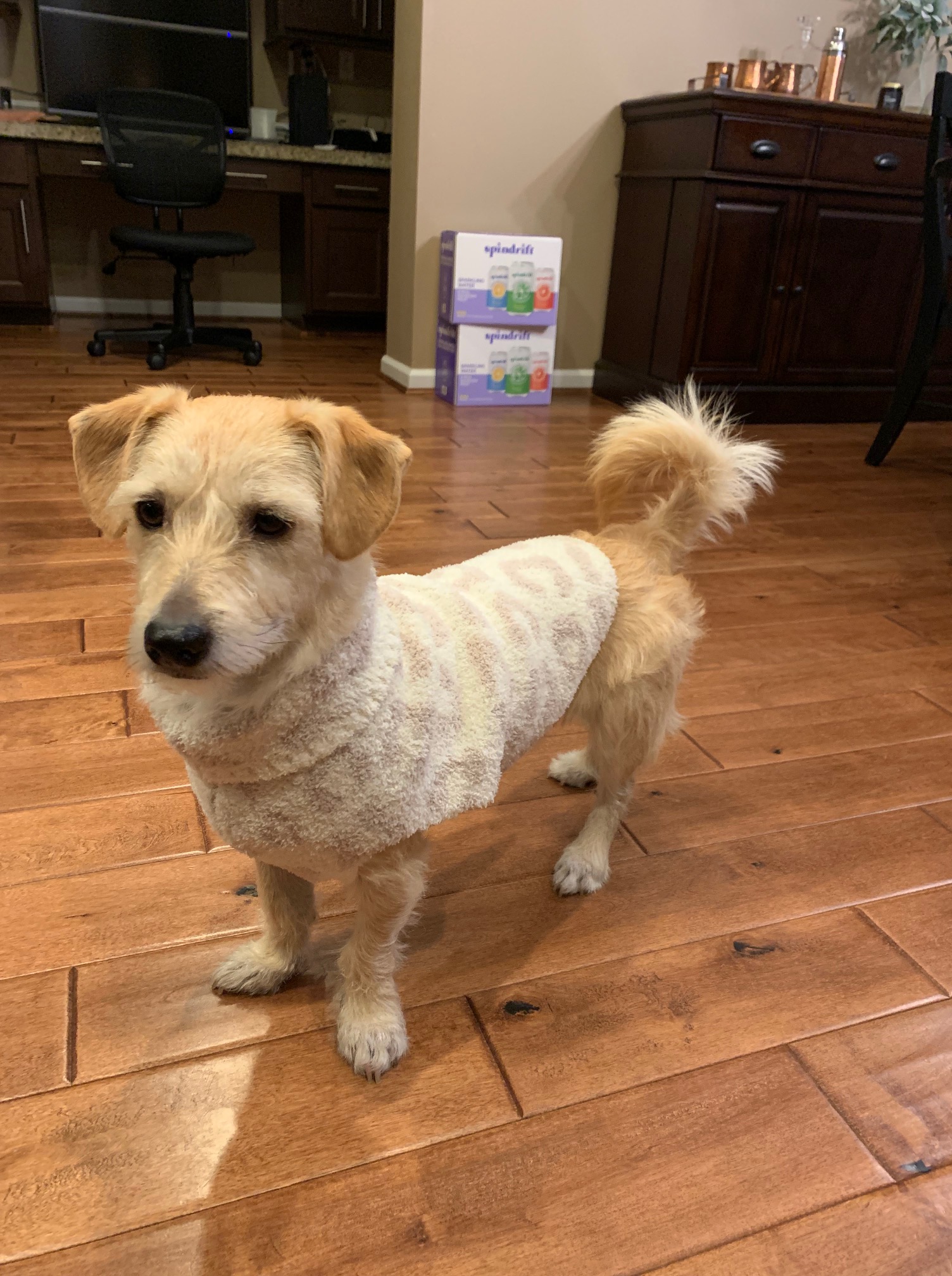
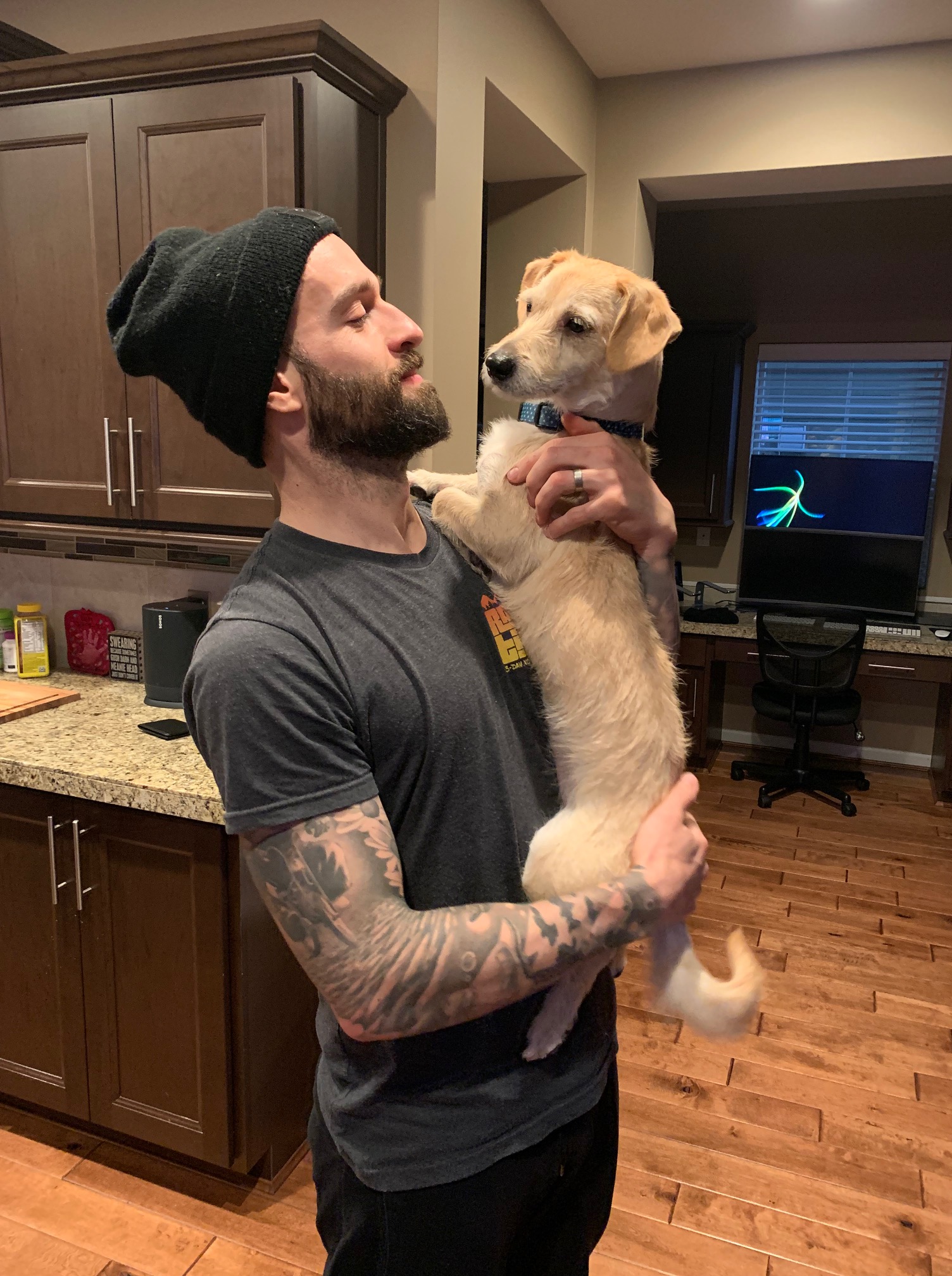
Wally turned out to be everything his foster Karen said he was and more: an incredibly sweet little guy who loves all people and dogs; calm most of the time, yet super bouncy and energetic when he’s ready to play; remarkably quiet, unless he feels like he’s not getting enough attention; and so loving and loyal to us, his new family.

Karen did a great job potty training Wally, so aside from a handful of accidents in the first few weeks, we successfully skipped that hurdle of new dog ownership. Our only challenge was that Karen had allowed him to sleep in her bed, so he repeatedly tried to join Aaron and me in ours the first few nights, but eventually got the memo and learned to settle into his dog bed in our room.

I figured January would be a slow month after the holidays when I could really focus on getting to know Wally and establishing a new routine with him. I was wrong.

My mom contracted Covid at her memory care facility, and my stepdad and I heard the news from her on the phone before we ever heard anything from the facility. She isn’t the most reliable source, so we were left wondering if she really had it or not until we could get ahold of the head nurse. It turned out she had indeed tested positive during regular testing of the entire facility—and was luckily asymptomatic—but for some reason it took them nearly 24 hours to contact us, her family, and let us know.

That was the cherry on top of a huge pile of grievances we had with that facility, and we decided then and there she needed to move ASAP.

Moving is stressful for anyone, but especially for someone with dementia who needs to be in familiar surroundings to feel secure and grounded. The first time we moved her into memory care, in January 2021, it took her about three months to settle in. That period was extremely stressful for her and for us, with many phone calls and visits that ended in tears on both ends. I was not looking forward to going through that again, but we knew it was for the best.

I chose that initial facility under impossible circumstances, in a pre-vaccine world when we weren’t allowed to go inside most facilities to tour them in person, when I was desperate to give my stepdad some relief from being a 24/7 caregiver, and desperate to help my mom—who had lost an alarming amount of weight and struggled with paranoid delusions at home—in any way I could.

I don’t blame myself for choosing the wrong place, but I did see this new move as a way to right that wrong.

I started from scratch all over again, calling every memory care facility I could find on the Eastside and gathering all the information about availability, pricing, activities and more. I narrowed the options down to six—a mix of assisted living/memory care, dedicated memory care and adult family homes—and scheduled three intensive days of in-person tours and assessments.

The thing about memory care (and I supposed regular assisted living) is that you can’t get the full picture of how much it will cost each month unless you do an assessment with the facility’s nurse, where they ask all sorts of questions to determine the level of care a person will need. The higher the level of care, the higher the cost, on top of the monthly rent for the room itself.

For example, a room in memory care might run $4,000 per month in rent, but care might start at $3,000 per month for a low-needs person and go up from there if they need more assistance dressing, bathing, eating, etc. There’s also a one-time “community fee” due upon move-in that can be $1,500 to $5,500 or more, which really makes it painful to move.

(Is this the first time you’re realizing how much memory care costs? Did you know most families have to pay out-of-pocket? In the Seattle area, $7,000-$10,000+ per month is the norm. Here’s your nudge to make sure your parents have long-term care insurance!)

Because cost was a decision-making factor for us, I scheduled the tours and assessments together so we could walk away from each facility knowing exactly how much it would cost—which was super efficient, but made for three very long and exhausting days. We’d do one tour and assessment in the morning, eat lunch, then do another in the afternoon. Talking with strangers about the specifics of your mom’s terminal illness for an hour twice a day is draining. Touring sad little hallways filled with people who aren’t sure where or who they are is heartbreaking. Trying to decide where your mom is going to live—and quite possibly die—is… I can’t think of the right word, but it fucking sucks.

After the last appointment of each day, I had about a 45-minute drive home by myself when I’d blast loud, happy music and drink in all the lovely sights of the world—puffy clouds, streaks of sunset—and transport myself from the land of the dying back to the land of the living.

And when I got home, there was Wally.

Not to say that I didn’t find comfort in Aaron and Evie, but dogs bring a different sort of joy. They’re invariably, unabashedly, ridiculously thrilled to see you each time you walk in the door. They give amazing, furry snuggles. They don’t ask questions, however well-intended, that might make you cry.

Sweet Wally came right when I needed him most.

The great thing about this journey to find a new place for my mom was that she came with us on all these tours. Last time, my stepdad and I peeked into memory care windows and talked to facility directors without her, worried that she would get confused or freaked out by the process.

This time, she was ready to get the hell out of her old place and was thrilled to see all these new places. She had definite opinions on which places she did and didn’t like, and best of all: the winning place was a clear, unanimous, enthusiastic yes from all three of us.

We chose a dedicated memory care facility, which has three floors that my mom can move about freely, including a secure outdoor garden area she can access at any time. It’s clean and bright and cheerful, with friendly and helpful staff that seem happy to be there. It was the only place that brought me to tears as we toured it; the only place where it felt like she could really live, not just exist, before she dies.

It was such a relief to choose this wonderful new place in early February and give notice to her old facility, making plans to move her in March. And then! Evie got Covid.

It was inevitable, since Covid seemed to rip through her elementary school after the holidays. Luckily, she was fully vaccinated and only had a day or two of mild cold symptoms, and Aaron and I somehow never had symptoms or tested positive. Still, it was another challenge to have her be home and contagious while Aaron and I tried to keep her busy and keep up with our work, plus quarantine ourselves. Walking Wally (while wearing a mask) was my only escape.

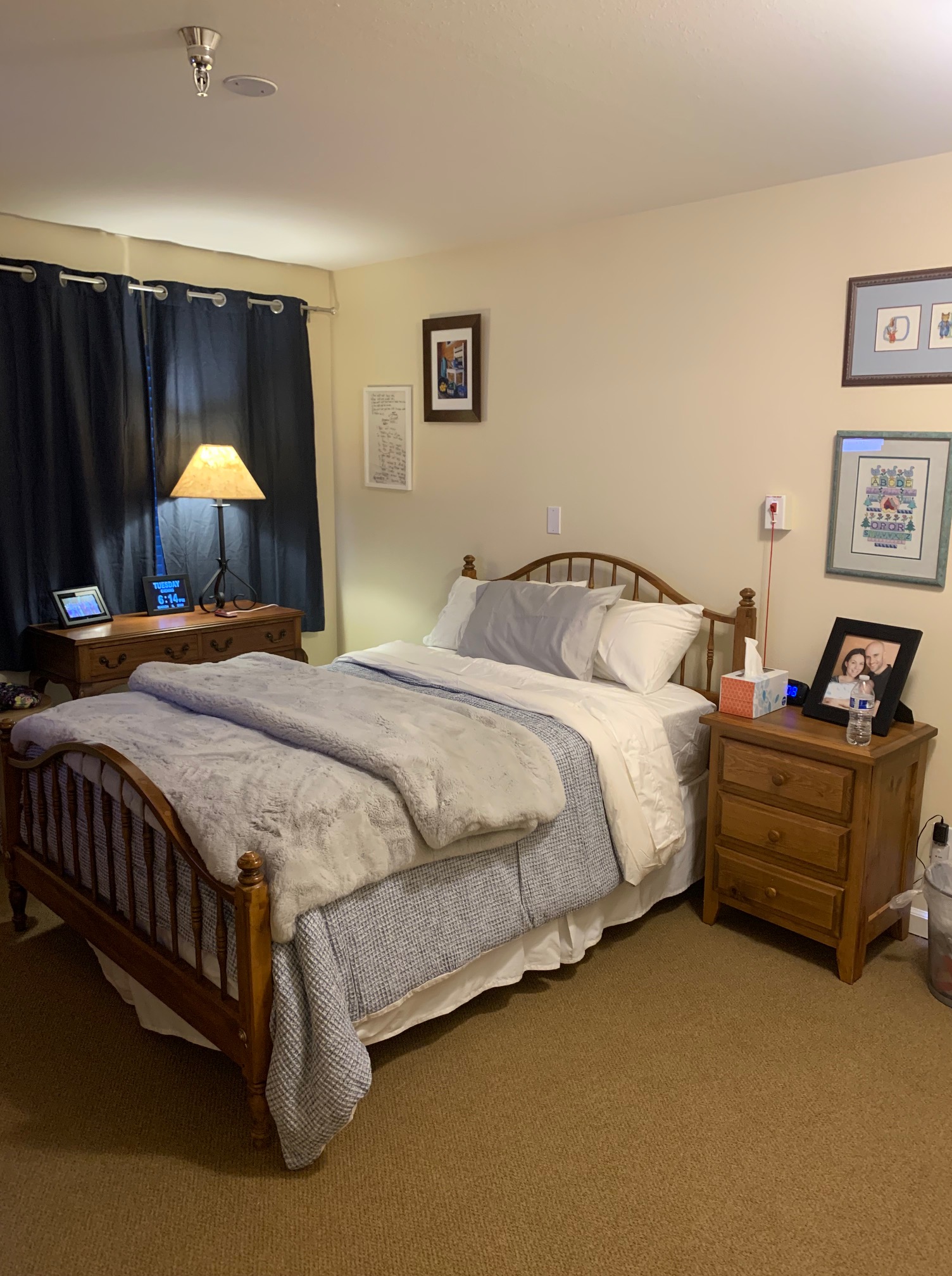
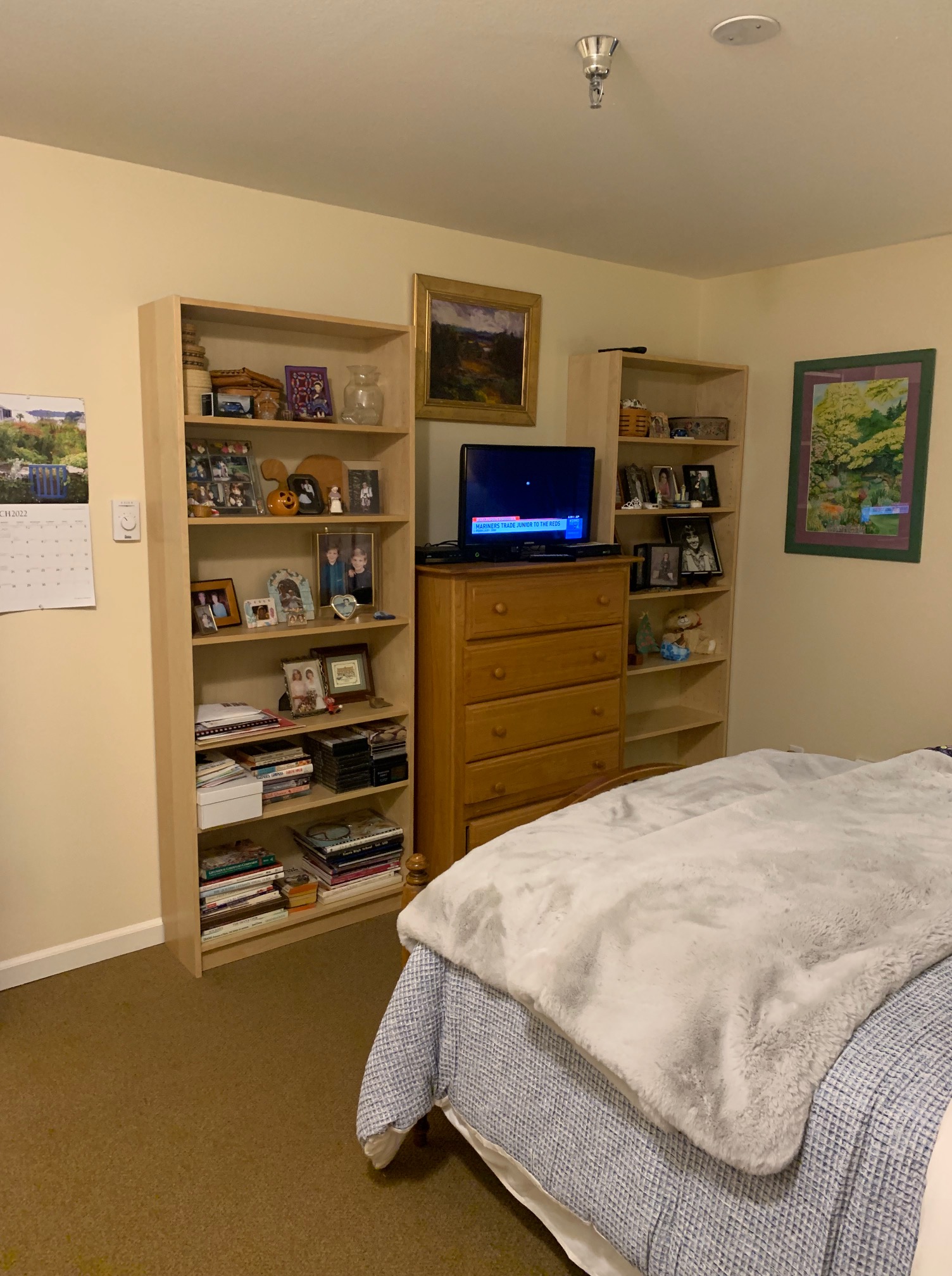
In March, my mom’s move went as well as it could go. It took us from very early morning to late evening, but we got her completely moved in and set up in her new space. Unlike last time, when we had to direct people through the window on where to place her furniture, my stepdad, brother and I were able to set up everything just how she liked it. I carefully made her bed and folded her clothes. My brother organized her bookshelves and placed her framed photos just so. It felt amazingly redemptive to do it right this time.

And then I figured life would be good for awhile, having accomplished this herculean task that consumed the first few months of the year.

But remember the three-month settling period I mentioned last time we moved my mom? It was hard this time, too.

Despite the fact that we knew this place was such an improvement from the last one—better food, nicer people, brighter and more beautiful surroundings—my mom still had her complaints. It was after a few of these unhappy phone calls that I realized no place would satisfy because the real problem wasn’t the place; it was the dementia. And there was no place I could move her and nothing I could do to fix that.

I realized this in the midst of a session with my therapist. “All solutions with dementia are imperfect,” she said. I wrote that down because I have to accept that as badly as I want to make things right for my mom, there’s only so much I can do.

As much as I hoped this move would improve things, the satisfaction I got from it was short-lived. I got so caught up in the doing, and didn’t anticipate the rush of sadness that would fill me once the doing was done.

I desperately looked forward to the first day of spring, craving literal sunshine to brighten up life. And wouldn’t you know, we had the gloomiest, rainiest Seattle spring in a decade.

But Wally got me outside three times a day regardless. We walked and walked, rain or (rare and blessed) shine. We went to the off-leash dog park any time it wasn’t too rainy or muddy, and I loved watching him goad bigger dogs into chasing him around in big circles. He kept me moving in a season when I wanted to get back into a regular running routine, but just couldn’t bring myself to endure the rain when I wasn’t training for anything.

It also made such a difference to wake up each morning to his little face peeking up at me from my bedside; to have his constant companionship throughout mundane days working at home; and to have his quiet, loving presence in the room during my biweekly therapy sessions. He’s not an emotional support animal, but he manages to be more than just a dog, too.

Maybe part of it is that Wally has given me the opportunity to save him in ways I can’t save my mom. She had to leave her home; I took Wally into mine. I can derive daily satisfaction from meeting Wally’s needs by feeding, walking and playing with him; but even when I try my best to give my mom a better life—by spending quality time with her, taking her shopping, moving her to a new place—I still feel like I’ve failed her because the inherent cause of her pain remains. All solutions are imperfect.

And Aaron? Despite not wanting to get a dog in the slightest, even he had to admit early on that Wally is a pretty great dog. Over the past six months, I’ve watched Aaron go from cautiously tolerating him to actually liking him to downright loving him. He’ll swear otherwise if you ask, but he has indeed said the L-word, and you can see it plainly in the way he always sprinkles a little rice on the floor for Wally as he cooks, and chases him around the living room, and clearly enjoys it when Wally chooses to snuggle with him instead of me.

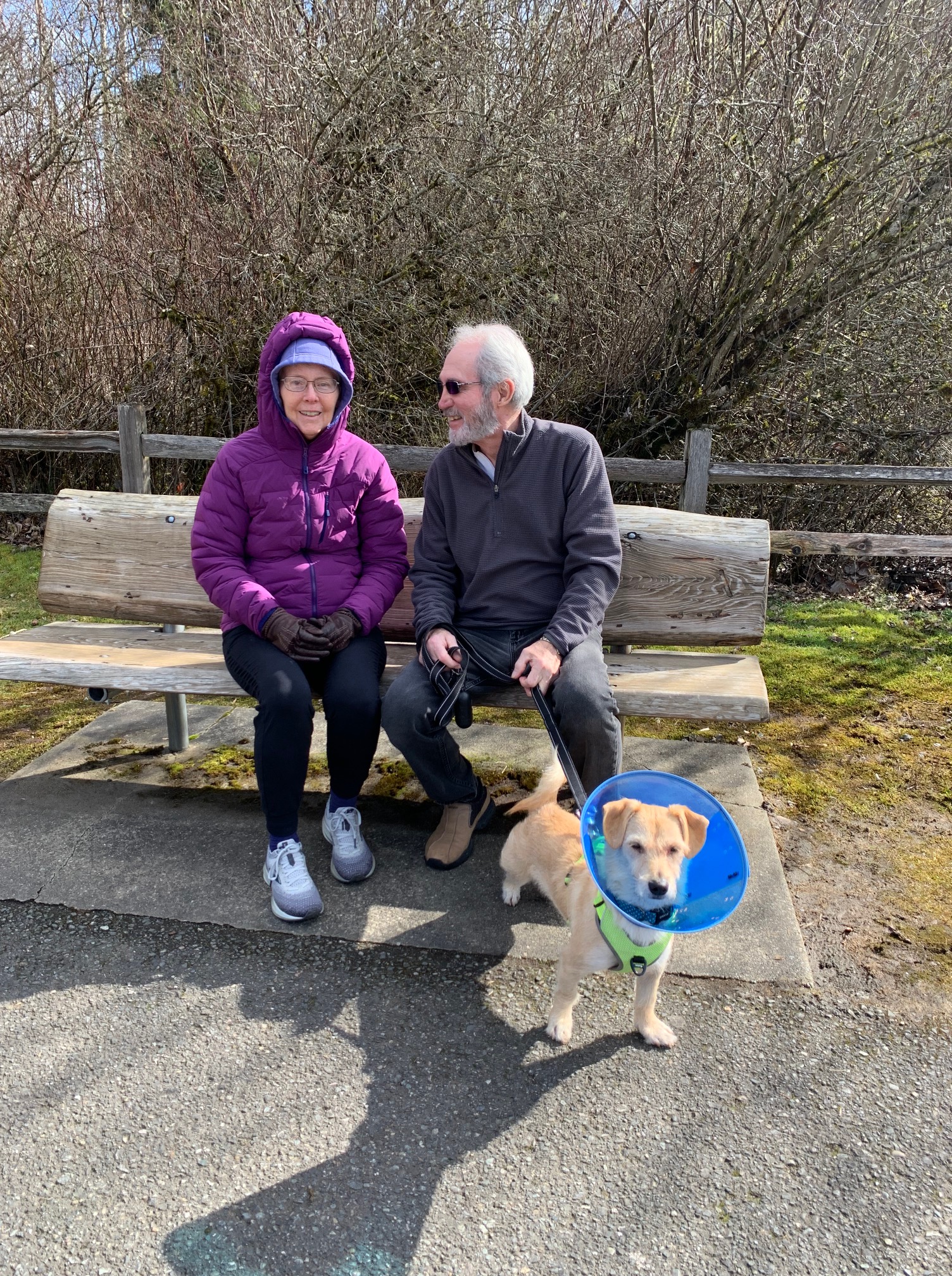
Wally brings joy to my stepdad and mom, too. He comes with me and Evie on our visits every weekend, and we take him on walks around the neighborhood and to the park. We toss his squeaky toys down the hall and laugh as he chases and pounces on them. He and Evie bring energy and levity to these visits. Together, they bring my mom firmly back to the land of the living, if only for a little while.

Now it’s summer. The days are brighter, literally and figuratively. It’s hard to remember a time before Wally was part of our family. And I hate to think of a time far in the future when he won’t be, because there will surely be a huge, Wally-shaped hole left behind.

I’ve always been a dog person and now, I think, I’ll always need a dog. I have the love to give, and I need the love they give.

I sure am grateful for his.

All Your Joys & Sorrows

“Pa threw mattresses into the wagon. Ma carefully spread their patchwork quilts over them. ‘We can’t leave these behind,’ she said. ‘All our joys and sorrows are sewn up into the patches.'”

Eleanor Coerr // The Josefina Story Quilt

The quilt my mother made for my daughter tells a story she didn’t intend.

The front, meticulously pieced together in 2015 when she found out I was pregnant with a girl, features strips of brightly colored fabric cut on the bias, perfectly straight, edges crisp—the work of a lifelong quilter.

The colors were chosen with intention: pink, of course, but well balanced with sunny yellow, sprightly green and a rich purplish-blue. You’d find these colors just before dawn on a spring morning, when the dusky sky gives way to the sun’s rays spilling onto new shoots of grass. 

Evie was born on such a morning in late April 2016, just before dawn. By the time the light and those colors crept in through our window, we barely noticed; she had already illuminated everything.

The back of the quilt bears Evie’s full name, birth date and statistics, machine-embroidered by another woman onto a patch that my mom then sewed on by hand. The stitches are clumsy, like the ones I made when my mom taught me how to make my own little quilts when I was eight years old. I can’t remember exactly when she sewed this patch—2018, 2019 maybe—but I remember it took a long time for her to do it and to return the quilt to me.

Somewhere in those years, between the front and the back, when I was busy feeding, wiping, shushing, bouncing, not sleeping and falling deeply in love—learning to be a mom—my own mom began to slip away.

There’s a feeling that accompanies the deepest hurts, in the very back of the throat: an involuntary clenching that can’t be relieved by methodic breathing or swallowing hard. When I get that feeling, I know the best course is to surrender to the tears, let myself make the ugly, contorted faces, scream if I need to. 

That feeling means something different to everyone. For me, it’s the feeling of missing my mom. Not the one who’s here now, but the one who was lost between the front and the back. The one whose wry observations and easy laughter grew quieter until they disappeared. The one who danced around the room when she found out she was going to be a grandma, then hesitated to play with her granddaughter for fear she would do or say the wrong thing. The one who booked flights and ordered catering for years as an executive assistant, then struggled to make sense of a digital clock.

Sixty-one is not an age at which one should be diagnosed with Alzheimer’s disease, yet there she was. Sixty-two is not an age at which one should be moved into memory care, yet there she is.

There are so many losses to grieve. And the trouble is the losses continue to mount as my mom’s cognition declines. There are days I wonder if things will be better when she’s further along and not so acutely aware of what’s happening to her. I almost want for her to slip into some blissfully ignorant state, like floating on her back in calm, cool water on a stiflingly hot day. Then I panic that she’ll disappear beneath the surface for good, and I hold onto her tighter.

She recently said to me, “I’m afraid one day I won’t know who you are.” I’m afraid of that, too. I took a deep breath and said, “I know. That might happen. But that’s OK. I won’t hold it against you.” Another deep breath. “I think even if your mind doesn’t recognize me, your heart will still know who I am.”

I think of the hundreds of hours I’ve spent with my daughter pressed to my chest, my skin alive with the warmth and sweetness of hers. I think of the searching eyes that have stared into mine since the very first time they opened. Could I ever be in a room with her and not feel, somewhere in my bones, the pull of those invisible threads that bind us?

The mind may fail, but the heart still knows. 

I will meet you wherever you are today, and tomorrow I’ll meet you there, too. 

I will walk with you to the very end, holding your hand, holding nothing against you. 

And when I have to let you go, I’ll gather the quilts your hands made, sewn up with all your joys and sorrows, and crawl beneath them, awash in the warmth of your love.